
Plants
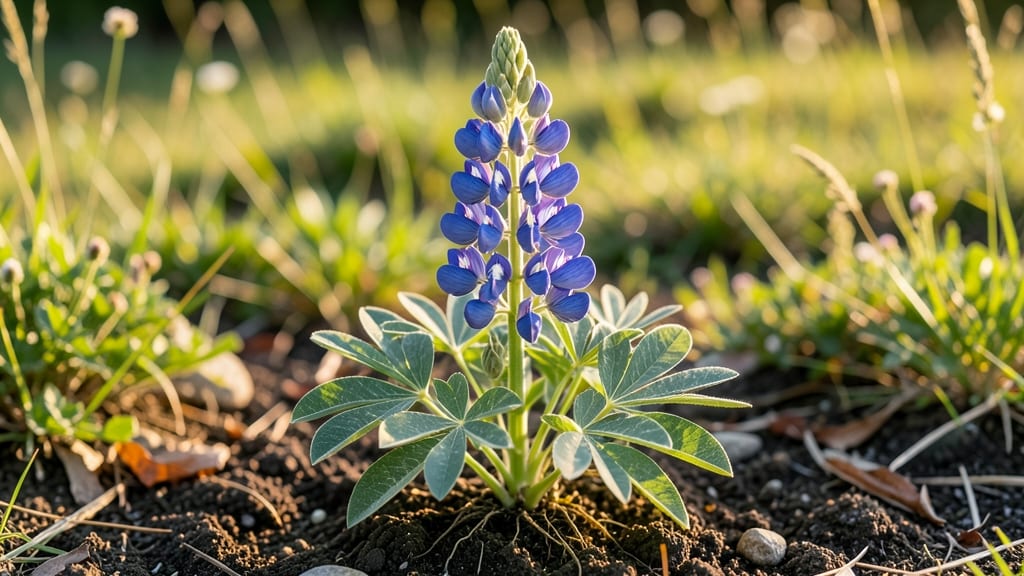
Lupines aren't true perennials—they die back each year to their roots but often return as cold-sensitive biennials or short-lived perennials in mild climates. With proper winter care and soil prep, you can coax them to live beyond two seasons.
Lupines thrive as cool-season plants, meaning they grow best in spring and fall when temperatures are moderate. 🌱 Their root systems store energy over winter, but harsh freezes often kill the tops, leaving only the roots alive.
In frost-free zones or with protective measures like mulch, they'll resprout the following year, mimicking perennial behavior. Unlike true perennials such as peonies, lupines don't have the same built-in resilience to cold snaps—this is why gardeners in colder regions treat them more like biennials.
What sets lupines apart is their adaptability. While they may not live as long as classic perennials, their vibrant blooms and nitrogen-fixing abilities make them a worthwhile addition to any garden.
Varieties like Lupinus polyphyllus (Russell lupine) or Lupinus nootkatensis (Alaska lupine) are particularly hardy choices for extending their lifespan with minimal effort.
💡 In This Article
- Lupine Life Cycle: Why They Act Like Perennials or Biennials
- How to Overwinter Lupines for Long-Term Garden Success
Lupine life cycle: why they act like perennials or biennials
Lupines belong to the Fabaceae family and exhibit a cool-season growth pattern, meaning they thrive when daytime temperatures hover between 50-75°F. Their life cycle begins in early spring when seeds germinate or dormant roots resprout.
Unlike true perennials, lupines don't have the same robust underground energy reserves—think of them more like biennials with a survival instinct. Their roots store just enough carbohydrates to sustain regrowth, but only if winter conditions aren't too harsh.
The key difference lies in their taproot system, which can extend 3-5 feet deep. This root structure allows lupines to access moisture and nutrients during dry spells, but it's also their Achilles' heel in freezing temperatures.
When winter arrives, the aboveground foliage dies back completely, but the roots remain alive—provided soil temperatures stay above 20°F. In colder climates, this survival mechanism often fails, leaving gardeners to replant annually. 🌱
Compare this to true perennials like peonies or lavender, which have thick, woody rhizomes packed with stored energy. These plants can withstand -20°F winters and regrow year after year without intervention.
Lupines, however, are more like short-lived perennials—they'll return for 2-3 years if conditions are right, but their lifespan shortens dramatically in colder regions. This is why gardeners in USDA Zones 5-7 often treat them as biennials.
What makes lupines unique is their nitrogen-fixing ability. Their roots host Rhizobium bacteria that convert atmospheric nitrogen into usable forms, enriching the soil. This process gives them an energy advantage during their short growing seasons.
However, this biological bonus doesn't translate to better cold tolerance—it's purely about soil fertility. The trade-off is that their 2-3 year lifespan makes them a temporary but impactful garden addition.
Consider this real-world example: In Zone 8 climates (like Los Angeles), lupines often resprout reliably each year because winters rarely drop below 30°F. But in Zone 5 (Chicago), the same plants may only survive one winter without protection.
The difference comes down to 5-10°F of temperature variation—enough to mean the difference between a perennial and an annual in lupine terms. 🌡️
Here's what's actually happening botanically: Lupines produce secondary growth in their roots, but not enough to sustain perennial behavior. Their cambium layer (growth tissue) remains underdeveloped compared to true perennials.
This explains why they often bolt (flower and set seed) in their first year, then die back—it's their way of completing their life cycle before winter sets in. In frost-free zones, this cycle repeats, creating the illusion of perennial behavior.