
Flowers
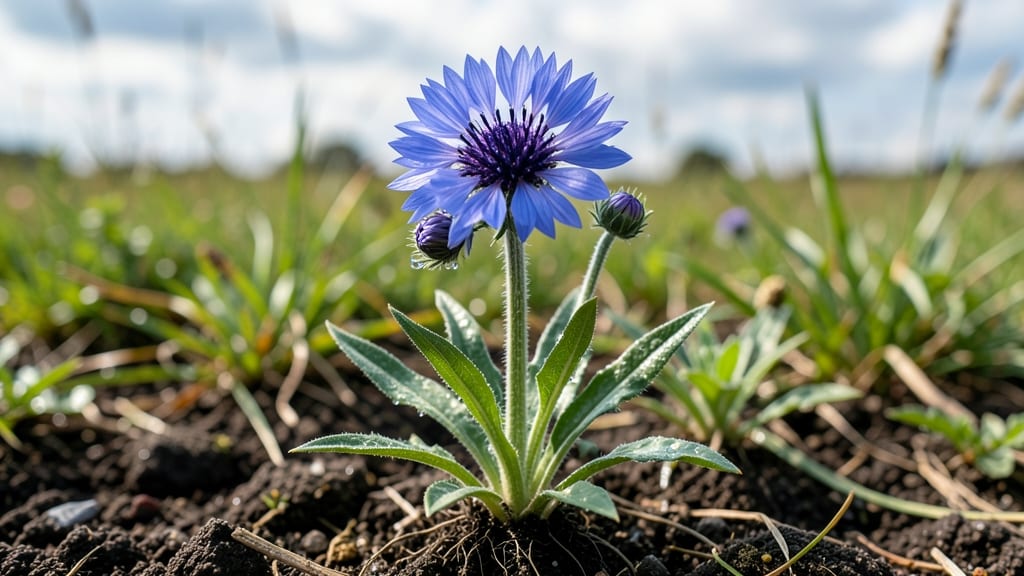
Bachelor buttons aren't true perennials in most climates, though they act like tender perennials by dying back each winter and returning from seed or roots when spring arrives. Their survival depends on frost tolerance and proper seasonal care.
These vibrant flowers thrive as cool-season growers but retreat underground when frost hits, much like many annuals that self-seed prolifically. 🌸 The key difference is their ability to regenerate from existing roots or dropped seeds rather than needing replanting every year.
In milder zones (USDA 7-10), they often return reliably, while colder regions may need annual replanting or protective measures to encourage regrowth.
What sets bachelor buttons apart is their adaptability—whether treated as annuals or nurtured through winter. With the right care, like mulching or container overwintering, you can coax them to behave more like traditional perennials in your garden.
This dual nature makes them perfect for gardeners who want both seasonal color and low-maintenance reliability. The trade-off? Their hardiness varies dramatically by climate, so local growing conditions play a huge role in determining whether they'll return year after year.
💡 In This Article
- Understanding Bachelor Buttons’ Dieback and Regrowth Cycle
- How to Extend Bachelor Buttons’ Lifespan as a Garden Perennial
Understanding bachelor buttons’ dieback and regrowth cycle
Bachelor buttons (Centranthus ruber) exhibit a fascinating growth cycle that blends annual and perennial traits. As cool-season plants, they thrive when temperatures drop below 75°F, producing vibrant blooms from early spring to fall.
However, their true nature emerges in winter: they’re frost-sensitive and die back completely when temperatures fall below 20°F, entering a dormant state. This isn’t true perennation (like peonies) but a survival strategy where the plant conserves energy in its roots or seeds until conditions improve.
The regrowth mechanism depends entirely on climate. In mild zones (USDA 7-10), where winters rarely drop below 25°F, the roots often survive and resprout in spring. In colder regions (USDA 3-6), the plant typically dies back to the ground, relying on self-seeding to return.
The seeds, which can remain viable for 2-3 years in soil, germinate when soil temperatures reach 50-60°F—a process triggered by moisture and light rather than temperature alone. This explains why bachelor buttons often appear "magically" in gardens year after year, even without replanting.
What’s less obvious is how their growth habit differs from true perennials. Unlike hardy perennials (e.g., lavender or catmint), bachelor buttons lack robust underground storage organs like rhizomes or tubers. Instead, they rely on fibrous roots that store minimal reserves, making them vulnerable to freeze-thaw cycles.
This is why they’re classified as "tender perennials"—they can persist through mild winters but require protection in colder climates to avoid complete die-off.
Consider this: in a Zone 8 garden, bachelor buttons might return reliably for years with minimal care, while in Zone 5, they’ll likely need annual replanting unless you take steps to insulate their roots.
The key difference lies in how the plant allocates energy—true perennials invest heavily in root systems, while bachelor buttons prioritize above-ground growth and seed production during their active season.
Here’s where it gets interesting: their self-seeding habit means they often behave like annuals in colder climates. A single plant can produce 500-1,000 seeds per season, which scatter widely. This explains why they’re so commonly found in wildflower meadows and disturbed soils—nature’s way of ensuring survival through genetic diversity.
In your garden, this translates to either a low-maintenance perennial (if winters are mild) or a self-sustaining annual (if winters are harsh).
The sensory clue to their regrowth potential lies in their leaves. Healthy roots will produce fresh foliage by early spring, often before the first blooms appear. If you see no new growth by mid-April, it’s a sign the plant didn’t survive winter and you’ll need to replant.
In contrast, true perennials like coneflowers push through snow with established stems. 🌱