
Plants
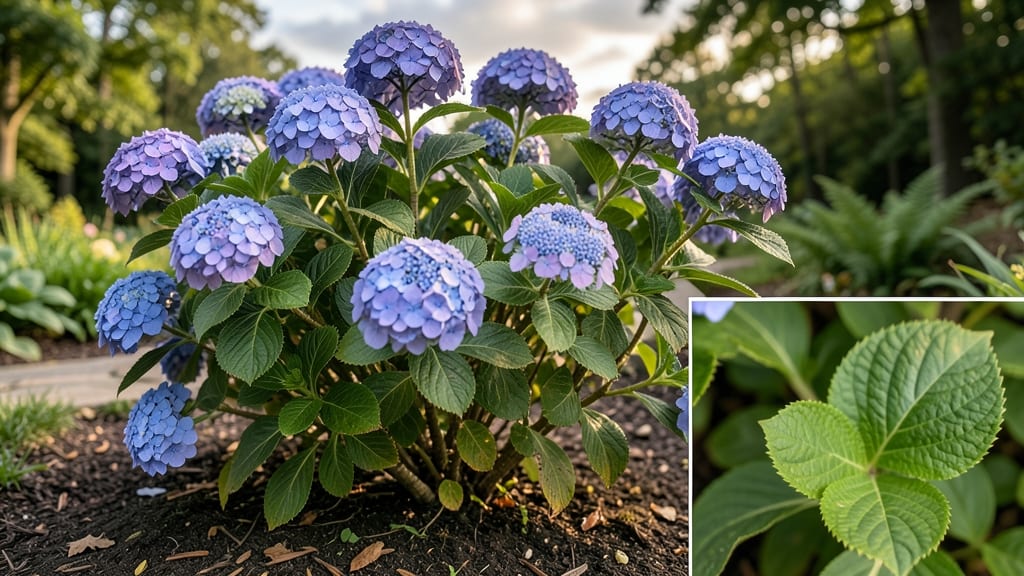
Hydrangeas are perennial plants that survive winter by entering dormancy, where their above-ground growth appears dead but their roots and crowns remain alive underground. With proper care, they regrow vibrant foliage and blooms each spring.
This perennial nature might surprise gardeners who assume hydrangeas die each winter, but their hardy root systems store energy throughout cold months. 🌱 Different varieties—like bigleaf, oakleaf, or panicle—handle freeze-thaw cycles uniquely, with some thriving in zones as cold as 3-5.
The key to their survival lies in protecting the crown (the base where stems meet roots) from extreme cold and ensuring consistent moisture before dormancy sets in.
What sets hydrangeas apart from annuals is their ability to regenerate from these dormant structures. While their stems may blacken and leaves fall, the roots remain active underground, ready to burst back to life when temperatures rise.
This cycle explains why some gardeners mistakenly believe their plants have perished—only to be rewarded with fresh growth come spring.
💡 In This Article
- Why Hydrangeas Look Dead in Winter (And How They Actually Survive)
- Pro Tips to Protect Perennial Hydrangeas Through Winter
Why hydrangeas look dead in winter (and how they actually survive)
Hydrangeas enter a state of dormancy during winter, where their above-ground growth appears completely dead—but this is just a survival strategy. Their roots and crowns (the thickened base where stems meet soil) remain alive underground, storing energy in specialized cells called parenchyma.
These cells act like natural batteries, converting and storing carbohydrates like starches and sugars produced during the growing season. 🌱 For example, bigleaf hydrangeas can store enough energy to fuel regrowth even after stems freeze solid.
The science behind this survival is fascinating: hydrangeas produce antifreeze proteins similar to those in cold-hardy fruits like apples. These proteins bind to ice crystals forming in their cells, preventing them from growing large enough to rupture cell walls—a process called extracellular ice formation.
Oakleaf hydrangeas take this further by developing a bud scale complex that insulates developing buds, allowing them to survive temperatures as low as -20°F (-29°C) in some varieties. This explains why they often appear "dead" but bounce back when spring arrives.
Different hydrangea species have unique cold tolerance ranges. Bigleaf hydrangeas typically thrive in USDA zones 6-9, while oakleaf varieties extend this to zones 4-9—meaning they can survive winters where temperatures drop to -30°F (-34°C). Panicle hydrangeas fall in between, handling zones 3-8.
The confusion arises because gardeners often see blackened stems and assume the entire plant has died, when in reality, the roots are still alive and waiting for warmer weather to restart growth.
What makes this even more interesting is how hydrangeas time their dormancy. They detect shortening daylight hours and dropping temperatures through specialized cells called photoreceptors, which trigger hormonal changes. This process slows metabolic activity by up to 90% and redirects resources to root storage.
The result? A plant that looks lifeless but is actually in a low-energy survival mode, ready to burst back to life when conditions improve.
Here's what's actually happening under the soil: The roots maintain a minimal metabolic rate, continuing to absorb moisture and nutrients even in frozen ground. Some hydrangea roots can even produce ethylene gas (a plant hormone) that signals dormant buds to prepare for regrowth.
This explains why you might see tiny green shoots emerge in late winter or early spring—proof that the plant was never truly dead.
One common misconception is that hydrangeas are annuals because their stems die back completely. However, this is a key difference between perennials and annuals: perennials like hydrangeas have persistent underground structures (roots, tubers, or crowns) that regenerate, while annuals complete their entire life cycle in one growing season.
The blackened stems you see in winter are simply the plant's way of conserving energy until spring.
To test if your hydrangea is truly dormant (not dead), perform a simple crown check in late winter. Gently scratch away a small section of soil around the base. If you find firm, white or light brown tissue beneath the blackened stems, the crown is alive.
If the tissue is dark, mushy, or smells rotten, the plant may have suffered irreversible damage. This visual inspection can save you from assuming the worst when your hydrangea appears lifeless in winter. 💫