
Companion Plants
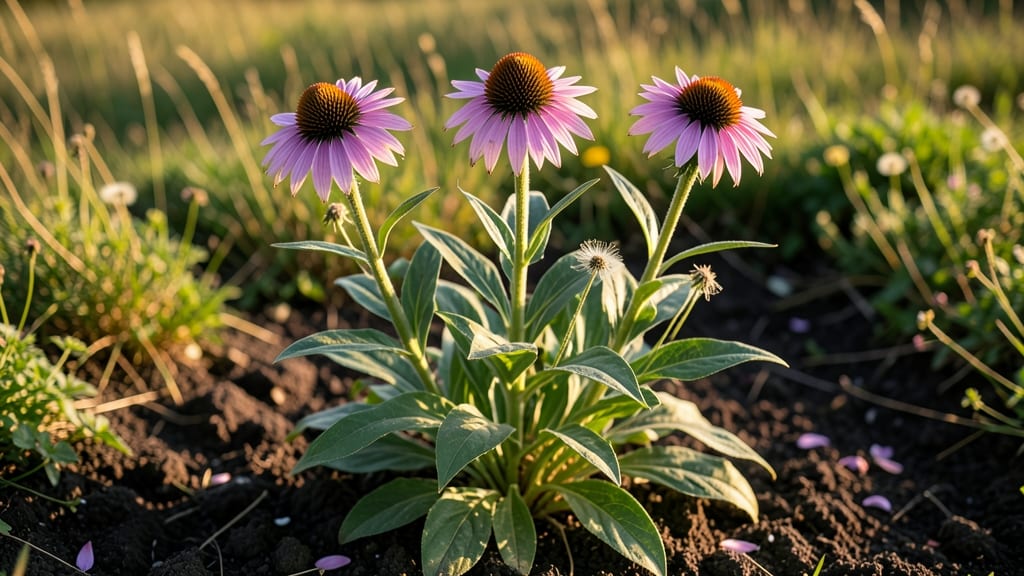
Yes, perennial plants come back every year because their root systems survive winter dormancy, storing energy to regrow when conditions improve. Look for emerging shoots or buds in spring as signs of life.
Perennials thrive because their roots act like underground batteries, storing nutrients and energy during winter's dormancy. 🌱 This built-in survival mechanism allows them to push through soil as temperatures rise, often within weeks of spring's arrival.
Unlike annuals that complete their life cycle in one season, perennials focus their energy on root development first, ensuring they'll bounce back stronger each year.
What sets perennials apart is their ability to adapt to seasonal changes—some species even develop thicker root systems over time, making them more resilient. The regrowth timing varies by climate zone, with cooler regions seeing later emergence compared to warmer areas.
I've noticed that consistent moisture during dormancy helps roots stay healthy, setting the stage for vigorous new growth when spring arrives.
💡 In This Article
- How Perennial Roots Survive Winter Dormancy
- When and How to Spot Perennial Regrowth
How perennial roots survive winter dormancy
The secret to perennials' resilience lies in their specialized root systems, which function like nature's energy storage units. During autumn, these plants undergo a biological process called dormancy, where growth slows dramatically and metabolic activity shifts underground.
The roots continue photosynthesizing through chlorophyll in stems, storing carbohydrates (like starch and sugars) in specialized tissues called rhizomes, tubers, or crowns—think of them as underground batteries.
Cold tolerance varies dramatically by species. Hardy perennials like peony or hosta can survive temperatures as low as -20°F thanks to antifreeze proteins that prevent ice crystal formation in their cells. In contrast, tender perennials like canna lilies need winter protection below 20°F.
The key difference is in their root structure: deep-rooted plants like asclepias (butterfly weed) store energy 12-18 inches below soil, while shallow-rooted varieties concentrate nutrients closer to the surface.
Dormancy isn't passive—it's an active survival strategy. Roots reduce water loss by thickening cell walls and producing protective compounds that act like natural antifreeze. This process can take 6-8 weeks to fully establish, which is why early frosts can stress young perennials.
The timing of dormancy triggers varies: some plants respond to day length, while others wait for soil temperatures to drop below 50°F consistently for 2-3 weeks. 🌱
What most gardeners don't realize is that root systems actually grow during dormancy, though at a microscopic level. Cells divide slowly, expanding storage capacity for the next growing season. This is why established perennials often outperform young plants—their roots have developed a larger "energy reserve" over multiple years.
For example, a 5-year-old daylily might have roots spanning 18 inches wide, compared to just 6 inches for a first-year plant.
The regrowth timing is directly tied to this stored energy. Plants like coneflowers often emerge when soil temperatures reach 55-60°F, while bleeding hearts wait until 60-65°F—the difference comes down to how efficiently each species converts stored starches back into active growth.
Some perennials even "test" the environment by sending up short, weak shoots that die back if temperatures dip again—a safety mechanism that ensures they only commit to full regrowth when conditions are stable.
One fascinating adaptation is the vernalization process—some perennials need exposure to cold temperatures (typically 32-40°F for 4-6 weeks) to "break dormancy." This is why perennials grown in warm climates sometimes struggle when transplanted to colder zones.
The cold period acts like a biological switch, signaling the plant that winter has passed and it's safe to grow. Without this trigger, some species may produce weak stems or delayed blooms.