
Plants
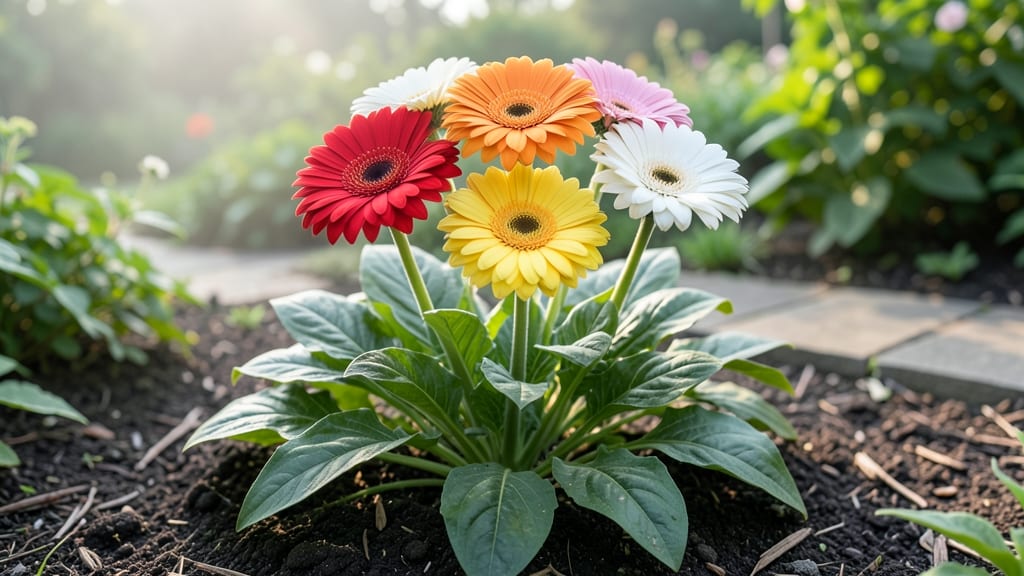
Gerberas aren't true perennials in most regions—though they grow like tender perennials through their underground rhizomes, these roots die back completely in freezing temperatures. Without protection or overwintering care, you'll need to replant them each spring in colder climates.
These vibrant bloomers rely on their thick, fleshy rhizomes to store energy during dormancy, much like true perennials—but their survival depends entirely on winter conditions. 🌱 In USDA zones 7-10, gerberas often return naturally each spring, while gardeners in colder areas must either dig up rhizomes for indoor storage or provide heavy mulch protection.
The key difference from hardy perennials? Gerberas can't tolerate prolonged freezing—their roots need to stay above 32°F to survive.
For container growers in chilly climates, overwintering in a cool, dry garage with minimal light works wonders. I've revived gerberas this way for years—just wrap the container in bubble wrap and check monthly for rot.
The trade-off? Their spring blooming may take 2-3 weeks longer than fresh starts, but the payoff is worth it for those who love their cheerful faces.
💡 In This Article
- How Gerbera Rhizomes Survive Winter Conditions
- Gerbera Lifespan Hacks: Extending Their Growth Cycle
How gerbera rhizomes survive winter conditions
Gerbera rhizomes function like nature's built-in survival kits, storing carbohydrates and nutrients in thick, fleshy roots that can shrink dramatically during dormancy. These underground stems contain specialized cells that convert sugars into starches—similar to how potatoes store energy—allowing them to endure months without active growth.
The rhizome's ability to "shrink" (sometimes by 50%) reduces water loss and protects against freezing, a strategy shared with true perennials like peonies but less extreme in scale.
The key difference lies in their cold tolerance threshold: while hardy perennials like hostas survive -20°F or lower, gerberas typically perish below 25°F unless protected. In USDA zones 7-10, their rhizomes naturally overwinter in the soil, but in colder zones, even light freezes (30°F) can cause irreversible damage.
The rhizome's outer layer contains a waxy cuticle that slows moisture loss, but this barrier isn't enough for prolonged freezing—hence the need for human intervention in chillier climates. 🌡️
What makes gerberas particularly fascinating is their dormancy cycle: they enter a state of suspended animation when nighttime temperatures drop below 50°F for several weeks. During this time, their above-ground foliage yellows and dies back, but the rhizome remains alive underground, ready to sprout when conditions improve.
This process mirrors true perennials but with a critical distinction—gerberas lack the deep root systems that allow plants like coneflowers to access groundwater during drought or freeze.
In warmer climates (zones 9-10), gerberas often self-sow, producing new plants from seed each year—a trait that blurs the line between perennial and annual behavior. However, in zones 5-6, even well-established rhizomes may fail to regenerate without protection.
The rhizome's survival hinges on maintaining soil temperatures above 32°F, which is why mulching (with 4-6 inches of straw or leaves) becomes crucial in marginal zones.
Here's what's actually happening biologically: The rhizome's meristem cells (growth points) remain dormant until warm soil temperatures (60°F) trigger enzyme activity that breaks down stored starches into sugars for new growth.
This metabolic restart is why gerberas often bloom 2-3 weeks later in overwintered plants compared to fresh starts—it takes time to rebuild their energy reserves. The trade-off? Rhizomes that survive multiple winters develop larger, more robust root systems capable of supporting bigger blooms. 💫
For container growers, the rhizome's survival strategy becomes even more critical since pots offer no soil insulation. In zone 5, I've seen gerberas in unprotected containers suffer complete rhizome rot after just one night below 28°F.
The solution? Moving containers to sheltered locations or using insulated grow bags filled with dry peat moss or vermiculite to mimic soil's natural insulating properties.