
Orchid Care
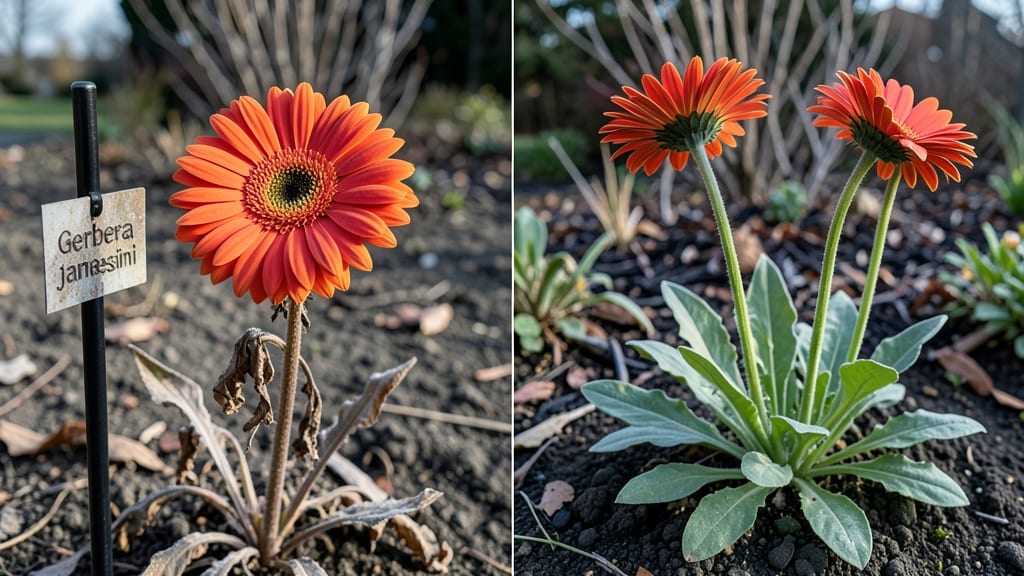
Whether gerber daisies are annuals or perennials depends on your climate zone—most gardeners treat them as annuals, but they thrive as perennials in USDA zones 9-11 where frost-free winters let them regrow each year.
Gerber daisies' lifespan hinges on winter temperatures, not just their natural growth cycle. 🌸 In colder regions (zones 8 and below), frost kills the roots, forcing gardeners to replant yearly. However, in warmer climates, their deep root systems survive winter dormancy, returning with vibrant blooms each spring.
The key difference lies in how well the plant's hardiness matches your local frost dates—even a single hard freeze can turn a perennial into an annual.
For gardeners in marginal zones (like 8a/8b), strategic care can sometimes extend their lifespan. Choosing cold-hardy varieties like 'Marmalade' or 'Pacifica' gives them a fighting chance, while overwintering potted plants in protected spots can work too.
The bottom line? Your zip code determines whether you're planting for one season or many.
💡 In This Article
- How Climate Zones Affect Gerber Daisy Lifespan
- Tips for Extending Gerber Daisy Growth in Cooler Climates
How climate zones affect gerber daisy lifespan
Gerber daisies' perennial potential comes down to their root hardiness threshold—typically around 20°F (-6.7°C). When temperatures drop below this, the fibrous root systems (which can extend 12-18 inches deep) suffer irreversible damage from frost penetration.
In USDA zones 9-11, where winter lows rarely dip below 25°F (-3.9°C), these roots remain viable through dormancy, allowing regrowth each spring. The plant's natural survival strategy involves storing energy in its roots during winter, which then fuels new growth when temperatures rise above 50°F (10°C).
The transition between annual and perennial behavior occurs in zone 8, where marginal frost events (below 23°F (-5°C)) create a "gray area." Here, some varieties may survive light frosts if protected, while others succumb completely.
The Pacifica series, for example, shows better hardiness than traditional types, with roots capable of enduring brief 15°F (-9.4°C) exposures. This explains why gardeners in zone 8a sometimes get partial regrowth—only the most protected root zones survive.
Temperature fluctuations also play a critical role. Gerber daisies enter dormancy when nights consistently stay below 55°F (13°C), but their roots remain metabolically active until 32°F (0°C). This means a sudden late frost after 60°F (15.6°C) days can be fatal, as the plant has already begun regrowth.
In contrast, zones 9-11 experience gradual cooling, giving roots time to harden off naturally—a process that takes 4-6 weeks of decreasing nighttime temperatures.
Another key factor is soil insulation. In colder zones, the ground freezes to 6-12 inches deep, cutting off root access to moisture and nutrients. Gerber daisies' shallow root systems (12-18 inches) become vulnerable to this "frost heave," where expanding ice crystals lift and damage roots.
This explains why even zone 8b gardeners often see only 30-50% survival rates—roots that escape frost heave may still starve from frozen soil.
For visual comparison, imagine a thermometer graph of winter lows: Zones 9-11 stay above the 20°F (-6.7°C) survival line, while zones 7 and below frequently dip 10°F (-12.2°C) or lower.
This 10°F difference is the biological tipping point between perennial success and annual treatment. Even in zone 8a, a single -5°F (-20.6°C) event can wipe out an entire planting.
The science behind this involves cellular membrane damage from ice crystal formation. When water in root cells freezes, it expands by 9%, rupturing cell walls. Gerber daisies lack the antifreeze proteins found in hardier perennials like daylilies, which can survive -20°F (-28.9°C) conditions.
This biological limitation explains why gerber daisies remain annuals in most gardens—unless you're in a frost-free paradise.