
Orchid Care
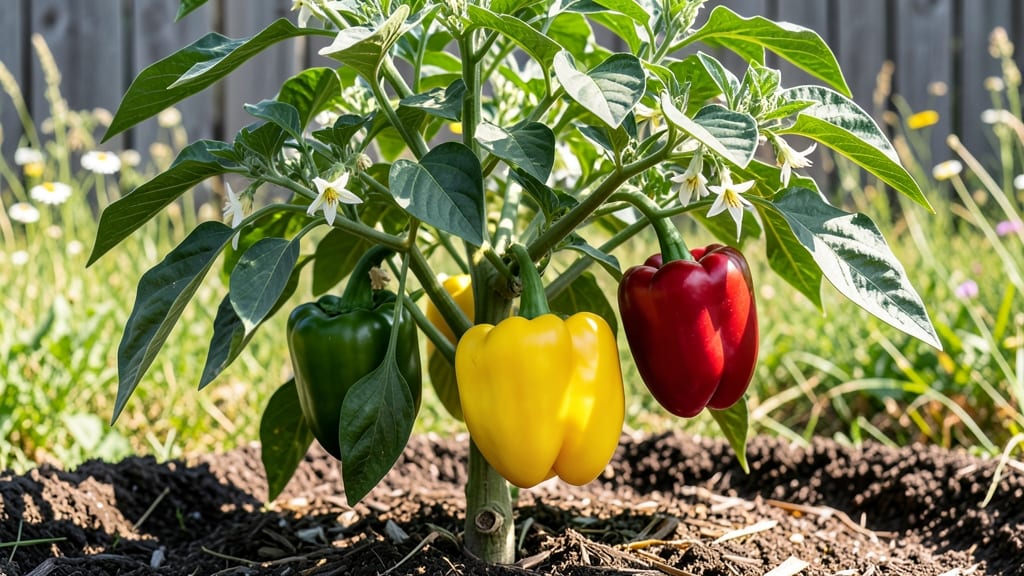
Whether bell peppers are annuals or perennials depends entirely on your climate—most gardeners treat them as annuals because frost kills them, but in frost-free zones (USDA 10-12), they can thrive for 2-3 years with proper care.
In cooler regions, bell peppers simply can't survive winter freezes, which is why they're treated as annuals. 🌱 The moment temperatures dip below 40°F, their growth slows dramatically, and any frost exposure will kill the plant.
However, in warmer climates where winters stay above 50°F, these plants can continue producing for multiple seasons if given consistent care—think mulching, adequate water, and protection from pests.
What many gardeners don't realize is that even in perennially suitable zones, bell peppers often lose vigor after 2-3 years. This happens because their energy shifts toward maintaining roots rather than producing new fruit. That's why even in ideal climates, many opt to replant yearly for peak harvests.
💡 In This Article
- Why Bell Peppers Die as Annuals in Cold Climates
- Growing Bell Peppers as Perennials: Zones, Tips, and Alternatives
Why bell peppers die as annuals in cold climates
Bell peppers are tropical plants at heart, originating from Central and South America where temperatures rarely drop below 50°F. Their cells contain delicate membranes that rupture when exposed to freezing temperatures, a process called chilling injury.
Even brief exposure to 32°F or lower triggers irreversible damage to their vascular system, cutting off nutrient flow to leaves and fruit. This is why gardeners in USDA zones 1-9 treat them as annuals—they simply can't survive winter freezes.
The real damage starts when nighttime temperatures fall below 55°F. At this point, bell peppers enter a state of metabolic slowdown, but their roots remain vulnerable. The plant's energy shifts toward protecting its core, leaving fruit and new growth stunted.
In zones 4-7, where winters dip into the 20s°F, even mulching can't prevent complete die-off. The root systems freeze solid, and by spring, only the seeds remain viable for replanting. 🌡️
What makes this particularly frustrating for gardeners is how quickly the decline happens. Within 24-48 hours of frost exposure, you'll notice leaves turning black and crispy—a clear sign the plant's cells have ruptured. The pepper's thick skin might still look intact, but internally, the tissue has already begun to degrade.
This is why even experienced growers in marginal zones (like zone 8) often pull plants before the first frost, harvesting what they can rather than risking total loss.
There's a biological reason why bell peppers can't adapt to cold: their genetic makeup lacks the cold-hardiness genes found in plants like kale or cabbage. These hardy vegetables produce antifreeze proteins that prevent ice crystal formation in their cells.
Bell peppers? Zero such protection. Their survival strategy is purely tropical—grow fast, produce fruit, and rely on warm seasons for reproduction. When winter arrives, their only option is to die back completely.
Interestingly, the pepper's fruit itself is more cold-tolerant than the plant. You can often harvest peppers that have been exposed to light frosts, as the thick skin protects the internal tissue. But the moment the plant's stem freezes, it's game over—the entire plant will wither within days.
This is why gardeners in cooler climates focus on early varieties that mature before the first frost, like 'Early California Wonder' or 'Jupiter,' which can produce fruit in just 60-70 days.
The science behind this sensitivity lies in the pepper's cell membranes. Unlike cold-hardy plants, bell peppers lack unsaturated fatty acids in their membrane lipids that maintain fluidity in cold conditions. When temperatures drop, these membranes become rigid, disrupting cellular processes and leading to cell death.
It's a fundamental limitation of their tropical heritage that gardeners in cooler zones must work around. 🌱