
Orchid Care
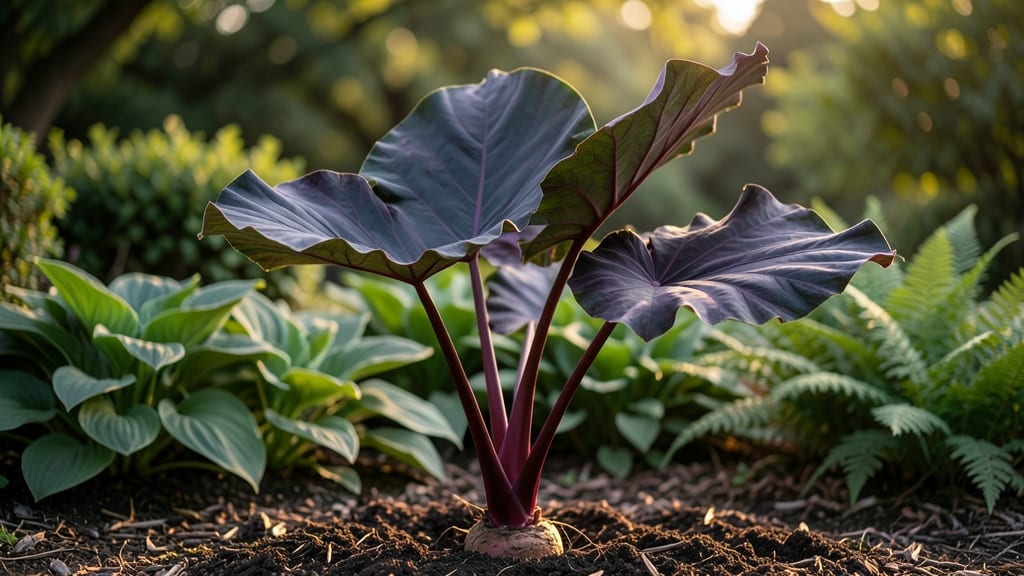
Elephant ears are perennial in warm climates but often treated as annuals in colder regions because their underground rhizomes die back during frost but regrow when temperatures consistently stay above 50°F.
Whether elephant ears act as perennials or annuals depends entirely on your climate zone.
In warmer regions (USDA zones 8-11), these dramatic plants thrive year-round, sending up new leaves from the same rhizomes each spring. 🌱 However, in colder areas, gardeners typically dig up and store the rhizomes during winter to protect them from freezing—this is why many treat them as annuals.
The key difference lies in those thick, tuber-like roots: they store energy and can survive dormant periods, but only if protected from prolonged freezing.
For gardeners in marginal zones, there's a happy medium: heavy mulching or container growing lets you keep the rhizomes in place while still giving them a fighting chance against winter.
I've found that even a 12-inch layer of straw mulch can make the difference between regrowth and loss in zone 7 gardens. The moment spring arrives and soil temperatures hit 55°F, those dormant rhizomes spring back to life with surprising vigor.
💡 In This Article
- How Elephant Ear Rhizomes Determine Plant Longevity
- Best Practices for Overwintering Elephant Ears
How elephant ear rhizomes determine plant longevity
Elephant ears (Colocasia spp.) rely on their thick, tuber-like rhizomes to store starches and nutrients, allowing them to survive winter dormancy in warmer climates. These underground stems can grow up to 6 inches long and 2 inches thick, functioning like natural batteries that power regrowth when conditions improve.
In USDA zones 8-11, where winter temperatures rarely drop below 20°F, the rhizomes remain active year-round, producing new foliage each spring from the same root system. 🌿
The critical factor isn't just temperature but how long frost persists. Rhizomes begin dying when exposed to 15°F for more than 24 hours, but they can tolerate brief freezes if protected.
In zone 7, where winters dip to -5°F, the rhizomes enter a deep dormancy state—similar to how sweet potatoes survive—but only regrow when soil temperatures consistently reach 55°F. This biological process explains why gardeners in colder zones must intervene, as the plant's natural survival mechanisms fail without protection.
What makes these rhizomes unique is their ability to regenerate even from small fragments. When you dig up a rhizome in autumn, you'll notice it's segmented like a string of sausages—each segment can sprout into a new plant.
This adaptability is why elephant ears thrive as perennials in ideal conditions but require human assistance in marginal climates.
The key takeaway is that the rhizome's health determines whether your elephant ear acts as a perennial or an annual—it's not the plant itself but its root system's resilience that matters. 💪
Here's how the temperature thresholds break down for rhizome survival:
- Perennial behavior: Thrives in zones 8-11 where winters stay above 20°F
- Marginal survival: Zones 6-7 with protection (mulch, containers) can regrow if soil stays above 15°F for short periods
- Annual treatment: Zones 5 and colder require winter storage as rhizomes won't survive extended freezing
The rhizome's dormancy isn't just about temperature—it's also about moisture. When frozen, the rhizome's cells dehydrate to prevent ice crystal damage, but this process requires the soil to be well-draining. In waterlogged conditions, even a 50°F winter can kill the rhizome by promoting rot before freeze damage occurs. This dual threat of cold and moisture explains why container growing works so well: you control both factors by moving the plant to a protected location. 🏺
For gardeners in transitional zones, the rhizome's ability to regenerate from small pieces offers a safety net. Even if the main rhizome dies back, a 2-inch segment with at least one growth node can produce a new plant when replanted in spring.
This biological insurance means your elephant ear's lifespan isn't strictly tied to whether it's perennial or annual—it's about how you protect its root system during critical temperature windows. The plant's true nature is perennial, but its expression depends entirely on your climate management skills.