
Flowers
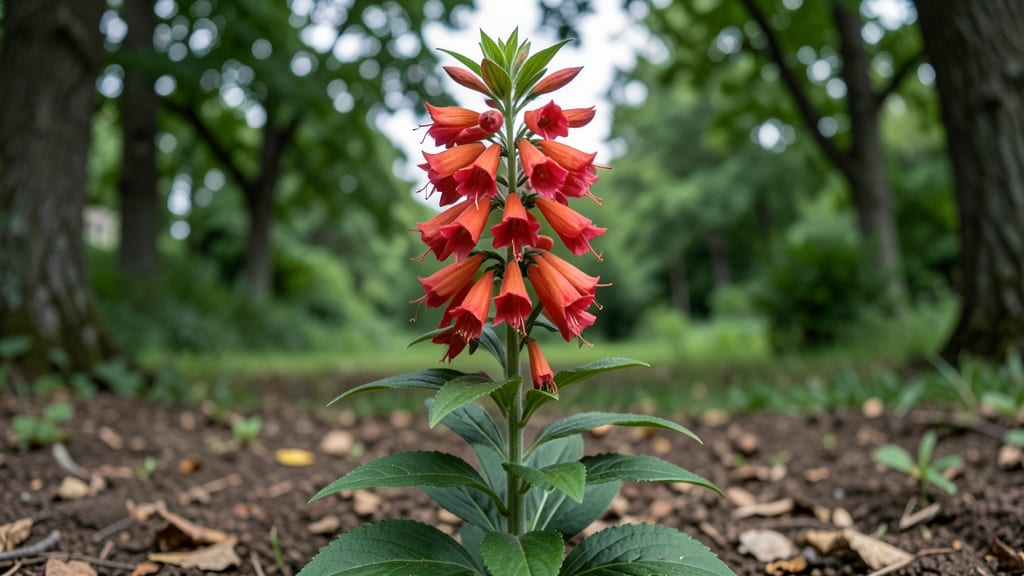
Cardinal flowers aren't true perennials but act like short-lived perennials, lasting 2-3 years before fading. Their rhizomes store nutrients to support regrowth, while prolific self-seeding often keeps them blooming in gardens longer.
This unique behavior stems from their underground rhizomes, which store energy but don't provide the same long-term resilience as true perennials like hostas. 🌱 While they may not return year after year from the same roots, their ability to self-seed means you'll often see new plants popping up naturally.
The key difference lies in their growth cycle—cardinal flowers prioritize rapid above-ground blooming over deep root establishment, which is why they decline after just a few seasons unless you actively manage their environment.
For gardeners, this means treating them more like annuals with perennial tendencies rather than reliable long-term plants. The trade-off? Their vibrant red blooms attract hummingbirds and last for months, making them worth the temporary commitment.
Many gardeners intentionally leave spent blooms to encourage self-seeding, creating a natural succession of plants that can keep your garden colorful for years.
💡 In This Article
- How Cardinal Flower Rhizomes Extend Their Lifespan
- Tips for Prolonging Cardinal Flowers in Your Garden
How cardinal flower rhizomes extend their lifespan
Cardinal flowers (Lobelia cardinalis) rely on their thick, fibrous rhizomes—horizontal underground stems—to store carbohydrates and nutrients during dormancy.
These rhizomes grow to about 1-2 inches in diameter and can extend 6-12 inches below the soil surface, allowing the plant to regenerate even after above-ground growth dies back in winter.
Unlike true perennials such as hostas or bee balm, which develop deep, robust root systems for long-term survival, cardinal flower rhizomes prioritize rapid energy storage over deep root penetration. 🌱
The trade-off is clear: while these rhizomes enable cardinal flowers to return for 2-3 years, they don’t provide the same longevity as plants with true perennial root systems.
For example, hostas can live for decades because their roots continuously expand and store energy, whereas cardinal flower rhizomes degrade over time due to fungal decay or competition from other plants.
The rhizomes’ shallow depth also makes them vulnerable to soil disturbances, like tilling or heavy foot traffic, which can sever connections to new growth.
What sets cardinal flowers apart is their aggressive self-seeding strategy—a survival tactic that compensates for their short-lived rhizomes. Each plant produces hundreds of tiny seeds that scatter widely, often landing in moist, shaded areas where they germinate within weeks.
This ensures a new generation of plants emerges even as the parent rhizomes weaken. In contrast, true perennials like bee balm rely on established roots to regenerate annually without needing to produce seeds.
Another key difference lies in how these rhizomes allocate resources. Cardinal flowers invest heavily in above-ground blooms—their iconic red flowers can appear from mid-summer to fall—rather than reinforcing their root systems.
This energy prioritization explains why they decline after 2-3 years: the rhizomes become depleted from supporting both growth and flowering simultaneously. True perennials, however, balance energy between roots and foliage, ensuring long-term resilience. 💫
Gardeners often notice this decline when cardinal flowers produce fewer blooms or fail to emerge entirely in their third year. The rhizomes may still be present but lack the vigor to support new shoots.
To counteract this, many gardeners practice rhizome division every 1-2 years, splitting the underground stems to refresh the plant’s energy reserves and extend its lifespan by another season or two.
For comparison, consider bee balm (Monarda spp.), a true perennial whose rhizomes spread aggressively and can live for 10+ years with minimal care. Bee balm’s roots grow deeper and wider, creating a dense network that outcompetes weeds and stores enough energy to regenerate even after heavy pruning.
Cardinal flowers, while stunning, lack this deep-rooted persistence, which is why they’re classified as short-lived perennials rather than true perennials.