
Plants
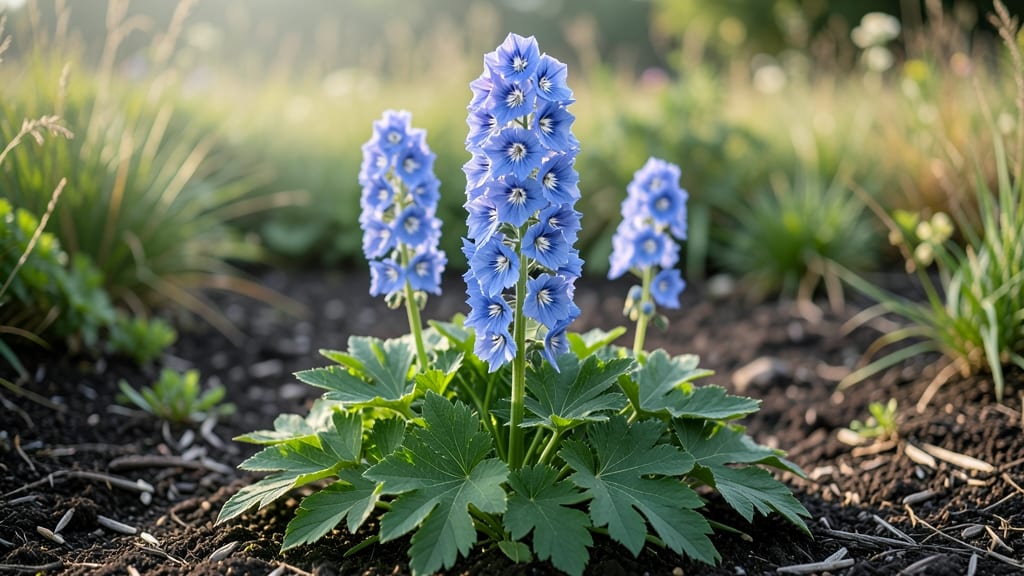
Delphiniums are perennials in mild climates, but most varieties die back to the ground each winter and regrow from their hardy root crowns or rhizomes, requiring proper winter protection in colder zones.
Whether delphiniums survive winter depends entirely on their underground storage systems—root crowns and rhizomes. 🌱 These hardy structures store nutrients and energy, allowing the plant to regrow each spring.
In colder zones (below USDA Zone 5), many delphinium species act more like biennials, dying back completely but returning if their roots stay protected. The key to extending their lifespan lies in proper soil prep and winter insulation, which I’ll cover in detail below.
For example, Delphinium elatum (tall garden delphiniums) thrives in Zones 3-7 with the right care, while Delphinium ajacis (annual or short-lived perennial) often needs replanting every 2-3 years. The difference comes down to root hardiness and winter conditions—something gardeners in transitional climates must account for.
💡 In This Article
- How Delphinium Root Systems Determine Their Lifespan
- Extending Delphinium Longevity: Planting and Winter Care Tips
How Delphinium root systems determine their lifespan
Delphiniums rely on two critical underground structures for survival: root crowns and rhizomes. The root crown acts as the plant's energy storage hub, containing dormant buds that can regenerate new stems and leaves when conditions improve.
Think of it like a hard drive storing your computer's operating system—without it, the plant can't reboot. Rhizomes, on the other hand, are horizontal stems that spread underground, creating new growth points. These structures are packed with starches and sugars that fuel regrowth after dormancy.
Cold hardiness varies dramatically between species. Delphinium elatum, for example, can survive down to -20°F (-29°C) when properly protected, thanks to its thick, woody root crowns. In contrast, Delphinium ajacis (larkspur) typically thrives only in Zones 6-9, with roots that may struggle below 10°F (-12°C).
This difference explains why some delphiniums behave as biennials—their roots simply can't withstand repeated freeze-thaw cycles in colder climates. The root's ability to insulate itself against temperature fluctuations is the real secret to perennial survival.
What most gardeners overlook is how root health affects above-ground growth. A robust root system produces 2-3 times more flowering stems than a stressed one, and the flowers themselves are larger and more vibrant.
This is why dividing established delphinium clumps every 3-4 years revitalizes growth—it prevents root-bound conditions where nutrients become depleted. The root crown's ability to regenerate also explains why delphiniums often "come back stronger" after a harsh winter, provided the roots stayed intact.
Soil type plays a surprising role in root development. Delphiniums prefer well-draining, slightly alkaline soil (pH 6.5-7.5) that prevents waterlogging—a condition that can rot roots within 48 hours of saturation. In heavy clay soils, roots may develop shallow and weak, making winter survival more challenging.
The root's ability to access moisture and nutrients directly impacts its cold tolerance, as healthy roots can better withstand freezing temperatures by producing protective sugars through a process called cold acclimation.
Here's a visual breakdown of how root systems vary:
- Delphinium elatum: Thick, woody root crown with deep taproots (can reach 2-3 feet deep)
- Delphinium ajacis: Fibrous root system with shallow rhizomes (6-12 inches deep)
- Delphinium grandiflorum: Intermediate system with moderate rhizome spread (1-2 feet)
The deeper the root system, the better it can anchor the plant and access moisture from lower soil layers—a critical advantage during drought or freeze cycles. This is why Delphinium elatum often outperforms other varieties in colder zones, despite similar above-ground appearances. 🌿