
Orchid Care
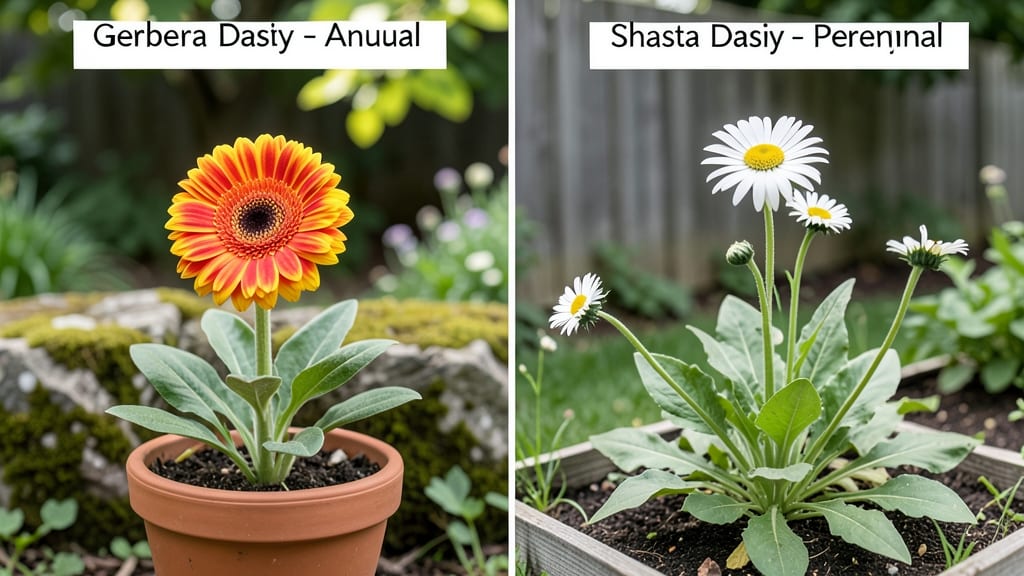
Whether daisies are annuals or perennials depends on the variety and climate: most daisies are perennials in temperate zones, regrowing yearly from underground rhizomes or roots, while some varieties act as annuals in colder regions where frost kills their foliage.
This distinction comes down to their root systems. Perennial daisies like Shasta daisies develop thick rhizomes that store nutrients, allowing them to survive winter dormancy and send up fresh shoots each spring. 🌱 In contrast, varieties like African daisies often die back completely in freezing temperatures, requiring replanting each year.
The key difference lies in how cold-hardy each type is—some perennials can withstand Zone 3-4 winters, while others need Zone 5+ protection.
For gardeners, this means selecting the right type for your climate. Hardy perennials like Gerbera daisies thrive in colder regions, while tender annuals may need winter mulching or container growing in frost-prone areas. Understanding these differences helps you plan for seasonal care and long-term garden design.
💡 In This Article
- How Daisy Rhizomes and Root Systems Support Perennial Growth
- Choosing Perennial vs Annual Daisy Varieties for Your Climate
How daisy rhizomes and root systems support perennial growth
Most daisy varieties thrive as perennials thanks to specialized underground structures that act like natural storage units. Rhizomes—horizontal, thickened stems—are the superstars of perennial daisies like Shasta daisies. These underground stems store carbohydrates, water, and nutrients during dormancy, fueling new growth when temperatures rise.
For example, a mature Shasta daisy rhizome can grow 1-2 feet long and produce multiple shoots in spring, creating dense clumps that return year after year.
The science behind this involves a process called autumnal senescence, where the plant intentionally breaks down leaves and stems to transfer nutrients to the rhizomes. This stored energy allows the plant to regenerate even after losing 90% of its foliage during winter.
Some daisies, like Gerbera daisies, use fibrous root systems instead, which spread outward to create a dense network that resists drought and cold. The key difference? Rhizomes provide more robust regrowth, while fibrous roots offer better drought tolerance in warmer climates.
Temperature plays a crucial role in this cycle. Most perennial daisies enter dormancy when soil temperatures drop below 40°F, halting growth but preserving the rhizomes. In spring, when soil warms to 50°F, the stored nutrients trigger bud formation.
This is why daisies often bloom earlier than many perennials—their root systems are already primed for action. 🌱 The trade-off? Perennial daisies may decline after 3-5 years as rhizomes become overcrowded, requiring division to rejuvenate growth.
Not all daisies use rhizomes, though. Some, like the Oxeye Daisy, rely on taproots that grow deep into the soil, accessing moisture and nutrients from lower layers. These roots can survive deeper frost penetration, making Oxeye daisies more cold-hardy in Zone 3-4 climates.
The root type you choose depends on your soil conditions—sandy soils benefit from deep taproots, while clay soils favor spreading rhizomes.
What most gardeners overlook is how mulching enhances this natural process. A 3-inch layer of organic mulch (like shredded leaves or straw) insulates rhizomes during winter, preventing temperature fluctuations that can damage stored nutrients.
In spring, this mulch also moderates soil warmth, encouraging even regrowth. Without proper mulching, perennial daisies may struggle to recover after harsh winters, appearing more like annuals in behavior.
Here's what happens when you ignore these biological processes: Without proper winter care, perennial daisies may produce weak shoots in spring because their rhizomes were depleted. Over time, this leads to declining vigor and smaller blooms.
The solution? Divide clumps every 2-3 years to refresh the root system and encourage stronger regrowth. This simple act can extend a daisy's lifespan by decades.