
Plants
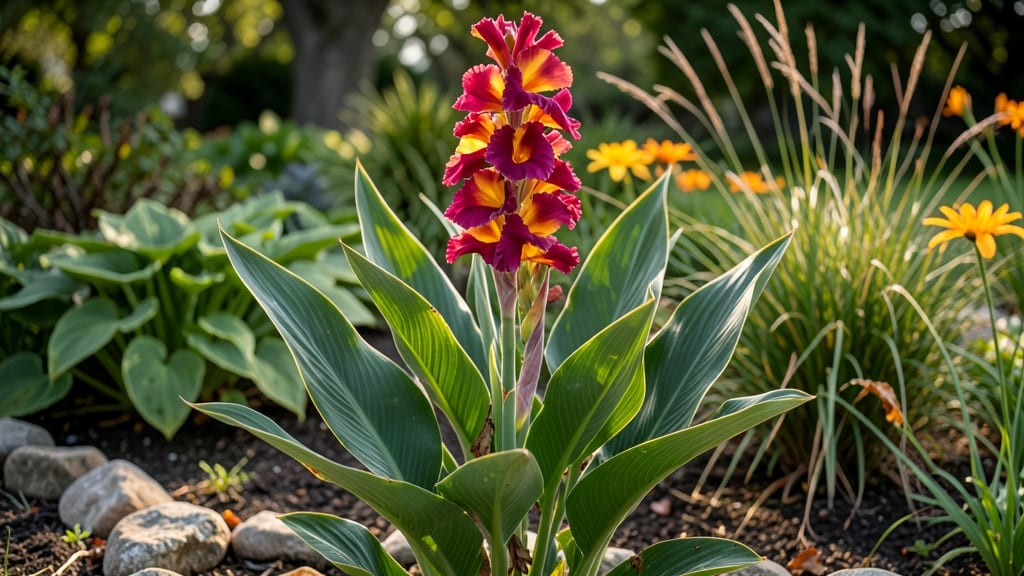
Yes, canna plants are perennials that thrive as hardy plants in warm climates (USDA Zones 8-11), but they go dormant in colder regions, requiring winter protection like digging tubers or heavy mulching to survive. Their underground rhizomes store energy and regrow each spring when conditions improve.
Canna plants earn their perennial status through their remarkable underground rhizomes, which act like nature's storage batteries. 🌱 These thick, starchy roots store nutrients and energy, allowing the plant to "sleep" through winter's chill before bursting back to life with warmer temperatures.
In colder climates, the above-ground foliage freezes back, but the rhizomes remain viable—if properly protected—ready to sprout new leaves when spring arrives. This biological trick explains why cannas can live for years in ideal conditions, often producing larger, more vibrant blooms with each passing season.
What makes this adaptation so fascinating is how temperature triggers the dormancy cycle. When nights dip below 50°F (10°C), the plant's growth hormones shut down, conserving energy in the rhizomes.
This survival mechanism is what lets cannas bounce back annually, provided gardeners in colder zones take preventative measures like digging tubers before the first frost or applying thick mulch layers to insulate the roots.
💡 In This Article
- How Canna Plant Longevity Works in Different Climates
- Cold-Zone Survival Strategies for Canna Plants
How canna plant longevity works in different climates
Canna plants rely on their specialized rhizomes—thick, horizontal underground stems—to survive as perennials. These storage organs store carbohydrates, proteins, and water, acting like a biological battery that keeps the plant alive during dormancy.
When temperatures dip below 50°F (10°C), the plant's meristematic cells (growth centers) in the rhizomes remain protected while foliage freezes back. This is why cannas can return year after year in frost-free zones like Florida or Southern California, where rhizomes stay active underground.
The dormancy cycle begins when shorter daylight hours and cooler temperatures trigger hormonal changes. Ethylene gas, a plant stress hormone, accumulates in the rhizomes, signaling the plant to stop producing chlorophyll and conserve energy.
Meanwhile, the rhizomes' thick, waxy skin prevents moisture loss, allowing them to remain viable even when soil temperatures drop to 32°F (0°C)—the point where foliage would freeze. In USDA Zone 9, for example, cannas naturally overwinter with just their rhizomes intact, emerging in spring as if nothing happened.
What's fascinating is how these rhizomes grow each season. After dormancy, the stored energy fuels new shoot growth, often producing larger tubers than the previous year. In ideal conditions, a single rhizome can divide into multiple segments over time, creating a network of storage organs that ensures the plant's longevity.
This is why mature canna plants in warm climates can live for 10+ years with minimal care—each rhizome segment acts as an independent survival unit.
However, the story changes in colder climates where frost penetrates deeper. Below Zone 8, the ground freezes to 20°F (-7°C) or lower, which can damage even protected rhizomes if left in the soil.
This is why gardeners in these areas must take proactive steps—either digging tubers for indoor storage or applying thick mulch layers (like 12+ inches of straw) to insulate the roots. Without protection, the rhizomes' cells can rupture from ice crystal formation, killing the plant permanently.
Consider this comparison: In Zone 10, cannas grow continuously with no winter care, while in Zone 6, even well-mulched rhizomes might only survive 50% of winters without additional protection.
The key difference lies in how deeply the frost penetrates—the rhizomes' survival depends on maintaining soil temperatures above 28°F (-2°C), the threshold where cell damage begins.
The plant's ability to regenerate from even small rhizome fragments adds another layer of resilience. A 2-inch (5 cm) segment with at least one growth bud can often sprout into a new plant, making cannas surprisingly forgiving when handled properly.
This trait explains why gardeners can propagate cannas so easily—simply divide the tubers in spring and replant the pieces.