
Plants
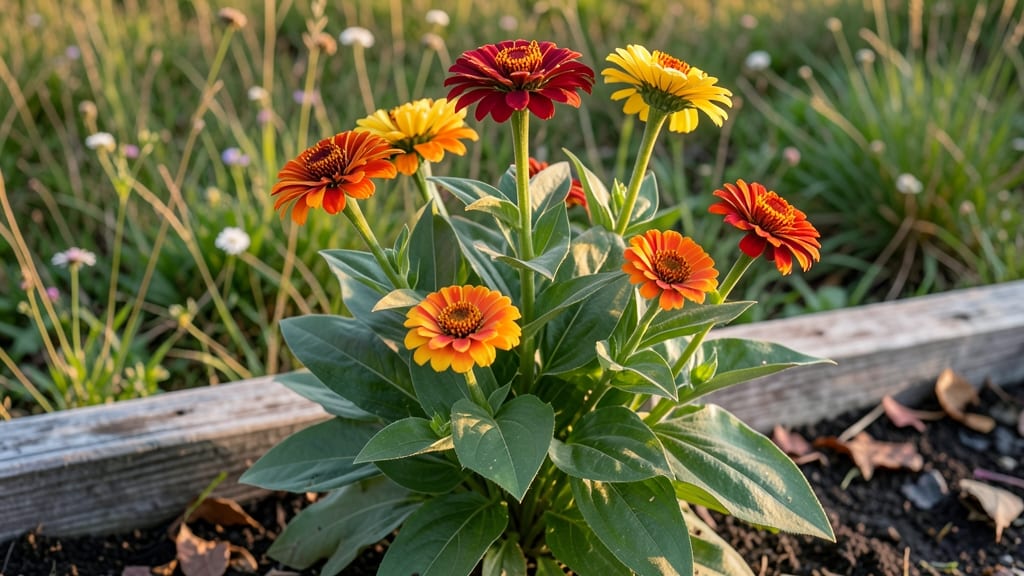
Zinnias are not true perennials in most climates but act as annuals, dying back to the ground in cold weather. In frost-free zones (USDA 9-11), they may regrow from the roots, but they’re typically grown as seasonal flowers in cooler regions.
Zinnias behave like annuals because they lack the hardy root systems that true perennials develop to survive freezing temperatures. 🌱 Unlike coneflowers or black-eyed Susans, which store energy underground through winter, zinnias simply shut down when nighttime temps drop below 30°F.
Even in milder climates, their stems and foliage turn crispy and brown, signaling the end of their seasonal cycle. What makes them unique is their ability to self-seed prolifically—many gardeners find new zinnias popping up the following spring from dropped seeds, even if the parent plants didn’t overwinter.
This dieback cycle explains why zinnias thrive as summer-long bloomers in most gardens: they focus their energy on producing vibrant flowers rather than maintaining woody stems. The trade-off? You’ll need to replant them each year unless you’re in a frost-free zone or willing to experiment with protective overwintering methods.
For cooler regions, succession planting or saving seeds becomes a gardener’s best friend to keep those cheerful blooms coming season after season.
💡 In This Article
- Zinnia Lifecycle: Why They Die in Winter
- How to Extend Zinnia Blooms Beyond One Season
Zinnia lifecycle: why they die in winter
The key difference between zinnias and true perennials lies in their cold tolerance thresholds. Zinnias originate from warm climates (primarily Mexico) and lack the genetic adaptations for winter survival found in hardy perennials like coneflowers (which tolerate -20°F) or black-eyed Susans (-30°F).
When nighttime temperatures consistently drop below 30°F, zinnia cells begin to freeze, causing irreversible damage to their tender stems and leaves. This triggers a shutdown response—similar to how annuals behave—where the plant conserves energy by dying back to the ground rather than attempting to overwinter.
What sets zinnias apart biologically is their shallow root system, typically reaching only 12-18 inches deep. True perennials develop deep taproots that store carbohydrates and nutrients through winter, while zinnia roots contain minimal reserves.
When frost penetrates these shallow roots, the entire plant's energy reserves are depleted, making regrowth impossible without intervention. The plant's survival strategy instead focuses on rapid seed production during its growing season, ensuring genetic continuity through self-seeding rather than vegetative regrowth.
This lifecycle explains why zinnias produce such prolific blooms—up to 100 flowers per plant in ideal conditions. Their energy goes into flower production rather than maintaining woody stems or underground storage organs.
For comparison, a true perennial like lavender allocates 30-40% of its energy to root development, while zinnias invest nearly all their resources in above-ground growth. This biological trade-off makes them perfect for seasonal gardens but requires annual replanting in colder climates.
There's a fascinating exception in frost-free zones (USDA 9-11). Here, zinnias can persist as "semi-perennials" because they avoid the freeze-thaw cycle that damages their roots.
In these areas, gardeners often find zinnias returning year after year from the same root base, though they still require cutting back in late winter to remove dead foliage. The difference comes down to consistent above-freezing temperatures—zinnias need nighttime lows above 35°F to maintain any chance of regrowth.
Understanding this lifecycle helps explain why zinnias are classified as "tender perennials" in botanical terms. They possess some perennial characteristics (like multi-year potential in ideal conditions) but lack the hardiness of true perennials.
This hybrid nature makes them fascinating study subjects for gardeners—you can observe their complete seasonal cycle from vibrant summer blooms to winter dormancy in just one growing season.
For gardeners in transitional climates (USDA 8-9), this biological reality presents both challenges and opportunities. While zinnias won't survive winter outdoors, their ability to self-seed means you might find volunteer plants appearing the following spring.
This natural propagation strategy often results in unexpected color variations, as seeds from different parent plants mix in the soil.