
Orchid Care
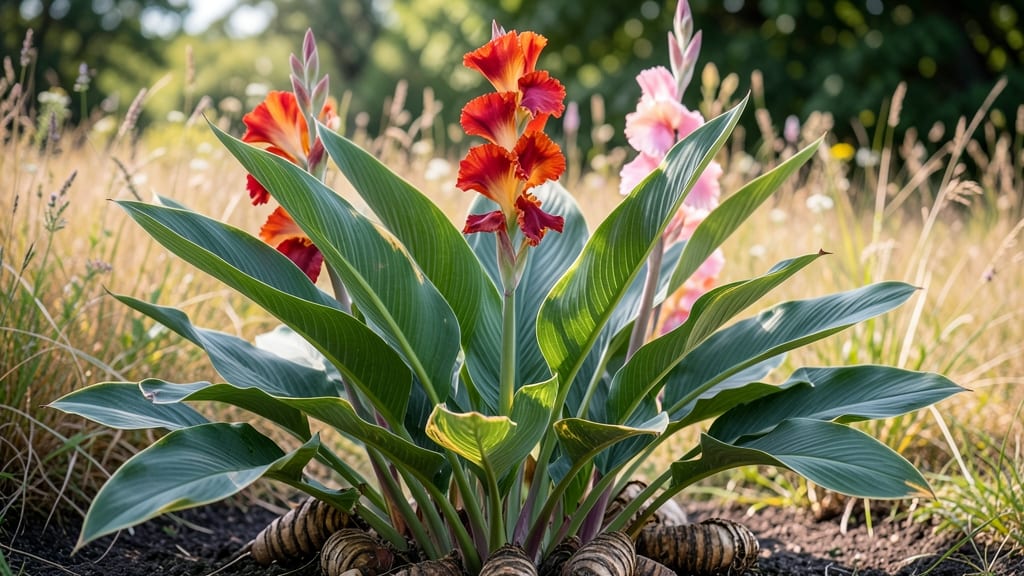
Whether canna lilies are annuals or perennials depends on your climate: they thrive as perennials in warm zones but must be replanted each spring in cold areas because their rhizomes freeze back.
Canna lilies are true perennials in USDA zones 8 and warmer, where their thick rhizomes naturally overwinter underground. 🌱 The key difference comes in colder regions: when temperatures drop below 20°F, these storage organs become dormant or die, forcing gardeners to dig and replant them annually.
This is why many treat them as annuals in northern climates—it's a survival strategy rather than a botanical classification.
What makes this interesting is how these plants adapt: in warmer zones, they regrow from the same rhizomes year after year, while in cooler areas, gardeners can still extend their season by lifting and storing rhizomes indoors over winter.
The decision to treat them as annuals is purely practical, not biological.
💡 In This Article
- How Canna Lily Rhizomes Survive Winter
- Canna Lily Care for Year-Round Growth in Cold Climates
How canna lily rhizomes survive winter
Canna lilies rely on their thick, tuberous rhizomes to store energy and survive winter dormancy. These underground stems contain high starch reserves that fuel regrowth when conditions improve.
In USDA zones 8 and warmer (average winter lows above 20°F), the rhizomes remain viable year-round, allowing the plant to emerge from the same roots annually.
The biological trigger is temperature: when soil temps drop below 50°F, the plant shifts into dormancy, halting growth until warmth returns in spring.
The rhizome's survival strategy involves a natural antifreeze mechanism. Their thick, waxy skin reduces water loss, while stored starches act as insulation against freezing. In colder zones (below zone 7), these adaptations fail when temperatures plummet below 20°F for extended periods.
The rhizomes either shrivel from dehydration or freeze solid, which is why gardeners in these areas must dig them up before winter. This isn't a weakness—it's an evolutionary trade-off for tropical plants that can't survive prolonged freezing.
What's fascinating is how quickly these rhizomes respond to warmth. After just 2-3 weeks of soil temperatures above 60°F, they'll begin sprouting new shoots.
In warmer climates, this happens naturally each spring, while in colder regions, gardeners must simulate these conditions by bringing rhizomes indoors under grow lights or in heated greenhouses.
The plant's entire lifecycle—from dormancy to blooming—is tightly regulated by temperature cues, making climate the defining factor in whether canna lilies act as perennials or annuals.
Another key factor is moisture management. During dormancy, rhizomes need minimal water—just enough to prevent complete desiccation. In zones 8+, the surrounding soil provides natural moisture regulation, while in colder areas, gardeners must mimic this by storing rhizomes in slightly damp (not soggy) peat moss or vermiculite.
Too much moisture accelerates rot, while too little causes irreversible dehydration. This delicate balance explains why overwintering success rates vary dramatically between regions.
Consider this comparison: In zone 9, a canna lily might thrive for decades from the same rhizome system, while in zone 5, even the hardiest varieties rarely survive winter outdoors without intervention.
The rhizome's ability to regenerate from small fragments (as little as 1 inch) makes it adaptable, but only if gardeners understand its temperature-dependent growth cycles. This is why zone-specific care makes all the difference in determining whether your canna lilies behave as perennials or annuals.
The science behind this involves photoperiodism too. While temperature triggers dormancy, shorter daylight hours in fall also signal the plant to prepare for winter.
This dual cue system explains why canna lilies often start yellowing leaves in late summer—it's not just about cold, but the combined effect of cooling temps and reduced sunlight. Understanding this helps gardeners time their overwintering strategies precisely.
For those in transitional zones (zone 7-8), the decision gets tricky. Some years, rhizomes survive winter outdoors, while others they don't. This variability is why many gardeners in these areas adopt a hybrid approach: planting rhizomes in containers that can be moved indoors before the first frost.
The rhizome's ability to regenerate from even small pieces makes this strategy particularly effective, as you can always replant fragments from your stored collection each spring.