
Flowers
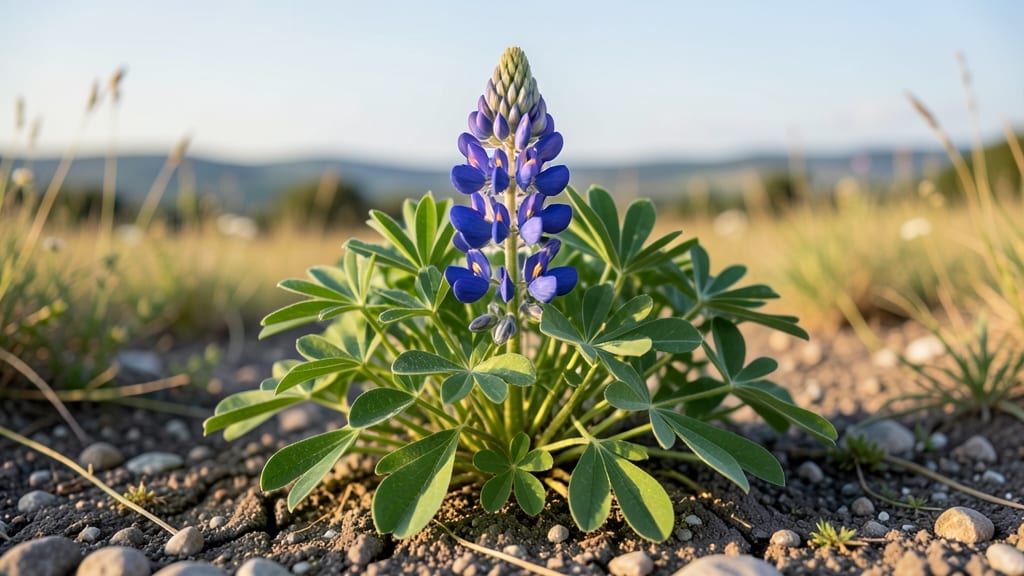
Bluebonnets aren't true perennials—they function like winter annuals by germinating in fall, blooming vibrantly in spring, then dying back after seeding. This seasonal cycle creates perennial-like displays but requires annual replanting for consistent blooms.
This unique growth pattern stems from their native adaptation to Texas's unpredictable winters. 🌱 The plants store energy in their roots during fall growth, then rely on cold stratification to trigger spring rebirth.
While they may appear perennial in wildflower meadows, their lack of deep root systems means they won't survive multiple years without human intervention or natural reseeding.
What makes this especially interesting is how bluebonnets outsmart traditional annuals—they produce seeds that remain dormant until conditions are perfect for new growth. This built-in survival mechanism explains why they dominate Texas roadsides each spring, creating those iconic blue carpets without needing annual planting.
💡 In This Article
- Why Bluebonnets Die Back: The Science Behind Their Annual-Like Growth
- How to Grow Bluebonnets Like a Perennial (Without Replanting Every Year)
Why bluebonnets die back: the science behind their annual-like growth
Bluebonnets (Lupinus texensis) exhibit what botanists call a "winter annual" life cycle, meaning they complete their entire growth and reproduction process within a single year—but their timing aligns with perennial behavior.
The key trigger is cold stratification, a natural process where seeds require exposure to cold, moist conditions (typically 40-50°F for 4-6 weeks) to break dormancy.
This adaptation ensures germination only occurs after winter's harshest conditions have passed, typically in late fall or early winter when Texas soils are cool and damp.
The plant's above-ground growth stops when temperatures drop below 32°F, but the roots remain alive underground, storing carbohydrates until spring. Unlike true perennials (like black-eyed Susans), bluebonnets lack deep, woody root systems that persist through multiple growing seasons.
Their fibrous roots max out at about 6-12 inches deep, which makes them vulnerable to summer drought and heat stress. 🌱 What's fascinating is their seed production strategy: each plant can generate 100-200 seeds per pod, and these seeds contain built-in chemical inhibitors that prevent premature germination, ensuring they only sprout when conditions are optimal.
This annual-like cycle explains why bluebonnets dominate Texas wildflower displays each spring—they're not perennial in the traditional sense, but their seed banks create the illusion of permanence. In natural settings, the soil remains populated with viable seeds for years, ready to germinate when disturbed or when conditions align.
The confusion arises because many perennials (like coneflowers) have similar spring blooms, but bluebonnets' entire life cycle resets after seeding, requiring either natural reseeding or human replanting for continued displays.
What most gardeners overlook is the plant's frost sensitivity during early growth stages. Seedlings can be killed by hard freezes (below 20°F), which is why Texas gardeners often pre-chill seeds indoors or use shade cloth to protect young plants.
This sensitivity is a trade-off for their rapid growth cycle: bluebonnets mature in just 60-90 days from seed to bloom, a pace that outcompetes many true perennials in seasonal displays. Their bright blue flowers aren't just beautiful—they're an evolutionary adaptation to attract pollinators during Texas's short spring window.
Here's the botanical paradox: while bluebonnets don't survive as perennials, their seed persistence creates multi-year displays without replanting. In wildflower meadows, you'll often see 70-90% of plants emerging from seeds dropped just 1-2 years prior, thanks to their efficient seed bank strategy.
This is why roadside bluebonnet fields appear "perennial" to casual observers—they're actually a sophisticated annual system with built-in renewal mechanisms. 💫
For comparison, consider a true perennial like salvia: it develops a robust root crown that survives winter, then regrows each spring from the same root system. Bluebonnets, however, rely entirely on annual seed production.
This fundamental difference explains why gardeners must either replant seeds yearly or create conditions that maximize natural reseeding to maintain bluebonnet displays beyond their first growing season.