
Orchid Care
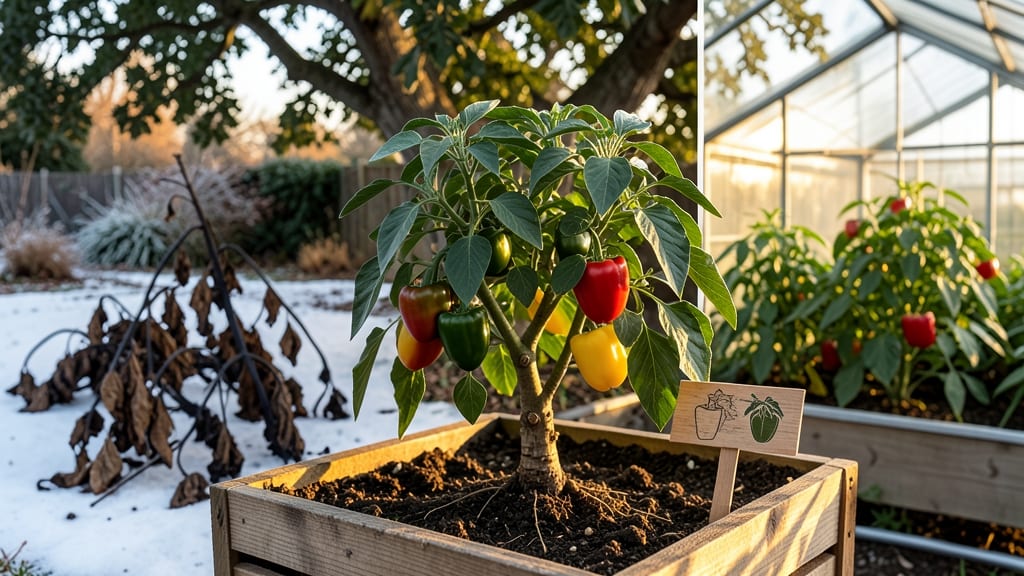
Whether peppers are annuals or perennials depends on your climate—most die back after fruiting in cooler regions, but in frost-free zones, they can regrow year after year from the same roots.
Peppers behave as annuals in most gardens because they're sensitive to cold—even a light frost kills their tops, leaving only the roots alive. 🌱 However, in warmer climates (like USDA zones 9-11), these roots can survive winter and sprout new growth in spring, making them act like perennials.
The key difference lies in temperature tolerance: while peppers won't survive freezing winters, they'll happily regrow if protected from frost.
This dual nature explains why gardeners in mild climates often get multiple harvests from the same plants over several years. The trade-off? Annuals in colder zones require replanting each spring, while perennial peppers demand extra winter care like mulching or row covers to protect their root systems.
💡 In This Article
- Why Peppers Die Back: The Science Behind Their Annual vs. Perennial Nature
- Growing Peppers as Perennials: Climate Zones and Care Tips
Why peppers die back: the science behind their annual vs. perennial nature
Peppers belong to the Solanaceae family, which includes tomatoes and eggplants, and share their sensitivity to cold temperatures. The dieback occurs because pepper plants are tender perennials—their roots can survive winter in frost-free zones, but the above-ground growth is killed by temperatures below 32°F (0°C).
This is why they behave as annuals in most gardens: their energy focuses on fruiting before winter, leaving little reserve for regrowth. 🌱 The plant’s survival strategy prioritizes reproduction over longevity in cooler climates.
The key mechanism is cold-induced dormancy. When temperatures drop, pepper cells undergo osmotic stress, causing water to leave their tissues and protecting them from ice crystal damage. However, this process only works within a narrow range—below 28°F (-2°C), even the roots struggle to survive.
In warmer climates (like Florida or Southern California), peppers naturally enter a dormant state during dry seasons but resume growth when conditions improve, acting like perennials.
Another factor is their photosynthetic efficiency. Peppers allocate most of their energy to fruit production during the growing season, leaving minimal reserves for winter survival. This is why you’ll see gardeners in colder zones replant each year—the original plant’s energy was exhausted by harvest time.
In contrast, perennial peppers in mild climates conserve resources, allowing roots to regenerate shoots year after year. 🌿
Light also plays a role. Shorter winter days reduce chlorophyll production, slowing growth and forcing the plant into dormancy.
This natural cycle explains why peppers in frost-free zones often produce smaller yields in their second year—they’re not as vigorous as first-year plants, but they’re still alive and capable of fruiting again with proper care.
Consider the example of jalapeño peppers in Texas. Gardeners there can leave plants in the ground year-round, and the roots will sprout new growth in spring. The same variety planted in New England will die back completely each winter, requiring annual replanting.
This climate-dependent behavior is what makes peppers such fascinating plants to grow—they adapt their lifecycle based on temperature cues. 🌡️
What most gardeners don’t realize is that even "annual" peppers can sometimes regrow if protected. A thick layer of mulch (like straw or leaves) can insulate roots enough to survive 20°F (-6°C) brief cold snaps, though true perennial behavior requires consistent frost-free winters.
This is why zone 8 gardeners might see partial regrowth—it’s not true perennialism, but a survival trick that blurs the line between annual and perennial growth patterns.