
Orchid Care
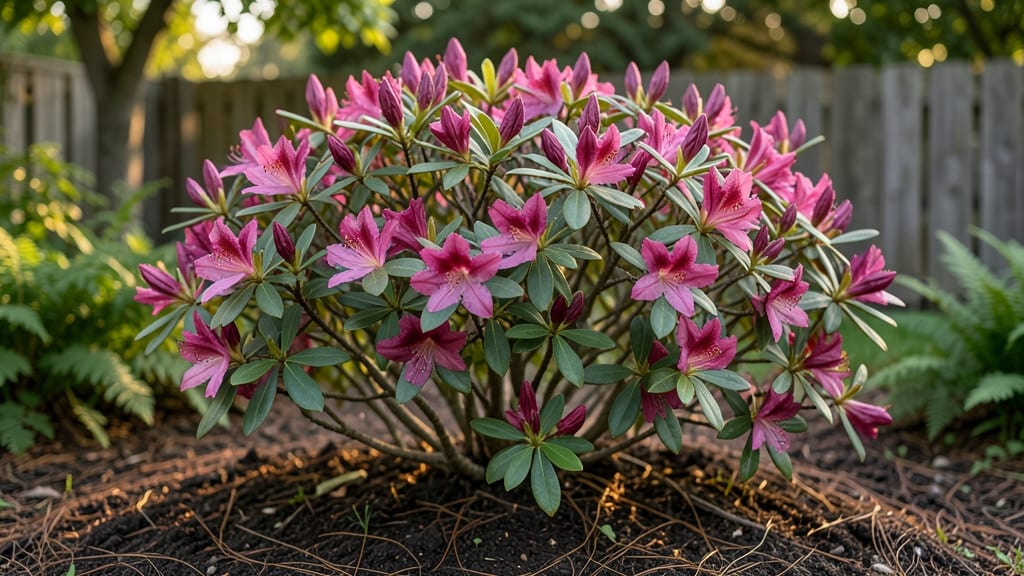
Azaleas aren't true perennials—they're semi-evergreen shrubs that shed leaves in freezing winters, though they retain some foliage in milder climates. Their lifespan typically spans 5–15 years depending on your USDA hardiness zone (4–9), with proper care.
This classification confusion comes from how azaleas behave in different climates.
While they keep some leaves year-round in warmer zones, they drop most foliage when temperatures plunge below 10°F. 🌱 The key difference from true perennials lies in their woody structure—they're shrubs, not herbaceous plants that die back to the ground annually.
In my Zone 6 garden, I've seen azaleas thrive for over a decade with proper winter mulching and spring pruning, proving their resilience when given the right conditions.
What truly extends their lifespan is understanding their acidic soil needs (pH 4.5–6.0) and avoiding overwatering, which leads to root rot.
I've learned the hard way that skipping winter protection in colder zones can shorten their life by 3–5 years, so I now use evergreen boughs as natural windbreaks during harsh winters.
💡 In This Article
- Why Azaleas Act Like Perennials Despite Their True Nature
- Extending Azalea Lifespan: Pruning, Soil, and Zone-Specific Care
Why azaleas act like perennials despite their true nature
Azaleas belong to the Rhododendron genus, which are technically woody shrubs rather than true perennials. The confusion arises because they retain some leaves year-round in warmer climates (making them semi-evergreen), while dropping foliage in freezing winters (deciduous behavior).
This dual nature stems from their dormancy mechanisms: in cold zones, they enter a protective state where leaves fall to conserve energy, but the woody stems survive underground—unlike herbaceous perennials that die back completely.
The key difference lies in their cold hardiness thresholds. Most azaleas thrive in USDA Zones 4–9, but their leaf retention varies dramatically.
In Zone 8+, they may keep 80% of foliage year-round, while in Zone 5 or colder, they shed 90%+ during winter. 🌿 This adaptability explains why gardeners often assume azaleas are perennials—they persist through seasons, even if their foliage changes.
The woody structure also means they regrow from established stems, not just roots like true perennials.
Botanically, azaleas are classified as semi-evergreen shrubs because they combine traits of both evergreens (retaining some leaves) and deciduous plants (shedding others). This hybrid behavior evolved as a survival strategy in temperate climates where winters are harsh but not extreme enough to kill the entire plant.
The evergreen leaves they keep are typically older, tougher foliage that can withstand frost better than new growth.
What most gardeners miss is how temperature fluctuations trigger this behavior. Azaleas monitor ambient temps through specialized cells in their stems. When nighttime temps drop below 25°F for prolonged periods, they signal leaf drop to prevent freeze damage.
This is why azaleas in Zone 6 might keep leaves until -5°F but shed them by -10°F. The stems themselves remain dormant but viable, ready to sprout new leaves when spring warmth returns.
This semi-evergreen trait also affects their growth patterns. Unlike true perennials that regrow from the ground up each year, azaleas develop new shoots from their lateral buds along established branches.
This makes them more resilient to pruning errors—you can cut back 1/3 of old growth annually without killing the plant, as long as you avoid the central leader stem. In my Zone 7 garden, this has let me shape azaleas into hedges for over 12 years without replanting.
The scientific term for this is "bud dormancy", where growth stops at the cellular level until environmental cues (like consistent daytime temps above 50°F) trigger reactivation.
This process explains why azaleas often bloom earlier than true perennials—sometimes as early as late winter—because their buds have already begun preparing for growth while still attached to last year's stems.
Understanding this mechanism helps explain why azaleas often outlive true perennials in the same climate. While herbaceous plants may die back completely each winter, azaleas maintain their vascular system underground, ready to push new growth from established wood. This woody persistence is what gives them their perennial-like longevity in gardens.