
Flowers
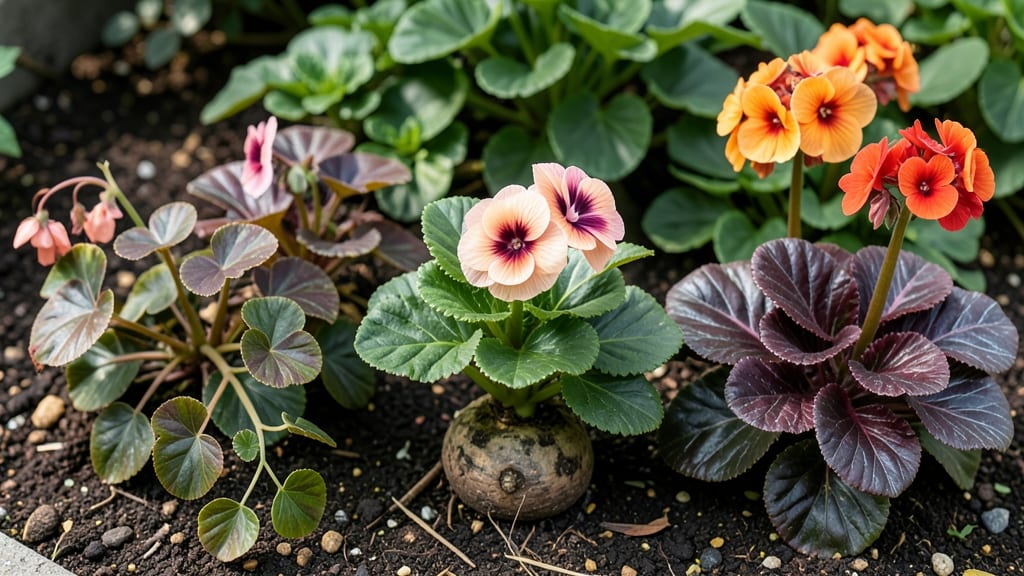
Begonias are not perennial flowers in cold climates—they die back when temperatures drop below 40°F (4°C), but many varieties thrive as annuals or can be overwintered indoors in pots. Some tropical begonias survive mild winters with proper mulching and protection.
Begonias are classified as tender perennials in most climates, meaning they won't survive freezing temperatures like true perennials. 🌱 The key difference lies in their native habitats—most begonias originate from tropical or subtropical regions where frost never occurs.
In colder zones, gardeners often treat them as annuals or take special steps to protect them through winter. For example, Begonia grandis can handle slightly cooler temps than Begonia rex, but neither will tolerate prolonged exposure below 35°F (2°C).
Understanding your specific variety's hardiness zone (USDA 8+ for most) helps determine whether to grow them as annuals or invest in overwintering efforts.
What sets begonias apart is their adaptability—while they won't come back year after year in freezing climates, many varieties can be brought indoors before the first frost. 💫 The secret to successful overwintering lies in proper timing: dig up tubers or cut back foliage before temperatures drop below 50°F (10°C), then provide bright indirect light and maintain 60-70°F (15-21°C) temperatures.
This approach lets you enjoy your begonias for multiple seasons with minimal effort.
💡 In This Article
- How Begonia Hardiness Varies by Type and Climate Zone
- Overwintering Begonias: Step-by-Step Survival Guide
How Begonia hardiness varies by type and climate zone
Begonias' cold sensitivity stems from their tropical origins, where frost never occurs. Their cells contain high moisture levels that freeze and rupture below 40°F (4°C), causing irreversible damage.
This threshold explains why most varieties die back in USDA zones 7 and below—unlike true perennials, which survive -10°F (-23°C) or colder. 🔥 The exception? Some tuberous begonias (like Begonia × tuberhybrida) can tolerate brief dips to 30°F (-1°C) if protected.
Variety matters significantly: Begonia grandis (a semi-hardy type) handles USDA zone 8 winters with mulch, while Begonia rex (a tender type) requires zone 10+ protection. The difference? B. grandis stores nutrients in its rhizomes, allowing regrowth after mild freezes, whereas B. rex lacks this adaptation.
Even a 10°F (-12°C) drop will kill its foliage permanently.
Climate zone mapping reveals hardiness patterns: Tropical begonias (e.g., Begonia boliviensis) need year-round warmth, while tuberous types can survive USDA zone 9 with 3-4 inches of mulch. The critical factor is nighttime temperatures—begonias suffer more from chilly evenings than daytime heat.
In zone 8, gardeners often grow them as annuals, while zone 10+ enthusiasts enjoy perennial growth with minimal care.
What most gardeners overlook is the role of soil moisture in cold damage. Wet soil conducts cold more efficiently, accelerating cell death. In zone 7, even Begonia grandis will fail if planted in poorly draining soil during winter.
The solution? Raised beds with organic mulch (straw or leaves) create a 5°F (3°C) warmer microclimate at root level.
For visual comparison, imagine a spectrum: Hardy end (zone 8) includes B. grandis and B. ferdinandi-mulleriana, while the tender end (zone 10+) features B. rex and B. dregei. The transition zone (zone 9) offers the most flexibility—where tuberous types thrive with heavy mulching and winter watering restrictions.
Pro tip: Check your begonia's leaf texture—thicker leaves (like B. grandis) indicate better cold tolerance, while waxy leaves (like B. rex) signal tropical sensitivity. This visual cue helps you select varieties suited to your climate without guesswork. 💫