
Plants
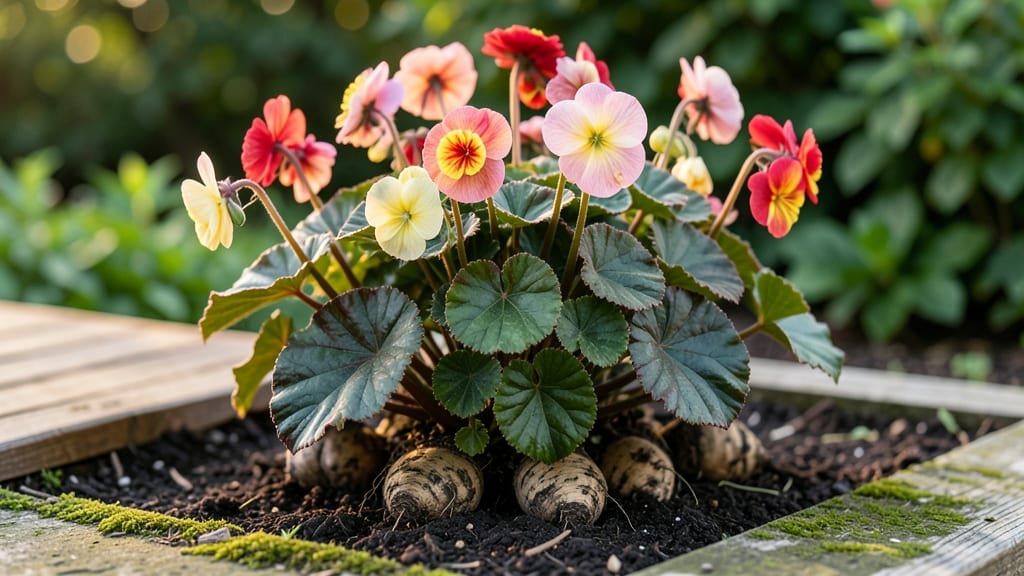
Tuberous begonias act as perennials only in frost-free zones (USDA Zones 10-12), where they bloom continuously. In colder climates, they retreat underground as dormant tubers each fall, needing careful storage to regrow annually.
These plants rely on their tuber roots to survive harsh winters, storing nutrients until spring's warmth signals regrowth. 🌱 Unlike true perennials that stay above ground, tuberous begonias enter dormancy when temperatures drop below 50°F, making their perennial status climate-dependent.
Gardeners in colder regions must mimic their natural cycle by digging and storing tubers in dry, cool conditions.
What sets them apart is their two-phase life cycle: above-ground blooms in warm months and underground survival during cold. This adaptation explains why they thrive in tropical climates but require human intervention elsewhere.
The key to successful overwintering lies in timing—waiting until foliage yellows before harvesting tubers ensures they've fully absorbed stored energy.
💡 In This Article
- Tuberous Begonia Growth Cycle Explained
- How to Overwinter Tuberous Begonias in Cold Climates
Tuberous begonia growth cycle explained
Tuberous begonias follow a distinct seasonal rhythm where their perennial nature manifests differently based on climate. In frost-free regions like USDA Zones 10-12, they behave like true perennials, continuously producing lush foliage and vibrant blooms throughout the year.
The magic happens through their specialized tuber roots, which act as natural storage units containing starches and nutrients. These tubers can swell to 2-3 inches in diameter during active growth, storing enough energy to fuel both current growth and future regrowth.
The growth cycle begins in spring when soil temperatures consistently reach 60°F, triggering the tubers to sprout. Within 4-6 weeks, you'll see rapid above-ground growth as the plant focuses energy on developing leaves and stems before flowering.
The flowering phase typically peaks in summer, producing clusters of 1-2 inch blooms that can last for months with proper care. What's fascinating is how the plant's growth mirrors its environment—cooler nights actually enhance flower production, while excessive heat can cause buds to drop prematurely.
As temperatures begin dropping below 50°F in autumn, tuberous begonias enter their dormancy phase. This isn't sudden death—it's an intelligent survival strategy. The plant systematically reallocates nutrients from leaves and stems back into the tubers, which become denser and more resilient.
You'll notice the foliage yellowing and wilting as the plant conserves energy, but the tuber remains alive underground, waiting for warmer conditions. This transition period is critical—if you disturb the plant too early, it may not complete the nutrient transfer process properly.
The tuber's dormancy isn't just about survival—it's about preparation. During winter storage, these underground structures undergo biochemical changes that actually improve their viability. Studies show that properly stored tubers can maintain 90% viability for up to 6 months when kept at 40-50°F with 50-60% humidity.
The key is preventing moisture loss while allowing minimal respiration. Too dry, and the tuber shrivels; too moist, and it rots. This delicate balance explains why gardeners must handle tuber storage with precision in colder climates.
Spring regrowth begins when tubers sense consistent warmth through a process called thermoperiodism. The plant's internal clock detects rising temperatures and triggers enzymatic activity that breaks down stored starches into sugars for new growth.
What's remarkable is how this cycle repeats annually—each tuber can produce multiple generations of plants over decades if cared for properly. This biological resilience is what makes tuberous begonias such prized garden plants, despite their climate-dependent perennial nature.
Here's what most gardeners overlook: the tuber's size directly correlates with next year's performance. A well-fed tuber that reaches 2.5 inches in diameter will produce a stronger, more vigorous plant than a smaller one.
This is why experienced growers focus on providing optimal growing conditions during the active season—every extra inch of tuber growth translates to more blooms and healthier foliage in subsequent years.