
Plants
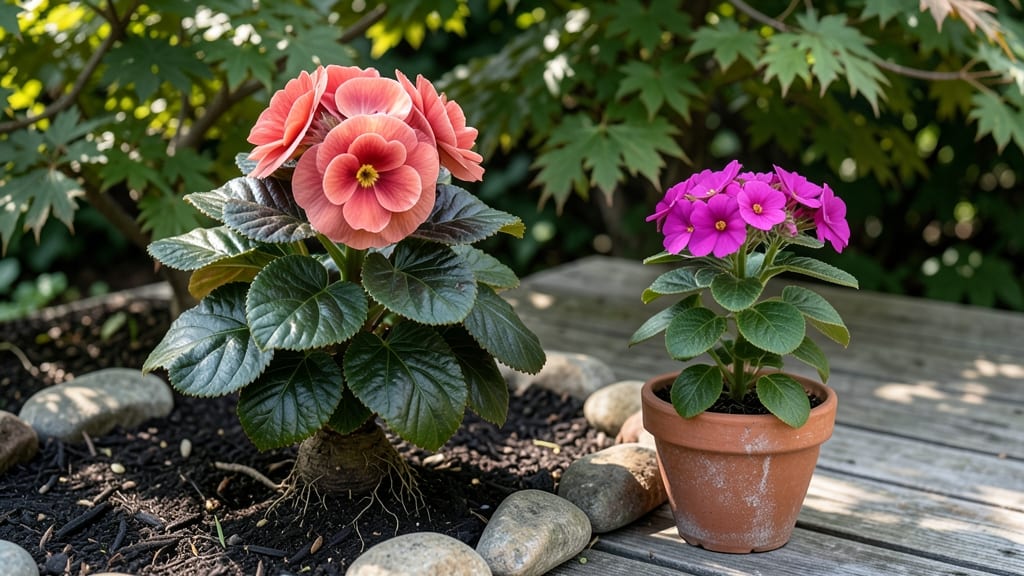
Begonia plants act as perennials only in frost-free zones or when grown from tubers, since their underground storage structures allow them to regrow season after season. Most types, however, will freeze back without protection or indoor overwintering.
The key to understanding begonia perennials lies in their root systems. 🌱 Tuberous varieties store energy underground, letting them regenerate each spring, while fibrous-rooted types often behave as annuals in colder regions. This explains why your neighbor's begonias might thrive year-round in Florida but need winter care in New England.
For gardeners in colder climates, overwintering becomes essential. 💛 Simply digging up tubers, drying them, and storing them in a cool, dark place prevents them from dying back entirely. I've found that replanting these tubers in early spring gives me a head start on the growing season.
Even in warmer areas, not all begonias are created equal. Some fibrous-rooted hybrids may not survive winter dormancy naturally, which is why many growers treat them as tender perennials—requiring annual replanting or container growing for winter protection.
💡 In This Article
- How Begonia Tubers Determine Their Perennial Nature
- Overwintering Begonias: Step-by-Step Survival Guide
How Begonia tubers determine their perennial nature
The secret to begonia perennials lies in their tuberous roots, which function like nature's built-in survival kit. These thick, potato-like structures store starches and nutrients during dormancy—typically from late fall through early spring—allowing the plant to regenerate when conditions improve.
Unlike fibrous-rooted begonias (which often die back completely), tuberous varieties like Begonia tuberhybrida or Begonia boliviensis can survive multiple growing seasons in frost-free zones.
Temperature sensitivity is the critical factor. Tubers enter dormancy when nighttime temperatures drop below 50°F (10°C), but they won't regrow until soil temperatures rise above 60°F (15°C) in spring. This explains why begonias thrive as perennials in USDA zones 10-12 but require overwintering protection in zones 7-9.
The tuber's protective outer skin prevents desiccation, while its internal structure maintains metabolic activity at just 1-2% of summer rates—enough to sustain life but not growth.
What sets tuberous begonias apart is their regrowth mechanism. When spring arrives, the tuber's apical bud (growth point) detects warmth and moisture, triggering the production of gibberellins—plant hormones that signal new leaf and stem development.
This process can begin as early as 4-6 weeks before last frost if tubers are stored properly. In contrast, fibrous-rooted types lack this storage capacity and typically die back to the ground each winter, requiring annual replanting.
Not all begonias follow this pattern. Some hybrids, like Begonia rex, develop rhizomatous roots instead of true tubers, making them less cold-hardy. These varieties often behave as annuals in colder climates unless grown in containers that can be moved indoors.
The key difference? Tuberous types can lose up to 80% of their foliage and still regrow from the same storage organ, while fibrous-rooted plants must regenerate entirely from seed or cuttings.
Consider the Begonia elatior—a popular hybrid that produces stunning flowers but lacks tuberous storage. In zone 6, it will freeze to the ground each winter, requiring replanting from cuttings.
Meanwhile, a Begonia tuberhybrida in the same zone can be dug up, dried, and replanted the following spring, emerging with 20-30% larger tubers than the previous year if cared for properly.
This biological adaptation isn't just about survival—it's about efficiency. Tubers can store enough energy to produce up to 50% more foliage in their second year compared to first-year growth from seed.
That's why experienced gardeners often prefer tuberous varieties for long-term garden beds, knowing they'll return year after year with minimal effort.