
Flowers
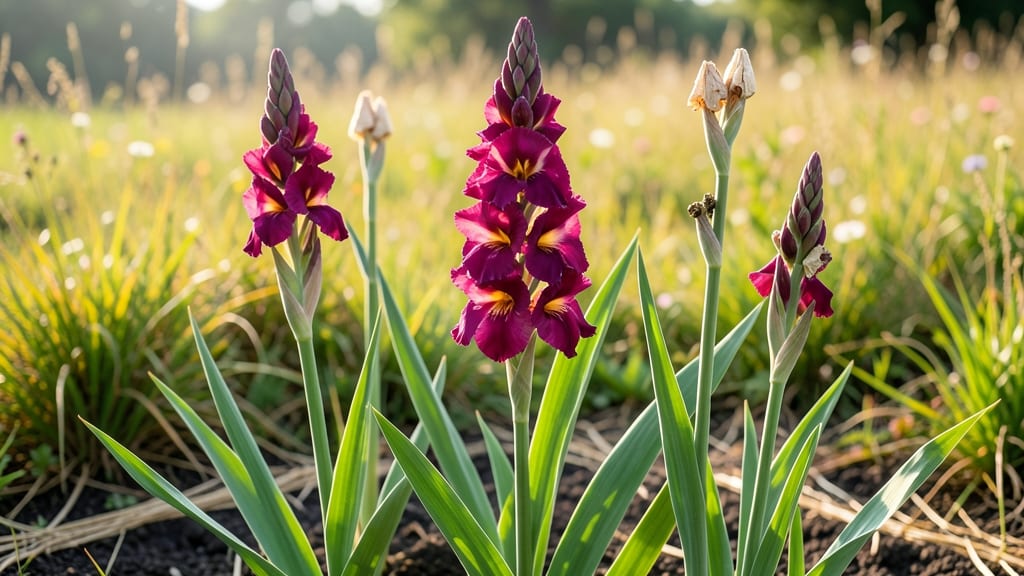
Whether gladioli are annual or perennial depends on climate: they act as annuals in cold regions where their corms die back each winter, but in warmer areas, they regrow yearly from the same corms with proper overwintering care.
Gladioli's lifespan hinges on their underground corms, which store energy like natural batteries. In freezing climates, these corms simply go dormant, leading gardeners to treat them as annuals. 🌱 However, with strategic mulching and soil protection, you can coax them back to life each spring—turning them into perennials.
The key difference lies in temperature: regions with mild winters allow the corms to remain active year-round, while harsh freezes force a yearly restart.
For gardeners in transitional zones, the solution often lies in lifting and storing corms during winter months. This mimics the natural dormancy cycle while preventing frost damage.
Think of it like putting your plants into hibernation mode—just like a bear preparing for winter, your gladioli corms need the right conditions to wake up refreshed each spring.
💡 In This Article
- How Gladiolus Corms Determine Their Lifespan
- Growing Gladioli as Perennials: Step-by-Step Care Tips
How gladiolus corms determine their lifespan
Gladiolus corms act like biological storage units, packed with starches and nutrients that fuel regrowth. These underground structures contain specialized cells that convert sunlight energy into chemical energy during the growing season, storing it for future use.
When temperatures drop below 40°F, the corms trigger a natural dormancy mechanism, halting growth to survive winter. This process involves hormonal shifts where abscisic acid (ABA) accumulates, signaling the plant to conserve energy and enter a resting state.
The lifespan difference between annual and perennial behavior comes down to temperature thresholds. In regions where winters dip below 20°F, the corms' cell membranes rupture from ice crystal formation, effectively killing the plant's ability to regrow.
However, in milder climates (like USDA zones 8-10), the corms remain viable year-round, with temperatures between 50-60°F stimulating new shoots in spring. This creates a clear divide: freezing climates force annual treatment, while warmer areas enable perennial growth.
What's fascinating is how these corms "age" each season. Each growing cycle produces a new corm at the base while the old one shrinks, creating a chain of smaller corms over time.
This is why gardeners often dig up and divide clumps every 3-4 years—to prevent overcrowding and maintain vigor. The older corms become less efficient at storing energy, which directly impacts the plant's ability to survive dormancy. Think of it like a battery losing its charge over multiple cycles.
Light exposure also plays a crucial role in this lifecycle. Gladioli need 6-8 hours of sunlight daily to build sufficient energy reserves in their corms. In northern latitudes, this means summer growth must be aggressive enough to compensate for the coming winter dormancy.
The plant's leaves act like solar panels, converting light into carbohydrates that get transported to the corms. Without adequate light, the corms simply won't store enough energy to survive dormancy.
Climate comparisons reveal striking differences. In tropical regions where temperatures rarely drop below 55°F, gladioli can flower continuously year-round, with corms growing larger each season. Meanwhile, in temperate zones, gardeners must implement artificial overwintering strategies—like lifting corms and storing them in 40-50°F conditions—to mimic the plant's natural tropical behavior.
This creates a fascinating parallel between climate adaptation and gardening techniques.
Understanding these biological mechanisms helps explain why gladioli often look like annuals in cold climates. The corms aren't dying—they're simply following their programmed survival strategy. With the right conditions, you can override this natural cycle and transform your gladioli from seasonal performers into long-term garden stars. 🌿