
Orchid Care
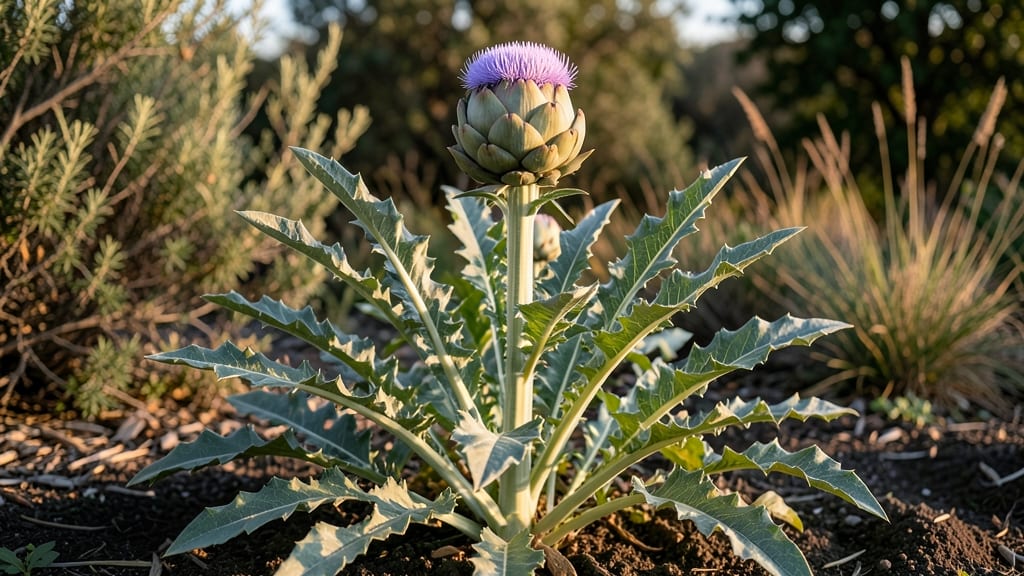
Artichokes are perennial plants in warm climates but are often grown as annuals in colder regions due to their underground corms, which can survive multiple seasons with proper care and frost protection.
Whether artichokes thrive as perennials or annuals depends entirely on where you grow them.
In frost-free zones like California, their thick, bulb-like corms store enough nutrients to regrow year after year, making them true perennials. 🌱 However, in colder climates where temperatures drop below 20°F, the corms often fail to survive winter without protection, forcing gardeners to treat them as annuals.
The key difference lies in how well you can protect those corms—mulching heavily or providing temporary cold frames can sometimes coax a second harvest.
For gardeners in marginal zones, the decision isn't just about climate—it's also about timing. Planting artichokes in early spring gives the corms time to establish before winter, while late-season harvests may not have enough energy stored for regrowth.
The corms' ability to store starches makes them resilient, but they're not invincible. In my experience, even well-protected corms sometimes produce smaller yields in their second year, which is why many gardeners opt to replant annually for consistent harvests.
💡 In This Article
- How Artichoke Corms Determine Their Growth Cycle
- Growing Artichokes as Perennials: Climate and Care Tips
How artichoke corms determine their growth cycle
Artichoke plants rely on their corms—thick, bulb-like underground storage organs—to determine whether they'll return as perennials or die back as annuals. Unlike tubers (like potatoes), these corms store starches, sugars, and nutrients that fuel regrowth.
In ideal conditions, a single corm can produce 3-5 new shoots each spring, with the plant channeling energy from its stored reserves to produce new leaves, stems, and eventually flower buds. This biological mechanism is why artichokes naturally thrive in Mediterranean climates where winters are mild and frost-free.
The corm's survival hinges on temperature tolerance. When soil temperatures stay above 40°F consistently, the corm remains metabolically active, slowly replenishing its nutrient stores during the growing season. However, when temperatures drop below 20°F for extended periods, the corm's cells begin to freeze, disrupting its ability to store energy.
The damage isn't always immediate—sometimes the corm appears intact but lacks the vitality to regenerate, leaving gardeners with a false sense of security. 🌱 This is why artichokes in zones 7-10 (USDA classification) can reliably return year after year, while those in colder regions often fail to survive.
Dormancy plays a crucial role in this cycle. During autumn, artichoke plants enter a natural dormancy phase where growth slows dramatically. The corm shifts from active nutrient production to conservation mode, converting excess sugars into starches for winter storage.
This process mirrors how other perennial vegetables like asparagus or rhubarb prepare for cold months. The difference is that artichoke corms are less cold-hardy—while asparagus crowns can tolerate -20°F, artichoke corms typically succumb to damage at 15°F or lower without protection.
What most gardeners don't realize is how the corm's size affects its survival odds. A mature artichoke corm (about 3-4 inches in diameter) has significantly more stored energy than a small one (1-2 inches).
This is why experienced growers recommend planting larger corms—they're better equipped to weather mild freezes and still produce a decent harvest the following season. The corm's outer layers also act as a natural insulator, but they're not foolproof against prolonged cold snaps.
Botanically, artichokes belong to the thistle family (Asteraceae), and their corms share characteristics with other perennial plants that use underground storage organs. However, their sensitivity to cold distinguishes them from hardier perennials like Jerusalem artichokes, which can survive -30°F thanks to their deeper root systems.
The artichoke's shallow corm placement (typically 4-6 inches below soil) makes it vulnerable to temperature fluctuations near the surface, where frost can penetrate quickly.
Understanding this biological process helps explain why some gardeners in marginal climates (like zone 6) report success with artichokes while others don't. The difference often comes down to microclimate protection—whether the corms are planted in a south-facing slope, covered with thick mulch, or insulated with straw bales.
Even a 2-3°F difference in soil temperature can mean the difference between survival and failure for these sensitive storage organs. ✨