
Plants
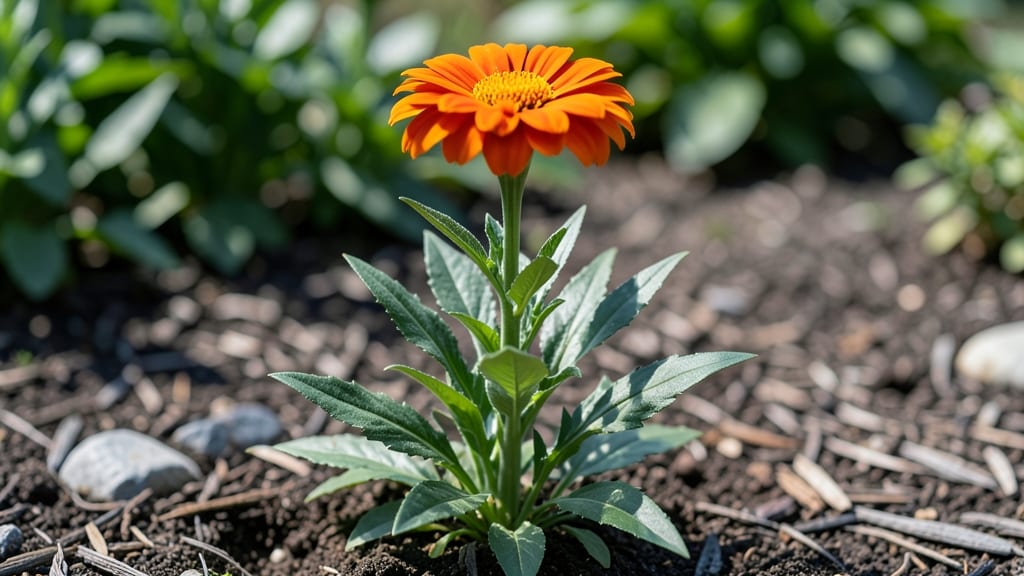
African marigolds are not true perennials in most climates, dying back to the ground in winter but often returning from their taproots if conditions are right. They thrive as annuals in cooler zones but may self-seed prolifically, creating a perennial-like presence.
African marigolds (Tagetes erecta) behave like perennials in warmer regions but are classified as tender annuals because they can't survive freezing temperatures. 🌱 Their deep taproots allow them to regrow from the base in mild winters, but prolonged frost will kill them back.
In colder climates, they complete their lifecycle as annuals, producing seeds that may sprout again the following spring, giving the illusion of perennial behavior.
What sets them apart from true perennials like French marigolds is their inability to withstand prolonged cold—African marigolds thrive in USDA zones 9-11, while French marigolds handle zones 2-11.
The key to extending their season lies in proper care: mulching heavily in fall or growing them in containers that can be moved indoors during cold snaps.
💡 In This Article
- African Marigold Lifecycle and Cold Hardiness
- Extending African Marigolds’ Season: Planting and Care Tips
African marigold lifecycle and cold hardiness
African marigolds (Tagetes erecta) belong to the Asteraceae family but differ fundamentally from true perennials in their cold tolerance. Their botanical classification as a tender annual stems from their inability to survive prolonged exposure to temperatures below 28°F (-2°C).
Unlike French marigolds (Tagetes patula), which can handle 20°F (-7°C) with proper protection, African marigolds' thick taproots only provide limited frost resistance. These roots can penetrate 2-3 feet deep, storing nutrients to regrow in spring—but only if winter temperatures stay above 25°F (-4°C) for extended periods.
The key survival mechanism lies in their taproot system, which acts like a natural storage organ. When temperatures drop below freezing, the above-ground foliage dies back, but the root remains dormant until soil temperatures rise above 50°F (10°C) in spring.
This process mirrors true perennials, but the critical difference is African marigolds lack the woody stems or rhizomes that help plants like peonies survive harsh winters. Their energy is focused on rapid above-ground growth during warm seasons rather than structural winter protection.
In colder climates (USDA zones 3-8), African marigolds behave like classic annuals, completing their lifecycle in 90-120 days from seed. However, they often self-seed prolifically, creating dense stands that may fool gardeners into thinking they're perennials.
The seeds can remain viable in soil for 2-3 years, germinating whenever conditions are favorable. This resilience explains why you might see them returning year after year even in areas where they technically shouldn't overwinter.
What most gardeners overlook is the temperature timing that determines survival. A brief cold snap below 30°F (-1°C) might kill the foliage but leave roots intact, while prolonged exposure below 20°F (-7°C) will kill the entire plant.
This threshold explains why African marigolds thrive in zones 9-11 but struggle in northern climates. The plants' high water content also makes them vulnerable to frost damage, as ice crystals form in their cells at 32°F (0°C), disrupting cellular function.
Comparing them to French marigolds highlights the differences: French types develop woody bases that can survive 20°F (-7°C) with mulch, while African marigolds remain herbaceous. The taller stature of African marigolds (reaching 3-5 feet) also makes them more susceptible to wind damage during winter storms, further limiting their hardiness.
Their bright orange and yellow blooms may dominate summer gardens, but their delicate winter survival hinges on precise temperature management.
Understanding these biological limits helps explain why African marigolds often reappear in gardens each spring—through self-seeding rather than true perennial regrowth. The seeds germinate when soil temperatures reach 60°F (15°C), creating new plants that may flower 60-80 days later.
This cycle can create the illusion of perennial behavior, especially in mild winters where some roots might survive and resprout alongside new seedlings.