
Flowers
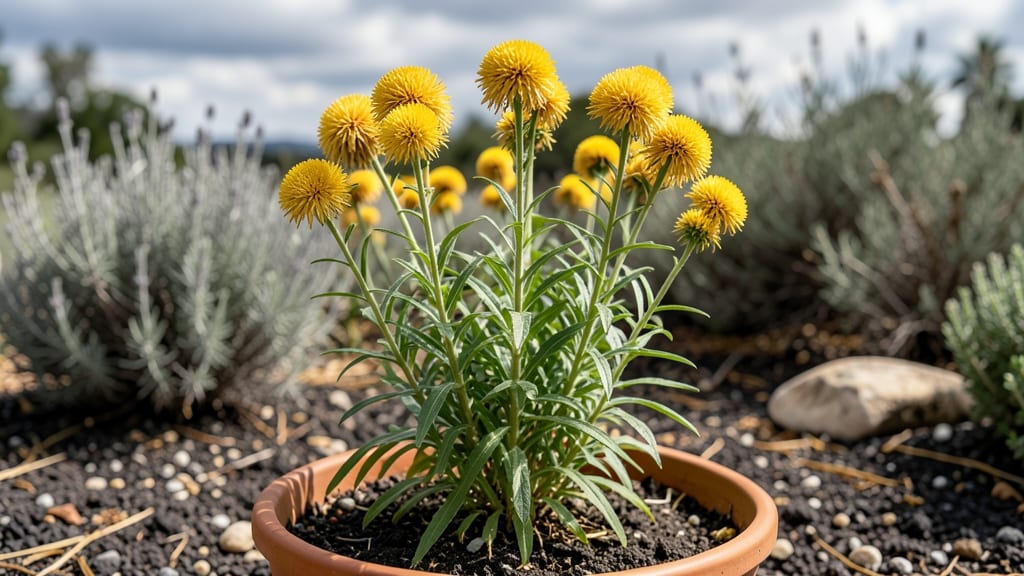
Straw flowers are perennials in warm climates, where they die back to the ground each winter but regrow from their roots in spring, though they're often grown as annuals in colder regions where frost kills them back each year.
This dieback-and-regrowth pattern is what makes straw flowers unique among perennials. 🌱 Unlike plants that stay green year-round, their woody stems and deep root systems store energy underground during dormancy, allowing them to bounce back stronger in spring.
In colder zones, gardeners can still extend their lifespan by cutting back stems in fall and replanting healthy cuttings the following season.
The key to their survival lies in their hardy nature—straw flowers thrive in USDA zones 9-11 but can be coaxed into returning in zones 5-8 with protective measures like mulching or container growing.
Their ability to regenerate from roots makes them a favorite for long-term gardeners who appreciate low-maintenance, drought-tolerant blooms.
💡 In This Article
- Understanding Straw Flower Perennial Growth Cycles
- Caring for Straw Flowers in Different Climates
Understanding straw flower perennial growth cycles
Straw flowers (Helichrysum) exhibit a fascinating survival strategy through their woody stems and deep taproots, which store carbohydrates and nutrients during dormancy.
Unlike many perennials that maintain some foliage year-round, straw flowers undergo complete dieback in winter, entering a state called vernalization—a biological process where cold exposure triggers spring regrowth.
Their roots can extend 12-18 inches deep, accessing water and nutrients even in dry conditions, while the stems develop a protective bark-like texture that insulates against frost.
The temperature threshold for dormancy typically occurs when nighttime temperatures drop below 40°F (4°C) for extended periods. At this point, the plant's meristematic cells (growth centers) become dormant, halting above-ground growth. What's remarkable is how these cells remain viable underground, ready to resume activity when temperatures rise again.
In USDA zones 9-11, this cycle happens naturally each year, while in cooler zones, the lack of consistent cold triggers may prevent full dormancy, leading to weaker regrowth.
This dieback-and-regrowth pattern isn't just about survival—it's a renewal mechanism. The stored energy in roots allows straw flowers to produce 20-30% more blooms in subsequent seasons compared to their first year. The woody stems also develop more robust vascular systems each year, improving water transport efficiency.
This is why established straw flowers often outperform younger plants in terms of drought resistance and flower production.
What most gardeners don't realize is how light exposure affects this cycle. Straw flowers require 6-8 hours of direct sunlight daily to maintain their dormancy triggers. In shaded conditions, the plant may not fully enter dormancy, leading to weak stems that struggle to regrow.
The combination of cold temperatures and sunlight creates the perfect conditions for their annual renewal process.
Scientifically, this growth pattern falls under hemicryptophyte classification—plants that survive adverse conditions by keeping their renewal buds near the soil surface. The buds remain protected by leaf litter or mulch during winter, while the roots continue absorbing moisture.
This adaptation explains why straw flowers can bounce back so vigorously from what appears to be complete death each year.
Consider this: A straw flower's root system can live for 5-7 years if conditions are ideal, while the above-ground portions regenerate annually. This makes them one of the most resilient perennials for dry, sunny gardens.
Their ability to "reset" each year through dormancy actually enhances their longevity and flowering capacity over time.