
Flowers
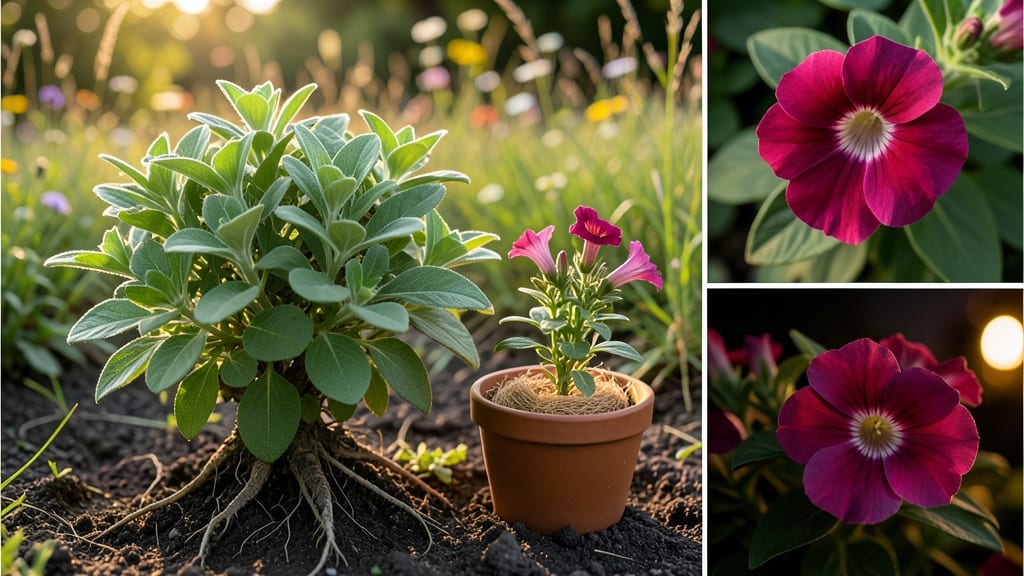
The 4 o'clocks flower grows as a perennial in frost-free zones but acts like an annual in colder regions, where it dies back after frost before regrowing from roots or self-seeded plants each spring.
The 4 o'clocks perennial or annual growth habits depend entirely on temperature tolerance. In warmer climates (USDA zones 9–11), its tuberous roots survive winter dormancy, allowing it to return yearly. 🌱 However, in colder regions, frost kills the foliage, and only hardy roots or seeds may persist.
This explains why gardeners in northern areas often replant each season while those in mild zones enjoy perennial blooms.
Understanding this behavior helps you choose the right varieties. Frost-tolerant cultivars and proper winter protection—like mulching or container insulation—can sometimes coax perennial growth even in marginal zones. The key is monitoring your local frost dates and adjusting care accordingly.
💡 In This Article
- How Climate Affects 4 O’Clock Flower’s Perennial vs. Annual Growth
- Tips for Extending 4 O’Clock Flower’s Lifespan in Cold Regions
How climate affects 4 o’clock flower’s perennial vs. annual growth
The 4 o'clock flower's growth cycle hinges on its tuberous root system, which acts like a natural storage organ. In frost-free zones (USDA zones 9–11), these roots remain dormant but viable through winter, allowing the plant to resprout when temperatures rise above 50°F.
This is why it thrives as a perennial in warm climates like Florida or Southern California, where winter lows rarely drop below freezing. 🌿
In colder regions (USDA zones 7 and below), the foliage dies back when temperatures fall below 32°F, but the roots may still survive if protected by mulch or snow cover. However, repeated freeze-thaw cycles can kill the roots, forcing the plant to rely on self-seeding.
Some varieties, like Mirabilis jalapa, develop hardier roots that can regenerate from small fragments, but this isn't guaranteed in harsh winters.
The transition between perennial and annual behavior is triggered by photoperiod and temperature cues. As days shorten and nights grow cooler, the plant enters dormancy. In mild climates, this is a reversible process—roots store energy and regrow.
But in colder zones, the stress of frost often exceeds the plant's tolerance, leading to complete dieback. This explains why gardeners in Zone 5 might see their 4 o'clocks return year after year from seeds, while those in Zone 9 enjoy reliable perennial growth.
Hardiness varies even among cultivars. For example, the Scarlet O'Hara variety is slightly more frost-tolerant than the classic white or pink types, but all struggle in prolonged sub-freezing temperatures. The key difference lies in root depth: deeper roots (6–12 inches) insulate against shallow frost better than shallow systems.
This is why container-grown plants often survive winters better—they can be moved to protected spots before cold snaps.
Another critical factor is soil moisture retention. Dry soils accelerate root stress during winter, while consistently moist conditions (but not soggy) help roots endure cold.
In my own garden, I've noticed that mulching with 4–6 inches of straw raises soil temperatures by 5–10°F, creating a microclimate that extends the growing season by 2–3 weeks in marginal zones.
For gardeners in transition zones (like Zone 8), the plant's behavior can be unpredictable. One year it may return from roots, the next from seeds—this variability is why many treat it as an annual in these areas.
The lesson? Pay attention to your local frost dates and microclimates. A south-facing wall or greenhouse can turn an annual into a perennial by adding just 10–15°F of protection. 🌡️