
Container Gardens
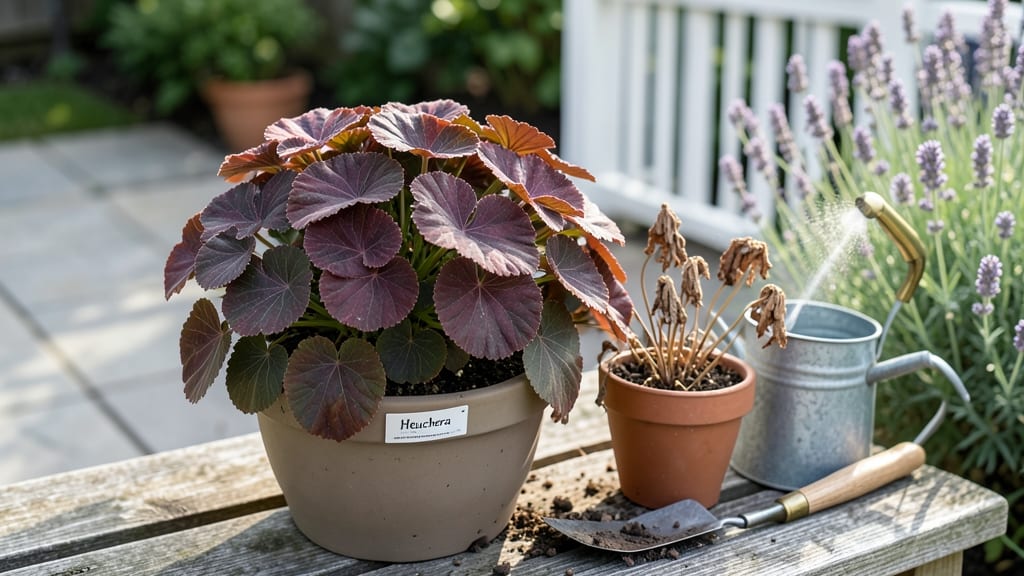
Perennials will come back in a pot if you choose cold-resistant varieties like lavender, sedum, or hostas, but they need winter protection—proper insulation, drainage, and shelter from freezing temps—to thrive through the season. The right container size and well-draining soil are also crucial for their long-term survival.
Cold-hardy perennials in containers face unique challenges because pots freeze faster than ground soil and drain moisture more quickly. 🌱 I've seen lavender and heuchera bounce back beautifully after winter when wrapped in burlap and placed on insulated trays, while smaller pots (under 12 inches) often need extra protection.
The key is mimicking their natural growing conditions—adding mulch, moving them to sheltered spots, and avoiding overwatering before dormancy.
For best results, I recommend using containers with at least 12-15 inches of depth and drainage holes, filled with a mix of 50% potting soil and 50% perlite or sand to prevent root rot.
Some perennials, like Russian sage, even benefit from a thick layer of straw mulch (3-4 inches) over the soil before the first frost. This combination gives them the stability they need to survive winter and rebound stronger in spring.
💡 In This Article
- Why Container-Grown Perennials Struggle in Winter
- Best Cold-Hardy Perennials for Pots and Winter Care Tips
Why container-grown perennials struggle in winter
Potted perennials face a triple threat in winter: faster temperature drops, root stress from drying soil, and moisture loss that ground-planted perennials don’t experience. Containers freeze from the outside in, creating a deadly ice shell around roots within hours of sub-freezing temps—unlike ground soil, which insulates gradually.
This is why a 10°F night might kill a potted hosta but leave its ground counterpart unharmed.
The science gets even trickier with hardiness zone shifts. A perennial rated for Zone 5 in the ground may only survive Zone 7 in a pot because containers lack the thermal mass of soil.
For example, lavender—hardy to -15°F in the ground—often dies in pots below 10°F unless heavily insulated. The root zone in containers also dries out 3-5 times faster than in-ground beds, making winter dehydration a silent killer.
Root stress compounds the problem. Perennials rely on cold acclimation—a process where roots gradually adjust to lower temps. In pots, this process gets interrupted by rapid temperature swings.
A sunny winter day might warm the soil to 40°F, tricking roots into thinking spring has arrived, only for nighttime temps to plunge to 15°F. This metabolic whiplash weakens the plant’s ability to store energy for regrowth.
Moisture dynamics play a critical role too. Frozen soil in pots can’t absorb water, and any liquid added sits on top, risking root rot. Meanwhile, the container’s edges act as a heat sink, pulling warmth from the roots faster than the center.
This creates a thermal gradient where outer roots freeze while inner roots remain marginally viable—a recipe for uneven dieback. 🌱
Even the container material matters. Terracotta pots lose heat 50% faster than plastic or fiberglass, while black plastic absorbs solar heat during the day but radiates it away at night. The solution? Choose thick-walled containers (at least 1 inch thick) with light-colored exteriors to reflect winter sun.
Adding a second pot (like a plastic liner) creates an insulating air gap, slowing heat loss dramatically.
Don’t overlook the wind factor. Containers are exposed to wind on all sides, accelerating moisture loss and temperature drops. A potted sedum might survive -5°F in a sheltered spot but fail at the same temp if blasted by wind.
This is why gardeners swear by burlap wraps—they reduce wind chill by 3-5°F**, making the difference between survival and loss.