
Flowers
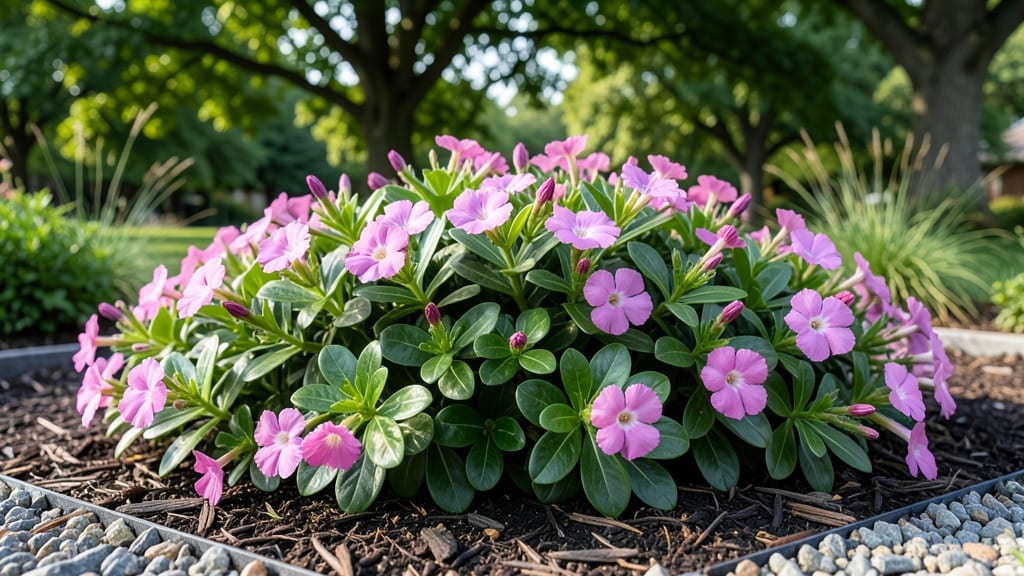
Are vinca flowers annual or perennial? They're actually perennials that go dormant in winter, making them appear to die back completely each year before regrowing from their roots with fresh foliage and blooms in spring.
This clever survival strategy lets vinca plants conserve energy during cold months while maintaining their root systems underground. 🌱 The confusion arises because many gardeners mistake their winter dieback for annual behavior, especially when leaves turn brown and crispy.
What's fascinating is how these plants store nutrients in their roots—this stored energy fuels their dramatic spring comeback, often producing even more vigorous growth than the previous season.
In milder climates where winters aren't severe, you might even notice vinca keeping some evergreen leaves throughout the year. This hardiness is one reason they're such popular ground covers—they bounce back reliably when other plants might struggle.
The key difference from true annuals is that vinca plants have the built-in resilience to regenerate from their root systems rather than needing to be replanted each year.
💡 In This Article
- Why Vinca Flowers Appear to Die Each Year
- Caring for Perennial Vinca Through Seasons
Why vinca flowers appear to die each year
Vinca plants employ a clever survival mechanism called seasonal dormancy, where they deliberately shed leaves and growth in response to cold temperatures. This isn't death—it's a strategic energy conservation strategy.
When daytime temperatures drop below 50°F and nights consistently reach freezing, vinca's leaves begin producing ethylene gas, a plant hormone that triggers leaf abscission (the natural process of leaves falling).
This happens because the plant redirects its energy from maintaining foliage to protecting its root system, which remains active just below the frost line.
The root system plays the starring role in vinca's perennial performance. These plants develop extensive, fibrous roots that can reach 12-18 inches deep in well-draining soil. During dormancy, the roots store carbohydrates and nutrients in specialized cells called parenchyma, creating a natural food reserve.
This underground storage system can sustain the plant through months of winter, with some varieties even maintaining 10-20% of their root biomass active during cold snaps. 🌱 The roots also produce growth inhibitors that prevent premature spring shoots until conditions are optimal.
What makes this dormancy particularly clever is the plant's ability to "sense" seasonal changes. Vinca uses a combination of photoperiodism (day length detection) and thermoperiodism (temperature fluctuations) to time its dormancy perfectly. When days shorten in autumn and nights grow consistently cold, the plant initiates its shutdown protocol.
The leaves turn brown and crispy as they dry out, but the roots remain hydrated and metabolically active—ready to spring back to life when temperatures stabilize in spring.
The spring regrowth begins when soil temperatures reach 55-60°F, typically 4-6 weeks before the last frost. New shoots emerge from the root crown (the area where roots meet stems), often producing 20-30% more growth than the previous season due to the stored nutrients.
This explains why established vinca plants often appear more vigorous after their winter "rest" than they did in summer. The key difference from true annuals is that vinca plants maintain their genetic material and structural integrity through dormancy rather than completing their life cycle.
Interestingly, vinca's dormancy strategy varies by species. Vinca minor (lesser periwinkle) often retains some evergreen leaves in mild winters, while Vinca major (greater periwinkle) may show more complete dieback. This variation occurs because Vinca major has thicker, more insulating root systems that can handle slightly colder conditions.
The leaf retention in milder climates isn't true evergreenness—it's a compromise between energy conservation and maintaining some photosynthetic capacity during winter.
This seasonal adaptation explains why vinca thrives in USDA zones 4-9 despite its dramatic winter appearance. The plants have evolved to balance energy conservation with rapid regrowth potential.
When gardeners see vinca's winter dieback, they're actually witnessing one of nature's most efficient survival strategies—where the plant appears dead but remains alive and ready to rebound with new vigor when conditions improve. 💫