
Flowers
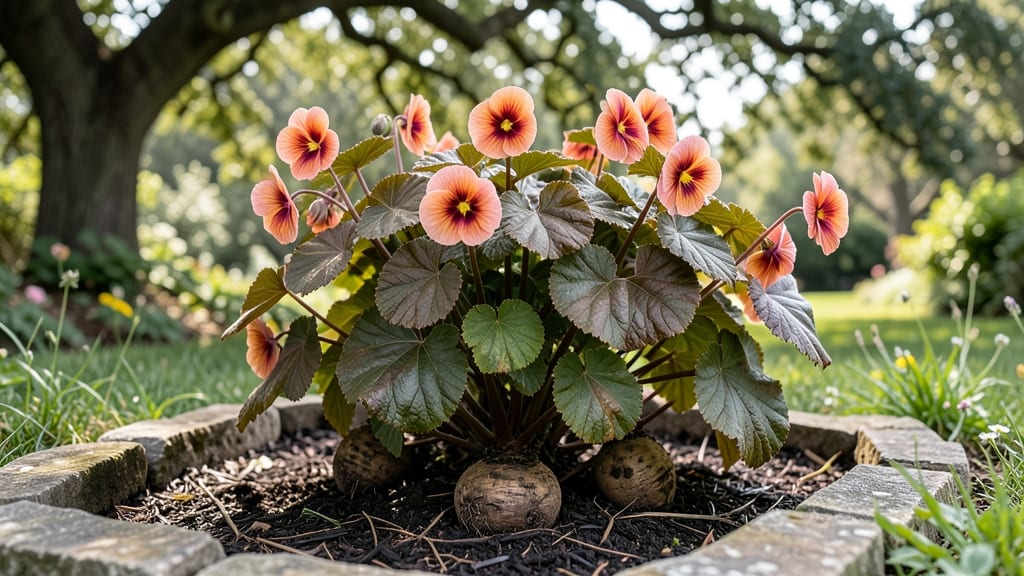
Tuberous begonia acts like an annual in cold climates but is actually a perennial, surviving as dormant tubers in warm zones (USDA 10-12). Gardeners in colder areas must protect tubers indoors to keep these plants alive beyond one growing season.
This plant's confusing classification comes down to its underground storage system. 🌱 Unlike true annuals that die after flowering, tuberous begonias produce thickened roots (tubers) that store energy for regrowth. In frost-free zones, these tubers naturally overwinter in the soil, making the plant perennial.
But when temperatures drop below 30°F, the tubers freeze and die—unless you rescue them. I've seen gardeners in USDA Zone 7 successfully overwinter tubers by digging them up before the first frost and storing them in a cool, dry place until spring.
The key to extending tuberous begonia's lifespan lies in timing and conditions. After the first frost blackens the foliage, cut back the stems and let the tubers cure in a dark, 50-60°F spot for 2-3 weeks before storing.
Too much moisture causes rot, while too little air leads to desiccation. When spring arrives, replanting cured tubers gives you a head start on the growing season—often producing flowers within 8-10 weeks of planting.
💡 In This Article
- Understanding Tuberous Begonia’s Perennial Nature and Cold Hardiness
- How to Overwinter Tuberous Begonia Tubers for Year-Round Growth
Understanding tuberous begonia’s perennial nature and cold hardiness
The confusion around tuberous begonia's lifespan stems from its unique biology. Unlike true annuals that complete their life cycle in one season, tuberous begonias produce specialized underground storage organs called tubers.
These tubers act as energy reserves, allowing the plant to regrow from the same root system year after year in frost-free environments. This biological adaptation is what classifies it as a perennial in warm climates.
The critical difference lies in temperature tolerance. Tubers begin dying when exposed to prolonged temperatures below 30°F, a threshold that occurs regularly in USDA Zones 8 and colder. The frozen water within tuber cells forms ice crystals that rupture cell membranes, leading to irreversible damage.
In contrast, tubers naturally overwinter in Zones 10-12 where soil temperatures remain above 40°F throughout winter. 🌡️ The root system's ability to remain dormant while maintaining viability explains why these plants thrive as perennials in tropical regions.
What makes tuberous begonias particularly vulnerable is their shallow root system. Most energy storage occurs in the upper 4-6 inches of soil, making them susceptible to freeze-thaw cycles.
The foliage may appear healthy until a sudden cold snap triggers irreversible damage to the tuber's meristematic cells - the growth centers responsible for new shoots. This is why gardeners in marginal zones (like Zone 9) often lose their plants despite seemingly mild winters.
Botanically, this classification aligns with other tuberous perennials like dahlias and cannas. All three share similar cold sensitivity thresholds but differ in their storage requirements. Tuberous begonias require slightly drier storage conditions than dahlias, which explains why many gardeners mistakenly think they're annuals - the storage requirements are easily overlooked.
The key insight is that while the plant behaves as an annual in cold climates, its biological classification as a perennial remains unchanged.
Understanding this distinction helps explain why some gardeners in Zone 7 successfully overwinter tubers while others fail. The difference often comes down to precise timing - digging tubers before the first hard frost (28°F) and maintaining proper storage conditions.
Even a single night below 25°F can kill tubers left in the ground, demonstrating why this plant's perennial nature depends entirely on climate and human intervention in colder regions.
For those curious about the science, the tuber's dormancy mechanism involves complex hormonal regulation. As temperatures drop, the plant increases abscisic acid production, which triggers dormancy and prevents new growth.
This hormonal shift explains why tubers can remain viable for months in storage while maintaining their ability to regenerate when conditions improve. The delicate balance between dormancy and regrowth is what makes tuberous begonia's lifecycle so fascinating to study.