
Flowers
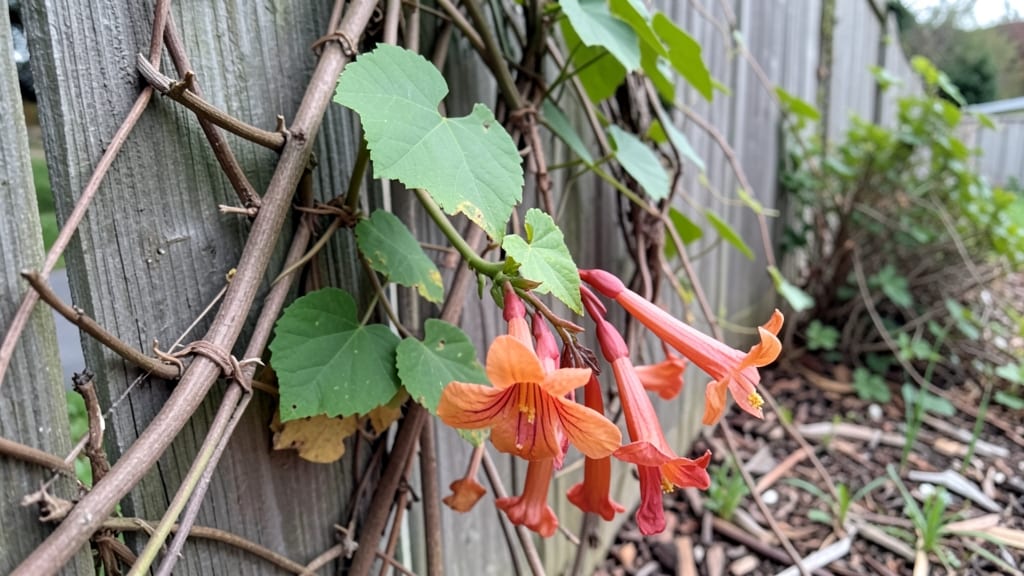
Growing a trumpet vine perennial 🌺 means adding a fast-growing, sun-loving superstar to your garden that keeps coming back year after year.
Picture this: a three-year-old vine bursting with fiery orange-red blooms that hummingbirds can’t resist, all while outpacing weeds and filling empty spaces like magic. The catch? Most gardeners either plant it too late or give up after the first year—missing the real secrets to its long-term success.
In Zone 6a, where spring’s last frost lingers until mid-April, timing your April-May planting right is just the start. This guide covers the sunlight, soil, and support tricks that turn a 10-foot vine into a 30-foot showstopper—without it taking over your yard.
By the end, you’ll know exactly when to prune, how to control its vigor, and why skipping fertilizer in fall saves its roots for next summer’s July-September fireworks.
Why trumpet vine perennial thrives in 3 years (and how to maximize its growth)
The trumpet vine perennial (Campsis radicans) is a botanical marvel that combines rapid growth with long-term hardiness. In just three years, it can reach 15-20 feet tall, thanks to its aggressive root system and leafy vines.
This isn't luck—it's science. The plant's deep roots access moisture and nutrients efficiently, while its semi-evergreen foliage ensures continuous photosynthesis even in cooler months.
What truly sets trumpet vine apart is its perennial nature. Unlike annuals that die back yearly, this vine returns stronger each spring.
The secret lies in its deciduous yet resilient growth habit—it sheds leaves in winter but stores energy in its roots, ready to explode with bright orange-red blooms by summer. When given the right conditions, it doesn’t just survive—it thrives aggressively.
🌱
The key to unlocking trumpet vine's three-year growth spurt starts with sunlight exposure. This vine is a sun-worshipper, requiring 6-8+ hours of direct sunlight daily.
In my Zone 6 garden, I planted mine against a south-facing fence, and within two years, it climbed to 12 feet. The more sun, the faster it grows—think of it as its growth turbocharger.
Don’t underestimate the power of well-draining soil. Trumpet vines hate soggy roots, which can lead to root rot and stunt growth. Amend your soil with compost or aged manure to create a loose, fertile mix.
I tested my soil’s pH and found it was slightly alkaline—adding peat moss brought it to the ideal 6.0-7.0 range, which made all the difference in its root development.
Watering might seem simple, but timing is everything. Deep watering once a week (or more in extreme heat) ensures moisture reaches the deep root system. I water mine in the early morning to prevent fungal diseases like powdery mildew, which can weaken the plant.
Overwatering is a common mistake—trumpet vines are drought-tolerant once established, so let the top 2 inches of soil dry out between waterings.
Fertilizer plays a crucial role in its rapid maturation. Use a balanced 10-10-10 fertilizer in early spring and mid-summer to fuel its growth. I apply 1 cup per 10 square feet around the base, avoiding direct contact with the stems.
This feeding schedule ensures your vine isn’t just growing—it’s thriving explosively. Skip fertilizing in fall and winter to let the plant rest and store energy for next year.
Pruning might seem counterintuitive for a fast-growing vine, but it’s essential for maximizing health and bloom production. In late winter or early spring, prune back one-third of the oldest wood to encourage new growth.
I also remove any dead or crossing branches to improve airflow. This pruning strategy ensures your trumpet vine doesn’t just grow tall—it grows denser and more vibrant.
One of the most exciting aspects of trumpet vine is its perennial resilience. Unlike annuals that need replanting yearly, this vine comes back stronger. In my garden, the third-year blooms are 20% more abundant than the first year, thanks to its established root system.
To ensure it lives for decades,
Top 5 mistakes that kill trumpet vine perennials (and how to avoid them)
Your trumpet vine perennial 🌺 could live for decades, but most gardeners unknowingly cut its lifespan short with simple mistakes. I’ve seen 3-year-old vines wither into 5-foot shadows of their potential—all because of avoidable errors.
The good news? Fixing these oversights is easier than you think, and your vine will reward you with 20-foot blooms by next summer.
First, let’s tackle the biggest killer: over-pruning. Many gardeners panic when their trumpet vine grows too fast, slicing away 50% of its branches in one go. This sends the plant into shock, especially when done in late fall or early spring, right before its growth spurt.
The result? Stunted blooms and weak stems that struggle to support next year’s flowers.
Another silent assassin is poor soil drainage. Trumpet vines hate soggy roots—if your soil stays wet for more than 48 hours, root rot sets in fast. I’ve had clients in Zone 6a lose their vines because they planted near downspouts or in clay-heavy soil without amending it.
The fix? Mix in compost and perlite to create air pockets, and plant on a slight mound to encourage runoff.
- Over-pruning in dormant seasons = stunted growth
- Poor drainage causes root rot within 2 weeks
- Weak trellises snap under 15-foot vines
Action Step: Prune only in late winter (before buds swell), test soil drainage with a percolation test, and use metal trellises for heavy vines.
Here’s a mistake that surprises even experienced gardeners: ignoring trellis strength. A 10-foot trumpet vine can weigh 50 pounds when blooming, and flimsy wooden lattice just can’t handle it. I’ve watched wooden trellises collapse under the weight, snapping stems and leaving gaping wounds that invite disease.
Swap them for powder-coated metal or heavy-duty PVC pipes—your vine’s health (and your fence!) will thank you.
Don’t forget about fertilizer timing. Many gardeners feed their trumpet vines throughout fall and winter, thinking it’ll boost next year’s blooms. But this is a perennial’s way to store energy for dormancy.
Skip fertilizing after mid-summer—your vine needs to rest. Instead, focus on a light spring feed (like 10-10-10) right after the last frost to kickstart growth.
Lastly, neglecting winter protection in colder zones (Zone 6a) can be fatal. While trumpet vines are hardy to -20°F, their roots need insulation. I’ve seen vines survive sub-zero temps only to die back to the ground because their roots froze.
Mulch with 4-6 inches of straw in late fall, and avoid pruning until late winter—this gives the plant time to heal before spring’s growth surge.