
Flowers
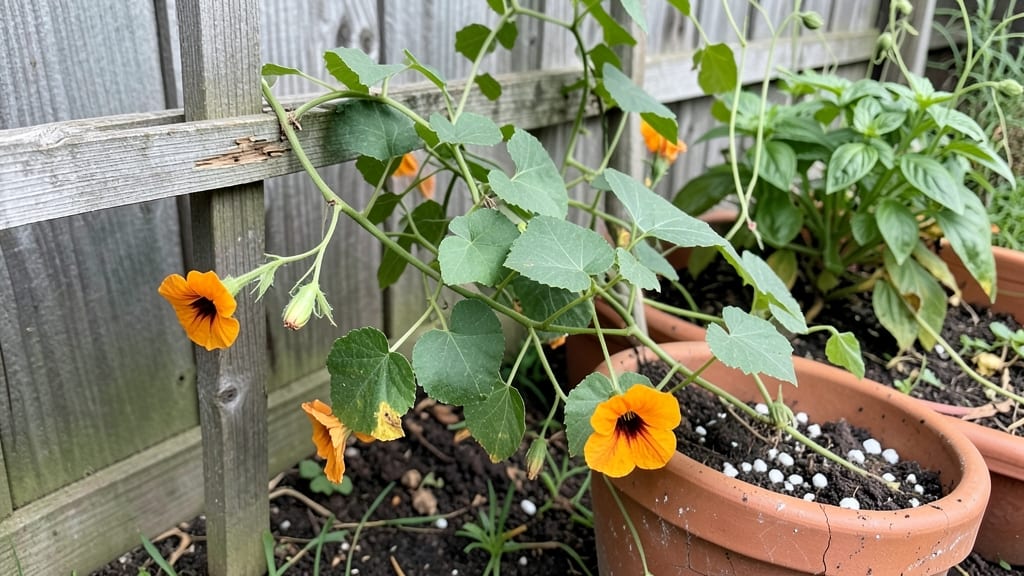
Whether thunbergia acts as an annual or perennial depends entirely on your climate—it behaves as a frost-sensitive annual in colder regions (USDA zones 9-11) but can become a tender perennial in frost-free areas with proper winter protection like mulching or container overwintering.
Thunbergia's behavior boils down to its tropical roots—this vine simply can't handle freezing temperatures, which is why it dies back to the ground in colder zones every winter. 🌿 In milder climates, though, it can rebound year after year with the right care, making it feel like a true perennial.
The key difference lies in how you protect it: while mulching adds insulation, moving potted plants indoors during cold snaps gives you even more control over its lifespan.
What many gardeners don't realize is that even in colder zones, you can trick thunbergia into acting more perennial-like by taking cuttings before frost hits and rooting them indoors.
This way, you effectively "reset" the plant each season while keeping its genetic line alive—it's like giving your clockvine a second chance every year.
💡 In This Article
- How Thunbergia Survives Winter in Different Climates
- Extending Thunbergia’s Lifespan Through Gardening Techniques
How thunbergia survives winter in different climates
Thunbergia's tropical origins explain why it behaves differently across climates. Native to Africa and Asia, this vine evolved in regions where temperatures rarely dip below 50°F—any frost triggers cell damage in its thin, herbaceous stems.
When temperatures drop to 32°F or lower, the plant's water content freezes and expands, rupturing cell walls like ice cracking a glass. This is why thunbergia dies back completely in colder zones each winter, acting as an annual.
In frost-free zones (USDA 10-11), thunbergia's natural growth cycle continues uninterrupted. The plant's deep root system stores carbohydrates during the cooler months, fueling regrowth when temperatures rise above 60°F. This stored energy allows it to rebound annually without human intervention—making it function like a true perennial.
The key difference? No frost means no cell damage, so the plant's biological clock keeps ticking year after year.
Temperature thresholds create the dividing line between annual and perennial behavior. Research shows thunbergia can tolerate brief exposures to 40°F without permanent damage, but prolonged periods below 50°F trigger dormancy-like responses.
In colder zones, this means the plant's above-ground growth dies back completely, while roots may survive if protected by 6+ inches of mulch. The plant's ability to regenerate depends entirely on whether these root systems remain viable through winter.
Here's what happens at the cellular level: Thunbergia's meristematic tissue (growth points) contains high concentrations of water and delicate proteins that freeze and denature in cold snaps. When temperatures rise again, these damaged cells can't regenerate, forcing the plant to rely on new growth from surviving roots or cuttings.
This biological limitation is why gardeners in colder zones must intervene to extend thunbergia's lifespan.
Interestingly, thunbergia's flowering behavior also reflects this climate sensitivity. In perennial climates, plants produce flowers continuously throughout the growing season, while annuals in colder zones focus all energy on flowering before frost.
This shift demonstrates how the plant's entire life cycle adapts to temperature cues—what appears to be annual behavior is actually an evolutionary response to seasonal cold stress.
The science behind this involves a process called "cold acclimation," where plants gradually adjust to cooler temperatures. Thunbergia lacks this adaptation because it evolved without seasonal temperature fluctuations.
When you see thunbergia rebounding in colder zones, it's typically because gardeners have provided artificial protection that mimics its native tropical conditions—whether through containers, greenhouses, or mulch blankets that maintain soil temperatures above 50°F.
What most gardeners miss is that even in colder zones, thunbergia's root systems can survive winters if properly insulated. The difference between annual and perennial behavior comes down to whether these roots can regenerate above-ground growth in spring.
With the right protection, you can effectively create perennial-like conditions even in annual climates. 🌱