
Flowers
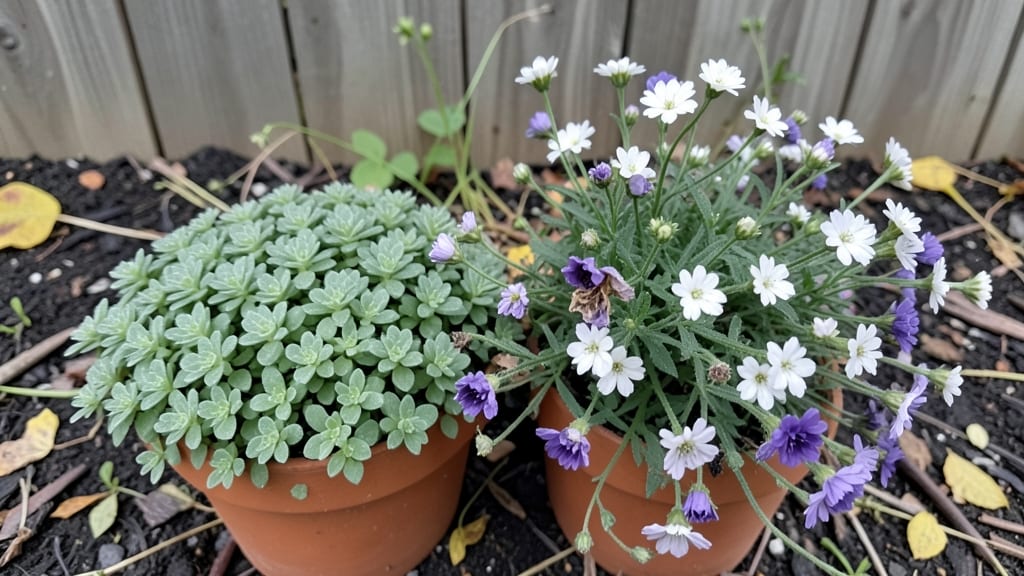
Sweet alyssum acts as an annual in most regions but can be a short-lived perennial in mild winter zones, thriving as a cool-season plant that spreads through self-seeding. Its frost tolerance varies by type, with some enduring light freezes while others completely die back when temperatures drop below freezing.
Whether your sweet alyssum lives one season or returns year after year depends entirely on your local climate. 🌱 In colder zones, it follows the classic annual pattern, blooming vigorously in spring and summer before fading with the first frost.
However, in regions with milder winters—like USDA zones 7-10—it often persists as a biennial or short-lived perennial, returning with new growth in early spring from dormant roots or self-sown seedlings.
What makes this plant so adaptable is its ability to self-seed prolifically, ensuring new plants pop up even if the parent dies back. This trait makes it a favorite for gardeners who want low-maintenance ground cover with continuous blooms.
The key to extending its life cycle is choosing cold-hardy varieties and providing some winter protection, like mulch or containers moved to sheltered spots.
💡 In This Article
- Sweet Alyssum Growth Habits and Temperature Tolerances
- Extending Sweet Alyssum’s Blooming Season in Gardens
Sweet alyssum growth habits and temperature tolerances
Sweet alyssum's life cycle shifts dramatically based on temperature. Botanically, it's classified as an annual in regions with hard freezes (USDA zones 3-6), completing its entire growth cycle in one season—germinating in spring, blooming through summer, and dying back when temperatures drop below 28°F.
However, in milder climates (zones 7-10), its growth pattern changes entirely due to a biological adaptation called vernalization, where cool temperatures trigger flowering without lethal frost damage.
The key difference between annual and perennial behavior lies in its dormancy mechanisms. Annual varieties store minimal energy reserves, prioritizing rapid seed production before winter.
Perennial types (like 'Sweet Alyssum' cultivars) develop deeper root systems that can survive 20-25°F temperatures through a process called cold acclimation, where cell membranes adjust to prevent freezing damage. This explains why some varieties return year after year while others disappear completely after their first frost.
Self-seeding occurs because sweet alyssum produces thousands of tiny seeds per plant, each containing 10-15% oil content that helps them remain viable for up to 3 years in soil.
The plant's cool-season preference (optimal growth at 50-70°F) means it often blooms in both spring and fall, creating multiple seeding opportunities. In frost-free zones, this creates a perpetual cycle where new plants emerge from seeds while older plants may persist as short-lived perennials.
Frost sensitivity varies by cultivar—some varieties like 'Tiny Tuffet' can tolerate 15°F brief exposures, while others like 'Snowdrift' may die back at 30°F. The difference stems from cellular antifreeze proteins that some varieties produce naturally.
These proteins bind to ice crystals, preventing them from growing large enough to rupture cell walls—a survival strategy seen in other cold-hardy plants like winter rye.
What most gardeners don't realize is that sweet alyssum's dormancy isn't true hibernation. Instead, it enters a state called quiescence, where metabolic activity slows dramatically but doesn't stop completely. This explains why you might see new growth appearing as early as 40°F in spring, even before surrounding plants.
The plant's ability to photosynthesize at these low temperatures gives it a competitive edge in early spring gardens.
Consider these temperature zone behaviors when planning your garden:
- Zones 3-6: Treat as annual—plant fresh seeds each spring after last frost (32°F danger zone)
- Zones 7-9: May persist as biennial—expect some winter dieback but frequent self-seeding
- Zone 10+: Often acts as short-lived perennial with continuous blooming potential
This adaptability explains why sweet alyssum thrives in coastal climates where mild winters prevent complete dieback while still providing the cool temperatures it needs to flower prolifically. 🌿