
Flowers
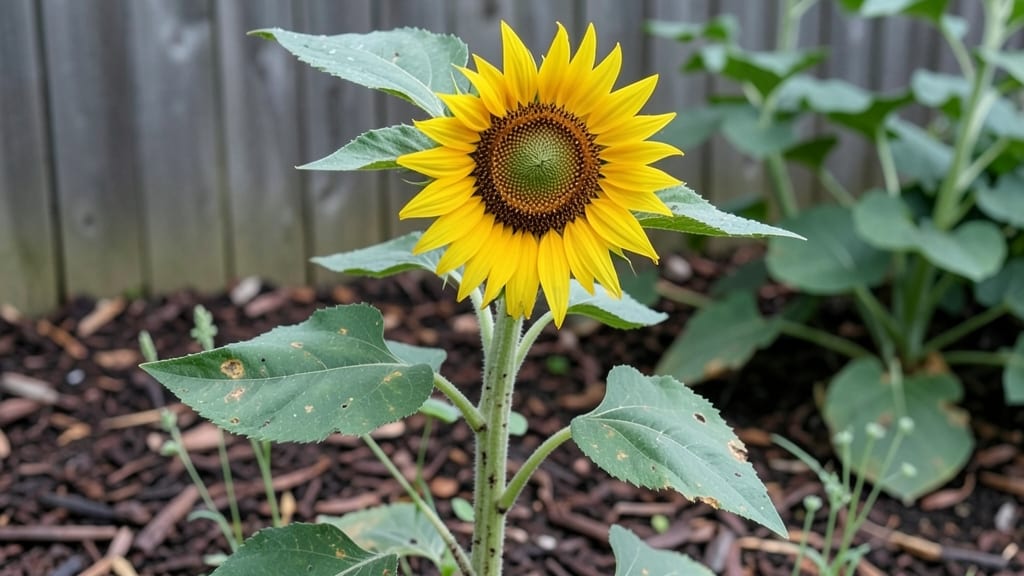
Sunfinity sunflowers are annuals, not perennials, completing their full life cycle—from seed to flower—in just one growing season. Their hardy appearance and regrowth in mild climates may seem perennial, but they won't survive winter in most regions without replanting.
Sunfinity sunflowers thrive as annuals because their rapid growth and flowering strategy are genetically programmed to maximize seed production before winter. 🌻 Unlike true perennials, they don't develop deep root systems or dormant structures to survive freezing temperatures.
Even in warmer climates where they might regrow from the base, they still complete their full cycle each year rather than returning from established roots.
This annual behavior actually works to their advantage in gardens, as it allows for vibrant, continuous blooms when planted in succession. The key difference from perennials lies in their inability to store energy underground—once frost hits, the entire plant system shuts down permanently unless you collect seeds for next season.
💡 In This Article
- Why Sunfinity Sunflowers Die After One Season
- How to Extend Sunfinity Sunflower Blooms Year-Round
Why Sunfinity sunflowers die after one season
Here's what's actually happening botanically: Sunfinity sunflowers follow an annual life cycle because their genetic programming prioritizes rapid seed production over long-term survival.
Unlike perennials like peonies or daylilies that develop deep root systems and energy reserves, these sunflowers allocate nearly all their resources to vertical growth and flowering within 60-90 days of germination.
This "bolt-and-go" strategy ensures they complete their reproductive cycle before winter arrives, even if it means sacrificing long-term plant longevity.
The key difference lies in their root structure. True perennials develop extensive underground networks with specialized storage organs (like tubers or rhizomes) that can withstand -10°F to -20°F temperatures. Sunfinity sunflowers, however, produce shallow fibrous roots that focus on quick nutrient absorption rather than winter storage.
When temperatures drop below 32°F, these roots become vulnerable to frost damage, causing the entire plant to collapse. 🌱 Even in mild climates where they might regrow from the base, this is actually new growth from seeds that fell to the ground—not true perennial regrowth.
What most people don't realize is how their flowering strategy locks them into this annual pattern. Sunfinity varieties are bred for continuous blooming through a process called determinate growth, where the main stem produces flowers that then develop into seeds.
This creates a biological clock: once flowering begins, the plant's energy shifts entirely to seed production, leaving no reserves for winter survival. The trade-off is stunning visual impact—each plant can produce 50-100 seeds per head—but at the cost of multi-year persistence.
Temperature sensitivity plays the biggest role in their annual nature. While they can tolerate heat up to 95°F, their real vulnerability comes when nighttime temperatures consistently drop below 45°F.
At this point, their metabolic processes slow dramatically, and any remaining energy reserves get used up maintaining basic functions rather than storing for winter. This is why you'll often see them still blooming in late summer—it's their last-ditch effort to produce seeds before the cold sets in permanently.
There's also a fascinating comparison to be made with their perennial sunflower cousins. Varieties like Helianthus annuus (common sunflower) can sometimes behave perennially in Zone 5-6 climates, but Sunfinity hybrids are specifically bred for annual performance.
Their stems are more brittle, their seed heads are heavier (requiring more structural support), and their leaves have less waxy coating to retain moisture during cold snaps. These adaptations make them spectacular summer plants but fundamentally unsuitable for perennial gardening.
The good news is that their annual nature actually makes them more manageable for gardeners. Since they don't require winter care, you can simply replant new seeds each spring without worrying about dividing roots or protecting crowns.
This predictable cycle also means their blooms are more reliable year after year—just plant fresh seeds, and you'll get that same cheerful display of 3-4 inch daisy-like flowers that attract pollinators like crazy. 💫