
Flowers
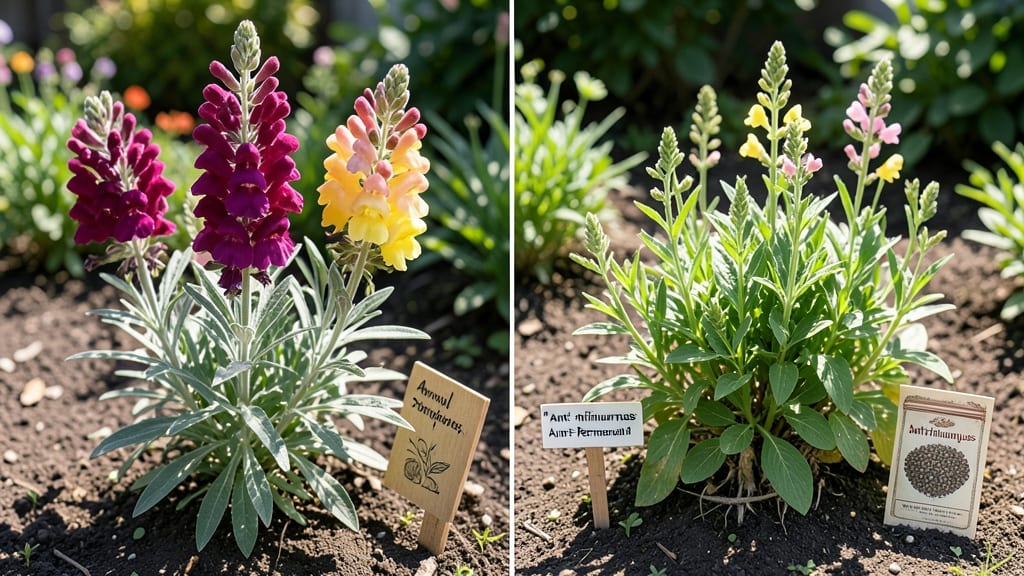
Whether snapdragons are perennial or annual depends on your climate—most gardeners treat them as annuals because they wither after flowering in colder regions, but they can overwinter as perennials in frost-free zones like USDA Hardiness Zones 7-10.
This distinction comes down to how cold temperatures affect snapdragons' root systems.
In regions where winter freezes penetrate the soil, the plants' roots and tubers simply can't survive, forcing gardeners to replant each year. 🌱 However, in warmer climates where temperatures rarely drop below 20°F, snapdragons naturally regrow from their roots after dormancy, proving their true perennial nature.
The key is selecting cold-hardy varieties and providing proper winter protection—like thick mulch—to help them persist through mild winters.
What many gardeners don't realize is that even in colder zones, you can sometimes coax snapdragons to return by cutting back dead foliage in late winter and protecting the base with straw or leaves.
This approach works best with Antirrhinum majus varieties, which are slightly more resilient than others. The bottom line? Snapdragons' lifespan is a climate game—not a biological limitation.
💡 In This Article
- Why Snapdragons Die Back Annually in Cold Climates
- How to Grow Snapdragons as Perennials in Warmer Regions
Why snapdragons die back annually in cold climates
Snapdragons (Antirrhinum majus) exhibit annual behavior in cold climates primarily because their root systems lack the cold-hardiness of true perennials. When temperatures drop below 20°F, the fibrous roots and crowns—where stored nutrients reside—succumb to frost damage.
Unlike perennials with deep taproots or woody stems (like peonies), snapdragons have shallow, delicate root structures that freeze solid, preventing regrowth in spring. This dieback isn't a seasonal adaptation but a survival failure caused by winter's severity.
The biological trigger is cellular damage from ice crystals forming in root tissues. At 15°F or lower, snapdragon roots experience irreversible damage within 24-48 hours, turning black and mushy—a process called "frost heaving."
In contrast, perennials like lavender or Russian sage have specialized cells that produce antifreeze proteins to protect their vascular systems.
Snapdragons lack these adaptations, making them vulnerable to even light freezes. 🌬️ What's fascinating is how this dieback mimics annual behavior: the plant completes its life cycle in one season, setting seeds before winter kills it.
This cold sensitivity explains why gardeners in USDA Zones 3-6 treat snapdragons as annuals. The plants' energy focuses entirely on flowering and seed production rather than storing reserves for winter survival. Even in milder winters (Zones 7-9), snapdragons may survive if protected, but their growth is stunted by cold snaps.
The key difference lies in their root zone temperature tolerance: while their shoots can handle brief 25°F dips, roots need protection above 20°F to avoid fatal damage.
Interestingly, snapdragons' annual habit isn't universal—wild relatives in Mediterranean climates (where winters rarely drop below 30°F) naturally overwinter. This proves their perennial potential when conditions are right. The confusion arises because most cultivated varieties were bred for showy annual displays rather than cold endurance.
Gardeners in colder regions often unknowingly plant varieties that would thrive as perennials in warmer areas. 🌱 The solution? Selecting cold-tolerant cultivars like 'Rocket' or 'Liberty' series, which can handle slightly lower temperatures than standard types.
Here's what happens biologically when snapdragons die back:
- Root damage: Ice crystals rupture cell membranes in the root cortex (outer layer)
- Nutrient loss: Stored carbohydrates in the crown convert to sugars that can't be reabsorbed
- Pathogen entry: Damaged tissues become entry points for fungal infections like root rot