
Flowers
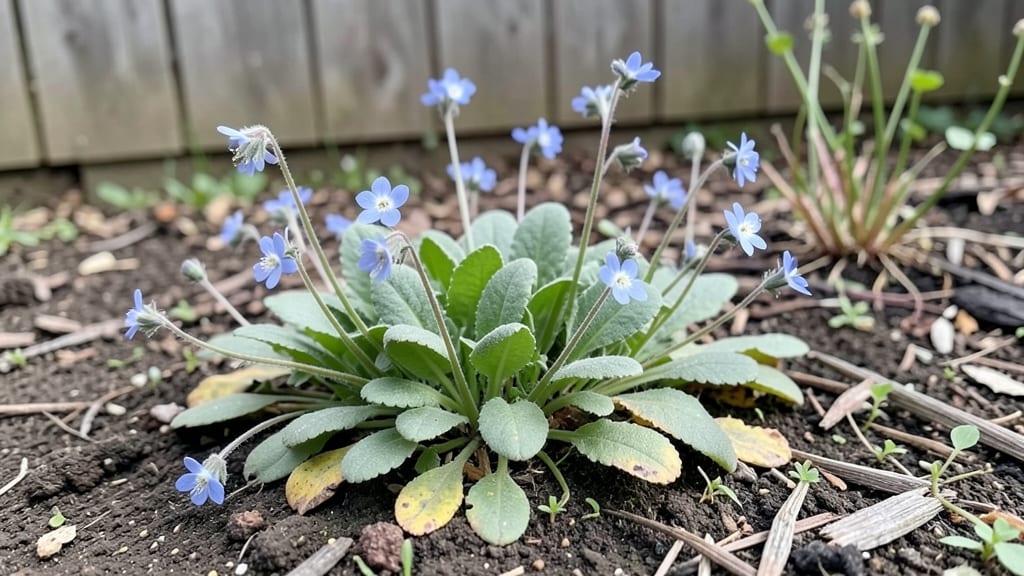
These hardy plants owe their resilience to deep root systems that store nutrients and moisture, plus specialized leaf structures that protect delicate tissues from frost damage. 🌱 Unlike annuals that die back yearly, these perennials return stronger each spring, often expanding their ground cover without intervention.
My favorite for sun-drenched borders is ajuga, which forms dense mats and even suppresses weeds—perfect for gardeners who want color without constant maintenance.
For shadier spots, myosotis (commonly called forget-me-nots) provides delicate blue clusters that bloom prolifically from early to late spring. The key to maximizing their spread is proper spacing at planting—giving them room to grow prevents overcrowding while encouraging natural colonization.
I’ve seen ajuga spread 12 inches per year in ideal conditions, making it a game-changer for filling gaps between stepping stones or along garden edges.
💡 In This Article
- How Cold-Hardy Perennials Survive Winter
- Best Low-Maintenance Blue-Blooming Perennials for Shade and Sun
How cold-hardy perennials survive winter
Cold-hardy perennials like ajuga and creeping phlox employ three key survival strategies: deep root systems, specialized leaf structures, and physiological dormancy. Their roots can extend 3-5 feet deep, storing carbohydrates and moisture that sustain the plant through frozen ground.
Unlike annuals, which die back completely each winter, these perennials enter a state of dormancy where metabolic processes slow dramatically, conserving energy until temperatures rise. 🌡️
The leaf structures of these plants are equally impressive. Many develop thick, waxy coatings or fuzzy hairs that act as natural insulation against freezing temperatures. For example, ajuga's leaves contain high levels of flavonoids, which help protect cell membranes from frost damage.
Some species, like myosotis, even produce anti-freeze proteins that prevent ice crystals from forming within their cells—a mechanism similar to how some fish survive Arctic waters. These adaptations allow them to withstand temperatures as low as -30°F in zone 3 climates.
What sets these perennials apart from tender varieties is their ability to regenerate from their root crowns each spring. While annuals complete their entire life cycle in one season, cold-hardy perennials have evolved to produce basal growth points that remain protected below the soil line.
This means even if the above-ground foliage freezes solid, the plant can regrow from these protected meristems once temperatures warm. It's like having a built-in survival kit that kicks in automatically when conditions turn harsh.
Another fascinating adaptation is their timing of growth. Many cold-hardy perennials complete most of their vegetative growth in early spring before the heat of summer arrives. This strategy, called vernalization, ensures they're ready to bloom when conditions are optimal.
For instance, creeping phlox often begins flowering in late winter or early spring, taking advantage of cooler temperatures that many other plants can't handle. This early bloom period gives them a competitive edge in the garden ecosystem.
When comparing these perennials to annuals or tender perennials, the differences become even more striking. Annuals lack the root storage capacity and must complete their entire life cycle in one growing season, while tender perennials often require winter protection or die back completely in cold climates.
The cold-hardy species we're focusing on have spent centuries evolving in harsh northern climates, developing these sophisticated survival mechanisms that make them the ultimate low-maintenance garden stars. 💫
One practical implication of these adaptations is how they affect gardening strategies. Since these plants can survive extreme cold, gardeners in zones 3-8 can plant them once and enjoy decades of reliable blooms with minimal care.
Their natural spreading habits mean they'll gradually fill in empty spaces without needing constant division or replanting. It's this combination of resilience and self-sufficiency that makes them particularly appealing for busy gardeners or those with less experience in plant care.
The science behind their cold tolerance also explains why they often outperform other plants in challenging conditions. Their deep root systems access water even when surface soil is frozen, while their specialized leaf structures prevent moisture loss during winter desiccation.
This dual protection system allows them to maintain cellular integrity even when temperatures drop well below freezing. Understanding these mechanisms helps gardeners create more resilient landscapes that require less intervention over time.