
Planting
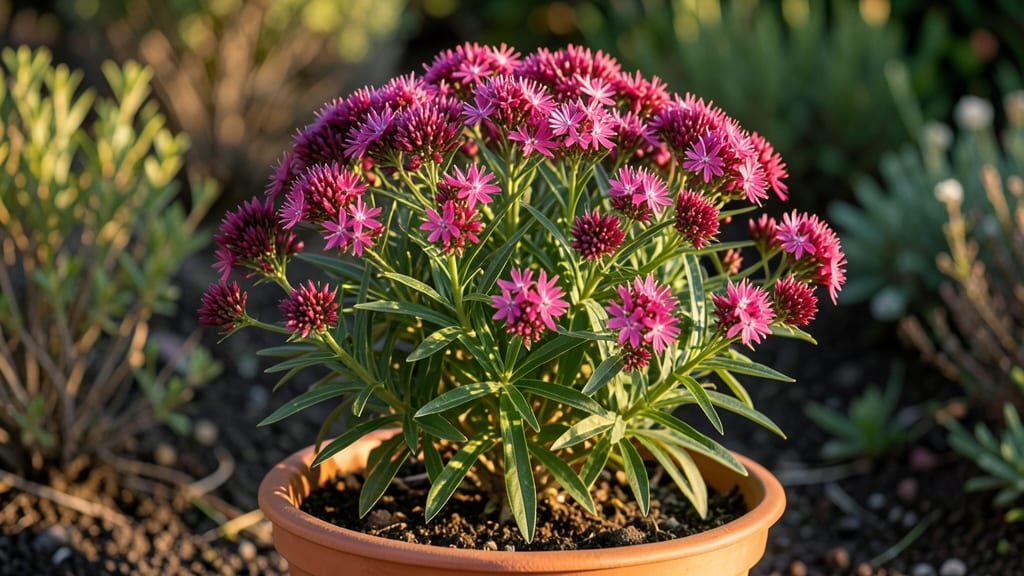
Determining whether a penta plant is annual or perennial depends on your climate—it acts as an annual in colder regions but behaves like a perennial in frost-free zones by regrowing from its roots each spring after winter dormancy.
This behavior makes pentas incredibly adaptable. In warmer zones (USDA 9-11), the plant's deep root system survives winter underground, then pushes new growth when temperatures rise. 🌱 The key difference is temperature exposure—freezing temps kill above-ground growth, but the roots often persist, allowing regrowth when conditions improve.
Gardeners in marginal climates can extend this lifespan by protecting plants during winter or selecting cold-hardy varieties.
What's fascinating is how this dieback cycle mirrors other tropical perennials like cannas or caladiums. The penta's ability to "reset" each year makes it a favorite for container gardening, where you can easily move plants indoors before frost or into protected microclimates during cold snaps.
This dual nature means you're not stuck choosing between annuals and perennials—you're working with a plant that can do both, depending on your growing conditions.
💡 In This Article
- How Penta Plant’s Cold Sensitivity Determines Its Lifespan
- Extending Penta Plant’s Lifespan in Cooler Climates
How penta plant’s cold sensitivity determines its lifespan
The penta plant's lifespan hinges on its native tropical origins. As a species from Africa and Madagascar, it evolved in regions where temperatures rarely drop below 50°F (10°C).
When exposed to freezing conditions, the above-ground growth dies back because the plant's cellular structure lacks the antifreeze proteins found in cold-hardy species like pansies or heather. 🌡️ These proteins prevent ice crystal formation in plant cells, but pentas simply don't produce them.
What keeps pentas going year after year in warm climates is their robust root system. The fibrous roots can extend 12-18 inches deep and store enough energy reserves to fuel regrowth when temperatures rise.
In USDA zones 9-11, where winters rarely drop below 20°F (-7°C), these roots often survive intact, allowing the plant to rebound with fresh foliage by late winter or early spring. The regrowth typically begins when soil temperatures reach 60°F (15°C), signaling the roots to send up new shoots.
This dieback cycle creates a fascinating botanical paradox. While the plant behaves like an annual in cold climates (dying completely back to the soil), its root system maintains perennial characteristics in frost-free zones.
The key difference is the duration and severity of cold exposure—even brief freezes can kill back pentas, but mild winters allow the roots to persist. This makes pentas unique among tropical plants, which are usually strictly annuals in temperate regions.
Gardeners often notice this behavior when comparing penta plants in containers versus in-ground plantings.
Container-grown specimens are more vulnerable to cold because their root systems have less soil mass to insulate them, while in-ground plants benefit from the earth's natural thermal buffering. 🌱 The root zone temperature is what truly determines whether the plant will regrow—if the roots stay above 32°F (0°C) for extended periods, they can survive to produce new growth.
To visualize this, imagine a penta plant in Florida versus one in New York. In Florida (zone 9b), the roots might experience only 2-3 weeks below 50°F (10°C) annually, while in New York (zone 6a), the same plant would face 4-5 months below freezing.
That's the critical difference that turns an annual into a perennial in the same species. The plant's genetic memory isn't changing—it's the environmental conditions that determine its lifespan expression.
This temperature sensitivity explains why pentas are often marketed as both annuals and perennials. The distinction isn't about the plant itself but about the growing conditions.
In marginal zones (7-8), where winters dip just below freezing occasionally, gardeners might get partial regrowth if the roots survive, creating a hybrid behavior between annual and perennial characteristics. 💫