
Flowers
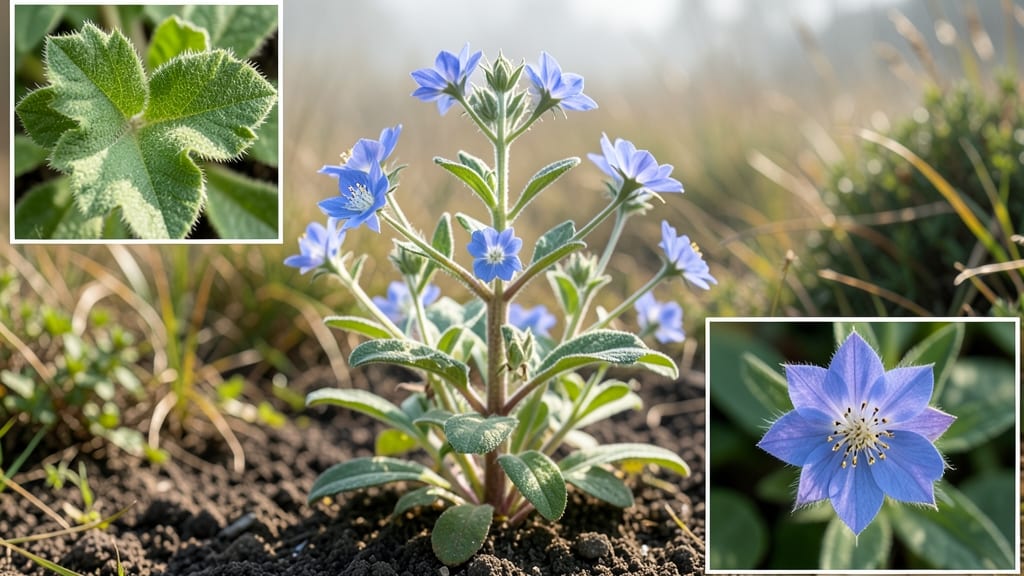
Borage is neither a strict annual nor perennial—it behaves as a biennial in most climates but can act like a short-lived perennial in mild USDA Zones 3-9, lasting 2-3 years before its vigor declines.
Is borage an annual or perennial? Borage's lifespan is a fascinating case of botanical flexibility. 🌱 While it's classified as a biennial—meaning it typically completes its life cycle in two years—it often extends its life in warmer climates by returning year after year. This happens because borage's deep roots store energy, allowing it to regrow even after frost. The key difference comes down to winter survival: in colder zones, it usually dies back completely, while in protected microclimates of Zones 3-9, it may persist for multiple seasons.
What makes this plant so adaptable is its prolific self-seeding habit. Even if the original plant doesn't survive winter, new seedlings often pop up from dropped seeds the following spring, creating the illusion of perennial behavior.
This natural propagation is why many gardeners consider borage a "perennial-like" plant—it may not live indefinitely, but it rarely disappears completely from your garden bed.
💡 In This Article
- Borage’s Lifespan: Biennial vs Perennial Behavior Explained
- Growing Borage as a Perennial: Zone-Specific Tips
Borage’s lifespan: biennial vs perennial behavior explained
The botanical classification of borage (Borago officinalis) as a biennial means it typically follows a two-year life cycle in most temperate climates. During its first year, it focuses on growing a robust root system and a sturdy stem, storing energy for its reproductive phase.
In its second year, borage puts all its resources into producing those iconic star-shaped blue flowers and setting seeds before dying back. This pattern is driven by its natural strategy to ensure seed propagation—once the seeds drop, the parent plant’s job is complete.
However, what makes borage unique is its ability to act like a short-lived perennial in milder climates, particularly USDA Zones 3-9.
The key factor here is winter survival: borage’s deep taproot can store enough energy to regrow from the same root system after frost, especially when protected by mulch or snow cover.
In Zone 5, for example, borage might survive winters with 3-4 inches of mulch, while in Zone 7, it often thrives year-round with minimal protection. This is why gardeners in warmer regions frequently see borage returning for 2-3 years before its vigor declines.
The confusion arises because borage’s prolific self-seeding habit mimics perennial behavior. Even if the original plant dies back in cold winters, new seedlings from dropped seeds often sprout in spring, creating dense patches that look like continuous growth.
These seedlings inherit the same hardiness traits, which is why borage beds can persist for years without replanting. The difference? True perennials like lavender regrow from the same root system indefinitely, while borage relies on this self-seeding cycle to maintain its presence in the garden.
Temperature thresholds play a crucial role in this behavior. Borage can tolerate brief exposures to -10°F to -15°F when dormant, but prolonged cold snaps below 0°F will kill the root system.
In contrast, protected microclimates—like those near south-facing walls or under evergreens—can maintain soil temperatures 5-10°F warmer than open garden beds, giving borage an extra survival advantage. This is why urban gardens in Zone 6 often see borage returning year after year, while rural areas might not.
Here’s what’s actually happening at the cellular level: borage’s meristematic tissue (growth zones) remains dormant but viable during winter, waiting for warmer temperatures to trigger regrowth.
The plant’s high water content in its leaves and stems (about 85-90%) makes it vulnerable to freeze damage, but the thick, woody stems provide some insulation. When spring arrives, these stored reserves fuel rapid regrowth, often within 2-3 weeks of consistent above-freezing temperatures.
For gardeners, this means borage’s lifespan isn’t fixed—it’s a spectrum influenced by climate, protection, and soil conditions. In ideal conditions (Zone 7+ with winter mulch), you might enjoy 3-4 years of continuous blooms, while in colder zones, you’ll likely need to replant annually.
The trade-off? Borage’s self-seeding ensures you’ll rarely be without it for long, even if the original plant doesn’t survive winter.