
Orchid Care
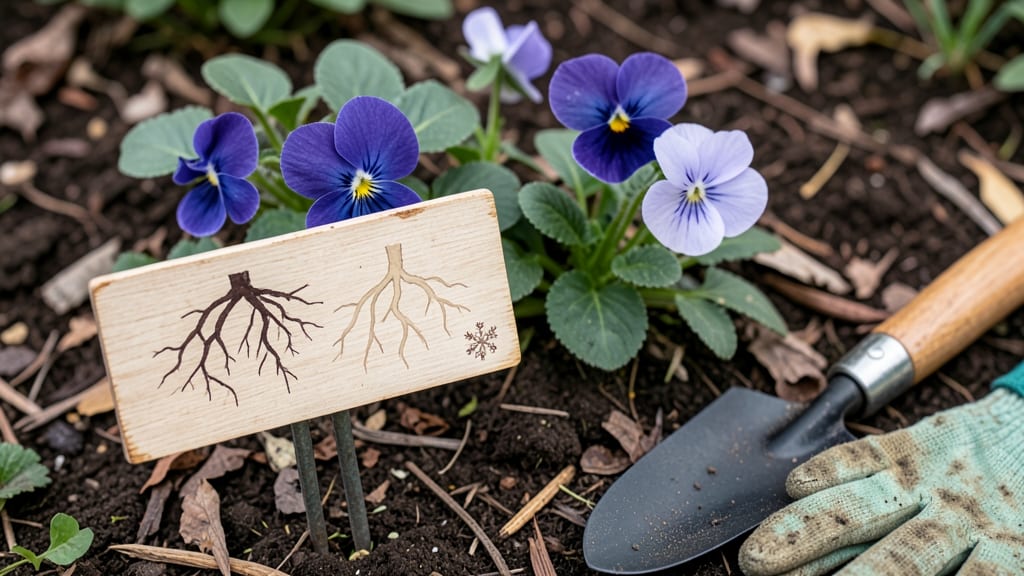
Violets are perennials in most climates, thriving for multiple years but often appearing annual because cold temperatures cause them to die back above ground while their roots survive underground. Hardy varieties like Viola sororia can return year after year in zones 3-8, while tender types may need replanting annually in colder regions.
This perennial behavior might seem confusing because violets often look like they've died completely in winter, only to regrow from their roots when temperatures warm. 🌱 The key difference lies in their underground structure—most violets develop strong root systems that persist through freezing conditions, allowing them to bounce back each spring.
For gardeners in marginal climates, understanding this dieback pattern is crucial for proper winter care and long-term plant health.
What sets true annuals apart is their complete life cycle: they grow, flower, set seed, and die within one season without any persistent structure.
Violets, however, store energy in their roots during dormancy, which explains why they can return for multiple growing seasons when given proper care—especially in milder winters or with protective mulching.
💡 In This Article
- How Violet Lifespan Varies by Climate Zone
- Extending Violet Blooms: Year-Round Care Tips
How violet lifespan varies by climate zone
Violets' perennial nature hinges on their underground survival strategy. Most species develop thick, fibrous root systems that store carbohydrates and nutrients, allowing them to persist through freezing temperatures.
The key threshold is 20°F (-7°C)—below this, tender varieties may suffer irreversible damage, while hardy types like Viola sororia can tolerate -30°F (-34°C) when properly established. This cold resistance explains why violets often "die back" in winter but regrow from roots when spring arrives.
The USDA hardiness zones play a critical role in determining violet longevity. In zones 3-8, violets typically thrive as perennials, with Viola sororia and Viola palmata being standout performers.
However, in zones 9-11, some varieties may struggle with summer heat and humidity, requiring partial shade to prevent leaf scorch. The most dramatic difference occurs in zone 1, where violets rarely survive winter without heavy mulch or container cultivation.
Seasonal dormancy is the biological mechanism that confuses many gardeners. When temperatures drop below 50°F (10°C), violets enter a state of reduced metabolic activity, shedding foliage to conserve energy. This isn't true death—roots remain alive and can regenerate when soil temperatures reach 45°F (7°C) in spring.
The confusion arises because annuals complete their entire lifecycle in one season, while violets merely pause their growth cycle.
Root depth matters more than most gardeners realize. Hardy violets develop roots that extend 6-12 inches deep, anchoring them below the frost line. This depth provides insulation and moisture access during winter. In contrast, shallow-rooted annuals have no such protective structure.
The root system's ability to regenerate explains why violets can return for 5-10 years with proper care, while annuals must be replanted each season.
Soil composition amplifies these effects. Well-draining, slightly acidic soil (pH 6.0-7.0) enhances cold resistance by preventing root rot during winter thaw cycles. In heavy clay soils, violets may suffer from poor drainage, which can be fatal during freeze-thaw cycles.
The combination of deep roots, proper soil, and winter protection transforms violets from seemingly fragile annuals into resilient perennials.
Consider this comparison: A Viola sororia plant in zone 5 might produce 3-5 flower cycles over 5 years, while an annual like pansy would complete its lifecycle in just one season. The perennial's ability to store energy and regenerate makes it far more economical for gardeners in marginal climates.