
Plants
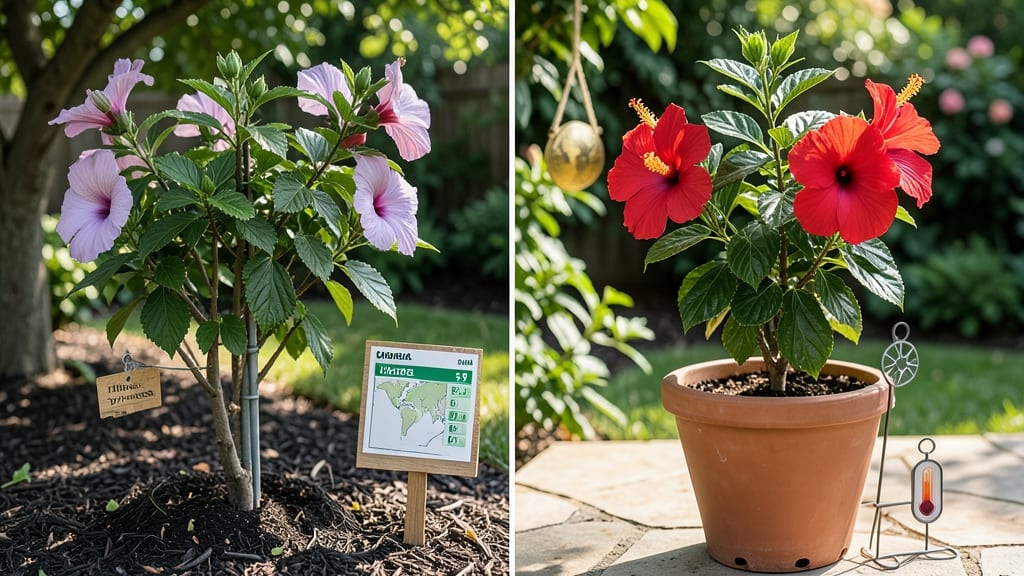
Hibiscus plants are not true perennials in cold climates—they die back to the ground when frost hits but can regrow from their root systems if properly protected or replanted each year in zones 5-9. Tropical hibiscus varieties like Hibiscus rosa-sinensis almost never survive winter outdoors without special care.
Hibiscus plants are actually seasonal woody shrubs that behave like perennials only in frost-free zones. 🌱 Their tropical origins mean they can't tolerate temperatures below 28°F, causing their above-ground growth to freeze and turn black.
However, the roots often remain alive underground, ready to sprout new shoots when temperatures warm again in spring. This makes them more like tender perennials—they'll come back if you help them survive the winter.
The key difference lies in their hardiness zones. While some varieties can handle brief cold snaps in zone 9, most hibiscus plants need protection in zones 5-8. This is why gardeners in colder regions often treat them as annuals or take extra steps to overwinter them.
The good news? With the right care, you can enjoy hibiscus blooms year after year even in freezing climates.
💡 In This Article
- Why Hibiscus Freezes Out in Cold Climates
- How to Overwinter Hibiscus in Freezing Zones
Why hibiscus freezes out in cold climates
Hibiscus plants originate from tropical and subtropical regions where temperatures rarely drop below 60°F. Their cellular structure lacks the protective mechanisms found in true perennials like peonies or hostas, which can withstand -20°F winters.
When temperatures fall below 28°F, hibiscus cells begin to freeze, causing ice crystals to form within their leaves and stems. This disrupts their cellular membranes, leading to irreversible damage and the characteristic blackened, mushy appearance of frost-killed foliage.
The roots, however, have a different story. While they can suffer damage in prolonged freezes, hibiscus roots often survive temperatures down to 15°F if protected by mulch or soil insulation. This is because the root zone stays slightly warmer than the air temperature, especially in well-drained soil.
The roots enter a dormant state, conserving energy until spring warmth signals them to regrow. 🌱 In zones 9-11, hibiscus can behave like true perennials because they rarely experience freezing temperatures that penetrate below the root zone.
What makes hibiscus unique is their growth habit. Unlike true perennials that develop woody stems over years, hibiscus typically grow as semi-woody shrubs that die back completely each winter. Their new growth emerges from the base each spring, which is why they're often called "tender perennials."
This behavior explains why gardeners in colder zones must take special care—without protection, the entire plant above ground will freeze, leaving only the roots to potentially regenerate.
Another critical factor is the plant's water content. Hibiscus leaves contain high moisture levels, which makes them particularly vulnerable to frost damage. When water inside plant cells freezes, it expands and ruptures the cell walls, causing the tissue to turn black and wilt.
This is why you'll often see hibiscus plants in colder climates completely blackened after the first frost, even if the roots remain alive underground.
Hardiness zones play a crucial role in determining hibiscus survival. While some hardy varieties like Hibiscus moscheutos (swamp hibiscus) can tolerate brief cold snaps in zone 5, most tropical hibiscus varieties—especially Hibiscus rosa-sinensis—struggle in anything below zone 9.
The USDA hardiness zone map helps gardeners understand these limitations, but real-world conditions like microclimates and wind exposure can push these boundaries even further.
Understanding this dieback behavior is key to successful hibiscus cultivation. Many gardeners mistakenly believe their hibiscus is dead after a freeze, only to be surprised when new shoots emerge in spring.
This resilience of the root system is what makes hibiscus such rewarding plants to grow, even in challenging climates—with the right care, they'll bounce back year after year.