
Planting
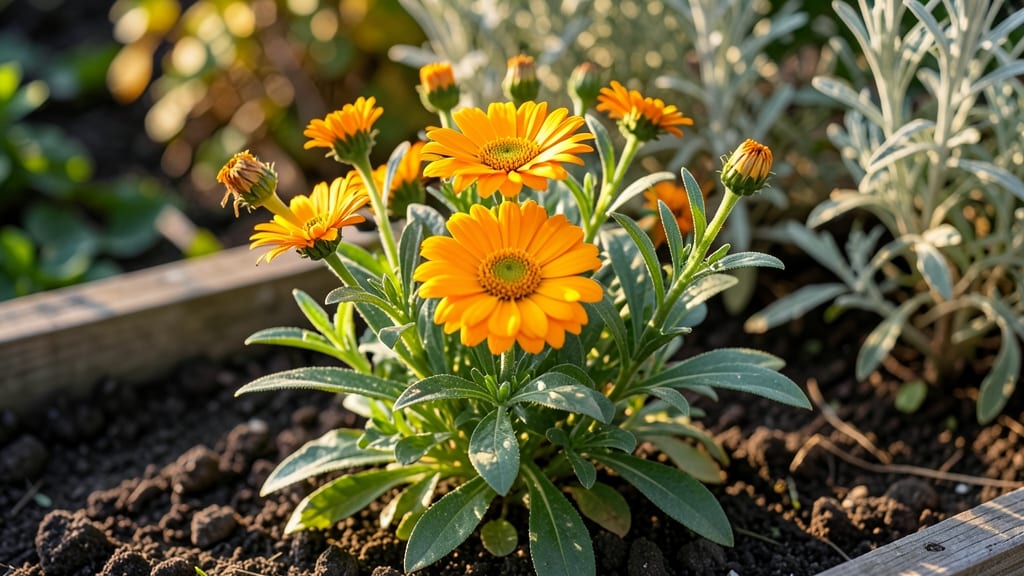
Calendula behaves as a perennial plant in warm climates like USDA zones 9-11, where it thrives year-round and self-seeds abundantly. In cooler regions, it acts like an annual, dying back each winter but often returning from seeds when conditions warm again. Its survival depends on both temperature and soil quality.
Calendula's classification as a perennial or annual depends entirely on your climate. In frost-free zones, it grows continuously, spreading through seeds and root systems. 🌱 However, when temperatures drop below 30°F, the plant's stems freeze, killing the top growth—but the roots often survive underground.
This is why you might see new sprouts in spring even if the plant died back completely over winter.
What's fascinating is how calendula adapts: in mild winters (like zone 8), it may survive with minimal protection, while in colder zones (3-7), gardeners must take active steps like mulching or indoor overwintering.
The key difference from true perennials like lavender is calendula's reliance on seeds for regrowth rather than persistent root systems.
💡 In This Article
- Calendula’s Growth Cycle: Why It Dies Back in Winter
- How to Overwinter Calendula in Cold Climates
Calendula’s growth cycle: why it dies back in winter
Calendula’s winter dieback happens because its stems lack the cold-hardy structure of true perennials. When nighttime temperatures drop below 30°F, the plant’s aboveground growth freezes solid—this is its built-in survival mechanism. Unlike hardy perennials like lavender (which can tolerate -10°F), calendula’s tender stems simply can’t withstand frost.
The good news? Its deep taproot system often survives underground, storing energy for spring regrowth in milder climates.
The botanical magic lies in calendula’s seed production. Even if the plant dies back completely, it drops thousands of seeds that lie dormant until soil temperatures rise above 50°F in spring.
This self-seeding ability is why you’ll often see calendula "reappearing" year after year in garden beds—it’s not technically overwintering like a true perennial, but it’s creating a new generation. 🌱 In zone 9-11, this cycle happens continuously, making it behave like a perennial.
What makes calendula different from hardy annuals like marigolds? Unlike marigolds, which regrow from their root crowns, calendula relies entirely on seeds for renewal. This means its survival depends on both temperature AND seed viability.
In colder zones, gardeners must either protect existing plants or collect seeds to ensure next year’s blooms. The plant’s bright orange petals contain compounds that actually inhibit seed germination until conditions are ideal—a clever adaptation for unpredictable climates.
Here’s the key distinction: true perennials like hostas regrow from the same root system year after year, while calendula’s "perennial" behavior is really a rapid annual cycle with built-in seed banking.
This is why you’ll see calendula thriving in Mediterranean climates but struggling as a true perennial in zone 5 gardens without intervention. The plant’s entire strategy revolves around maximizing seed production when conditions are favorable.
Interestingly, calendula’s cold sensitivity works in its favor in frost-free zones. The plant puts all its energy into continuous flowering rather than building cold-resistant structures. This is why it produces up to 50,000 seeds per plant in ideal conditions—each one a potential for next year’s garden.
The trade-off? In colder climates, this seed-dependent strategy makes calendula more vulnerable to harsh winters than plants with persistent root systems.
For gardeners, this means calendula’s behavior is a perfect example of how plants adapt to their environment. In warm climates, it acts like a true perennial; in cold climates, it becomes an annual that relies on human intervention or lucky seed survival.
The plant’s bright flowers and medicinal properties make this adaptation worth understanding—especially if you’re trying to grow it beyond its natural range. ✨