
Flowers
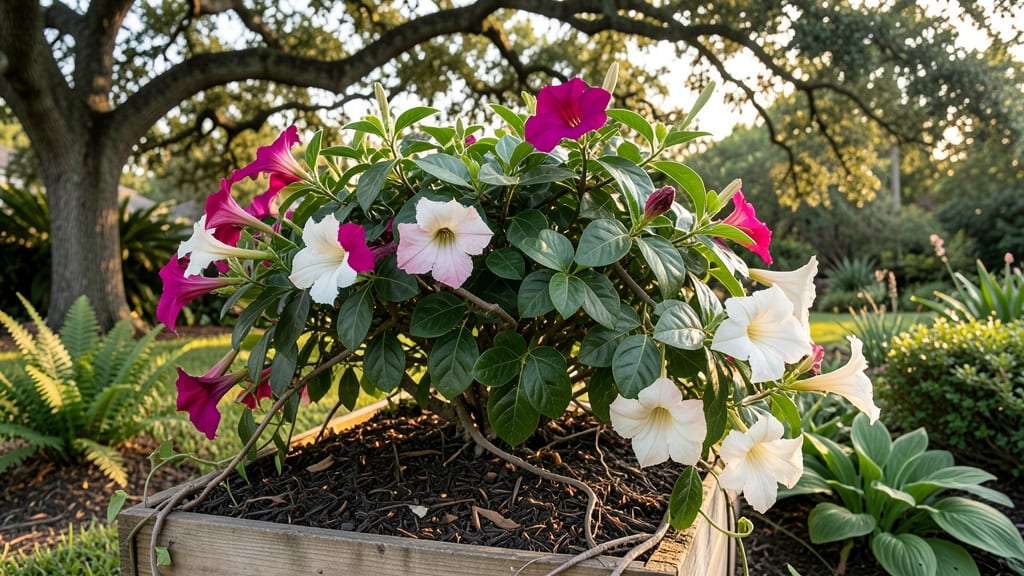
Determining whether vining mandevilla is annual or perennial depends on your climate: it thrives as a perennial in USDA zones 9-11 but behaves like an annual in colder zones, dying back each winter without proper protection. With the right care, its hardy stems reliably regrow each spring.
This tropical vine's behavior hinges on temperature tolerance—mandevilla can't survive freezing soil or prolonged cold snaps below 30°F. 🌿 In frost-prone areas, gardeners must treat it as an annual unless they implement winter protection strategies like container cultivation or mulching.
The key is understanding its growth cycle: mandevilla stores energy in its woody stems during warm months, which allows it to bounce back quickly when conditions improve.
What sets mandevilla apart is its ability to regenerate from the base even after severe dieback, provided the roots remain intact.
This makes it far more resilient than many people realize—with just a little extra effort during winter months, you can enjoy its vibrant blooms year after year, regardless of your hardiness zone.
💡 In This Article
- Why Mandevilla Dies Back in Cold Climates
- How to Overwinter Mandevilla in Cold Zones
Why mandevilla dies back in cold climates
Vining mandevilla originates from tropical regions of South America, where temperatures rarely drop below 60°F year-round. This tropical heritage explains its extreme sensitivity to frost—any exposure to 32°F or colder triggers cellular damage in its leaves and stems.
The plant's thick, waxy leaves help conserve moisture in warm climates, but this adaptation becomes a liability when temperatures plummet. 🌡️ Cold air causes the leaf cells to rupture, and the vine's vascular system struggles to transport nutrients efficiently below 50°F.
The real damage occurs when soil temperatures fall below 40°F. Mandevilla stores energy in its woody stems during warm months, but these reserves deplete rapidly in freezing conditions. Unlike hardy perennials that develop deep root systems to survive winter, mandevilla's fibrous roots are shallow and freeze easily.
When temperatures hit 28°F for more than a few hours, the root zone becomes inactive, cutting off the vine's lifeline to water and nutrients. This is why even a single hard frost can kill back an established plant in colder zones.
What makes mandevilla unique is its ability to regenerate from dormant buds at the base of the stem. These buds contain meristematic cells that remain protected during dieback, allowing the plant to "remember" its growth pattern when conditions improve.
In zones 9-11, these buds stay active year-round, enabling continuous growth. But in colder zones, they enter a state of dormancy until spring warmth reactivates them—typically between 65-70°F soil temperatures. 🌱
Another critical factor is the plant's hydrangea-like growth habit. Mandevilla produces new growth from the tips of its stems, which are particularly vulnerable to frost damage. When these growing tips freeze, the entire vine loses its ability to photosynthesize efficiently, accelerating dieback.
This explains why even well-established plants in containers can suffer severe damage during unexpected cold snaps, regardless of their size or maturity.
Light exposure also plays a surprising role in winter survival. Mandevilla's leaves contain chlorophyll that converts sunlight into energy, but in cold climates, reduced daylight hours (especially below 10 hours of sun) limit the plant's ability to build energy reserves.
This is why mandevilla grown in northern latitudes often requires more frequent feeding during summer to compensate for shorter growing seasons. Without adequate energy storage, the plant's resilience against winter stress diminishes significantly.
The good news is that mandevilla's regenerative capacity means it doesn't need to be replanted each year—just protected. Many gardeners successfully overwinter their vines by cutting back the foliage and insulating the crown, allowing the dormant buds to survive until spring.
This biological adaptation to seasonal changes is what makes mandevilla such a rewarding plant for patient gardeners in colder climates. ✨