
Flowers
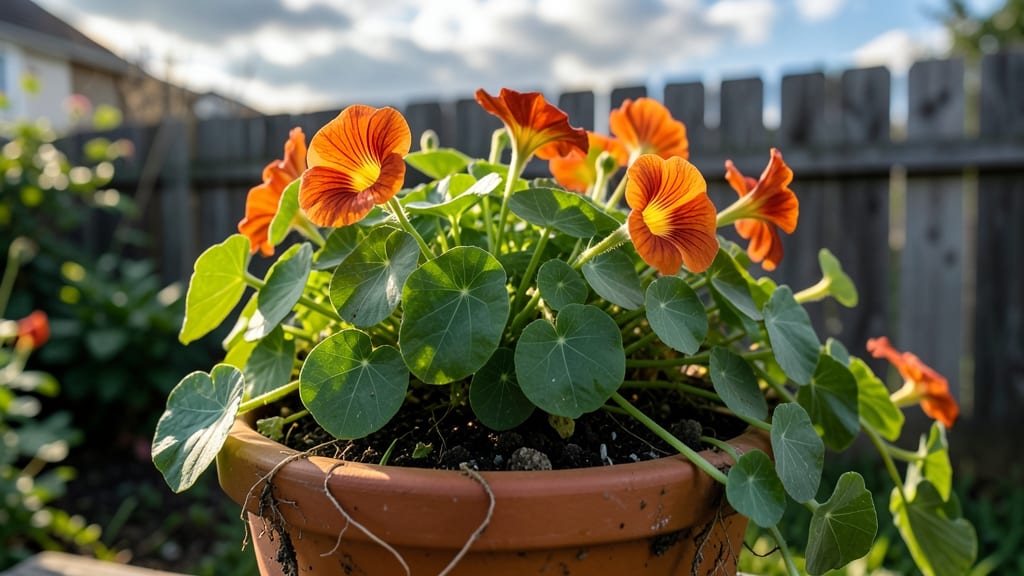
Whether nasturtiums are annual or perennial depends on your climate: they act as annuals in most regions, freezing back after frost, but some cold-hardy varieties can overwinter as tender perennials in zones 8-11 with winter care. Their rapid growth often hides their true seasonal nature.
Most gardeners treat nasturtiums as annuals because their delicate foliage can't survive below 25°F. 🌱 However, varieties like 'Alaska' or 'Mayflower' have shown surprising resilience in milder winters, especially when protected with thick mulch or grown in containers.
The key difference lies in their root systems—perennial types develop deeper, more robust roots that store energy for regrowth, while typical annuals focus all their energy on quick flowering. This explains why some gardeners in zone 7 report accidental overwintering when conditions are just right.
What many don't realize is that even "annual" nasturtiums often self-seed prolifically, creating the illusion of perennial behavior. 💫 The secret to true perennial performance lies in selecting cold-tolerant cultivars and providing winter protection, which transforms these fast-growing plants into reliable garden workhorses for multiple seasons.
💡 In This Article
- Why Nasturtiums Die in Cold Climates
- Extending Nasturtium Lifespan in Chilly Zones
Why nasturtiums die in cold climates
Nasturtiums (Tropaeolum majus) are frost-sensitive due to their tropical origins, where temperatures rarely drop below 50°F. The critical threshold for damage occurs when nighttime temperatures fall below 25°F—this triggers cellular damage in leaves and stems as ice crystals form in their thin, water-rich tissues.
Unlike hardy perennials such as pansies (Viola × wittrockiana), which can tolerate 15°F with proper acclimation, nasturtiums lack the protective mechanisms like antifreeze proteins or deep root systems to store energy for regrowth.
The plant's shallow root system—typically only 6-12 inches deep—fails to anchor it through winter. 🌱 This contrasts sharply with violas, whose roots extend 18-24 inches and store carbohydrates to fuel early spring regrowth.
When frost hits, nasturtiums' above-ground growth freezes first, followed by the roots within 24-48 hours if temperatures remain low. The result? A complete dieback that leaves gardeners puzzled about why their self-seeded plants vanished overnight.
What makes this especially frustrating is how nasturtiums' rapid growth—producing 1-2 feet of vine in a single season—can mask their true fragility.
Their thick, waxy leaves and bright blooms suggest resilience, but these traits actually serve to conserve moisture in their native warm climates, not to withstand freezing. 💫 The confusion arises because even "annual" nasturtiums often self-seed prolifically, creating the illusion of perennial behavior when they're merely reproducing aggressively before winter.
Scientific studies show that nasturtiums' cellular membranes lack the necessary lipids to remain fluid at freezing temperatures, a key adaptation in cold-hardy plants. This explains why even 32°F temperatures can cause stunted growth or leaf scorch, while violas and other winter-hardy flowers continue thriving.
The plant's entire lifecycle is geared toward quick reproduction in warm seasons rather than surviving harsh winters.
Interestingly, the nasturtium's relative—Tropaeolum majus's cousin Tropaeolum minus (canary creeper)—shows slightly better cold tolerance (down to 20°F), but neither species can compete with true perennials.
This biological limitation is why gardeners in zones 8-11 see occasional overwintering success: the milder winters simply don't push temperatures low enough to trigger the same cellular damage seen in colder regions.