
Flowers
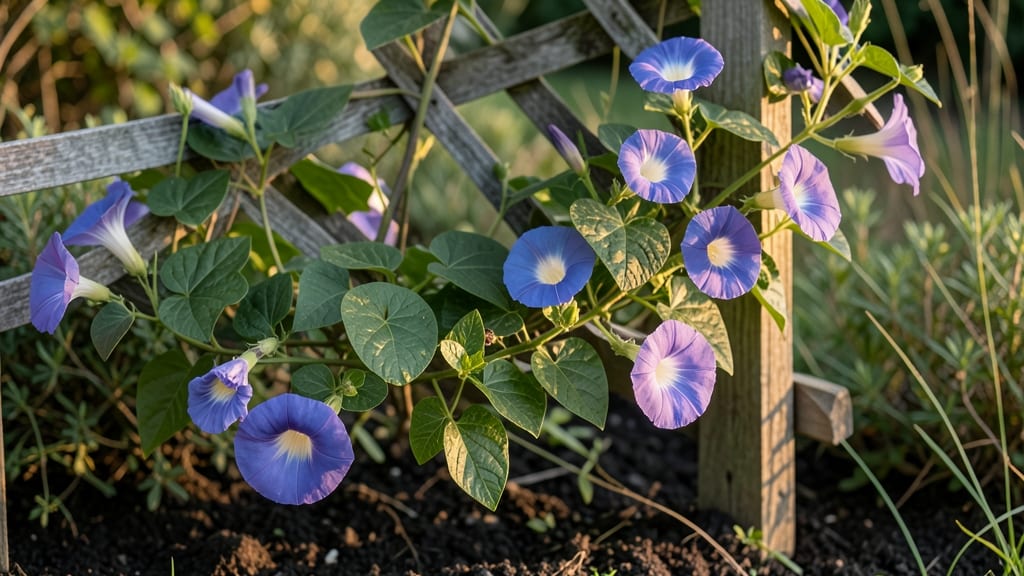
Whether morning glory flowers are annual or perennial depends on the species and climate: most varieties complete their lifecycle in one season, though cold-hardy types like Ipomoea nil or Ipomoea purpurea may reseed aggressively. True perennials like Ipomoea quamoclit (cypress vine) survive mild winters with proper care.
Most morning glory varieties thrive as annuals in temperate regions, meaning they bloom spectacularly for one season before dying back. However, some species—particularly those native to warmer climates—have adapted to persist through winter in USDA zones 8-10.
The key difference lies in their root systems: perennials like cypress vine develop deeper, more resilient roots that store energy, while annuals focus all their energy on rapid above-ground growth. 🌱 For gardeners in colder zones, selecting cold-tolerant cultivars or using mulch can help extend their growing season significantly.
Understanding this distinction helps you choose the right variety for your climate. For example, heavenly blue morning glory (Ipomoea tricolor) typically behaves as an annual in northern gardens but may reseed prolifically if conditions allow.
Meanwhile, cypress vine (Ipomoea quamoclit) often returns year after year in frost-free areas, making it a low-maintenance perennial option for warmer regions.
💡 In This Article
- Why Morning Glory Classification Varies by Species
- Extending Morning Glory Growth in Cold Climates
Why morning glory classification varies by species
The distinction between annual and perennial morning glories comes down to their evolutionary adaptations. Annual varieties like Ipomoea nil (Japanese morning glory) invest all their energy into rapid growth and seed production during a single growing season, typically 60-90 days from seed to bloom.
Their roots are shallow, focusing on quick nutrient uptake rather than winter survival. In contrast, true perennials like Ipomoea quamoclit (cypress vine) develop deep, woody roots that store starches to regenerate each spring, allowing them to persist for years in frost-free climates.
Temperature plays a critical role in this classification. Most morning glories originate from tropical or subtropical regions, where they naturally complete their lifecycle annually. However, some species—like Ipomoea purpurea—have evolved to tolerate brief cold snaps by entering dormancy.
These "semi-perennial" types may die back in hard freezes but often reseed aggressively the following spring. For example, in USDA zone 7, heavenly blue morning glory (Ipomoea tricolor) typically acts as an annual but may self-sow prolifically if protected by mulch or snow cover.
The botanical mechanism behind this variation lies in their growth habits. Annual morning glories prioritize vegetative growth and flowering during warm months, while perennials allocate resources to both above-ground blooms and below-ground storage organs.
This difference is visible in their foliage: annuals produce broader leaves optimized for photosynthesis, while perennials often have finer, more drought-resistant leaves. The key takeaway is that classification isn't absolute—environmental conditions can push a species toward annual or perennial behavior.
Cold tolerance varies dramatically between species. For instance, Ipomoea quamoclit can survive light frosts (-5°F for short periods), while Ipomoea nil typically succumbs to temperatures below 25°F.
This explains why gardeners in USDA zones 8-10 often treat morning glories as perennials, while those in colder regions must treat them as annuals or take special overwintering measures. The confusion arises because many varieties blur the line between true perennials and aggressive reseeding annuals.
Consider the example of Ipomoea hederacea (ivy-leaved morning glory), which behaves as an annual in northern climates but may persist through mild winters in coastal areas. Its seeds can remain viable in the soil for 3-5 years, creating dense colonies even if the parent plant dies back.
This reseeding behavior often leads gardeners to mistakenly classify it as a perennial, when in reality, it's an annual with exceptional persistence strategies. 🌿
To complicate matters further, some morning glory hybrids combine traits from both growth cycles. For example, certain cultivars of Ipomoea purpurea may produce both annual and perennial growth forms depending on whether they're grown from seed or transplanted tubers.
This hybrid vigor allows them to adapt to a wider range of conditions, making them popular choices for gardeners in transitional climates like USDA zone 7b.