
Flowers
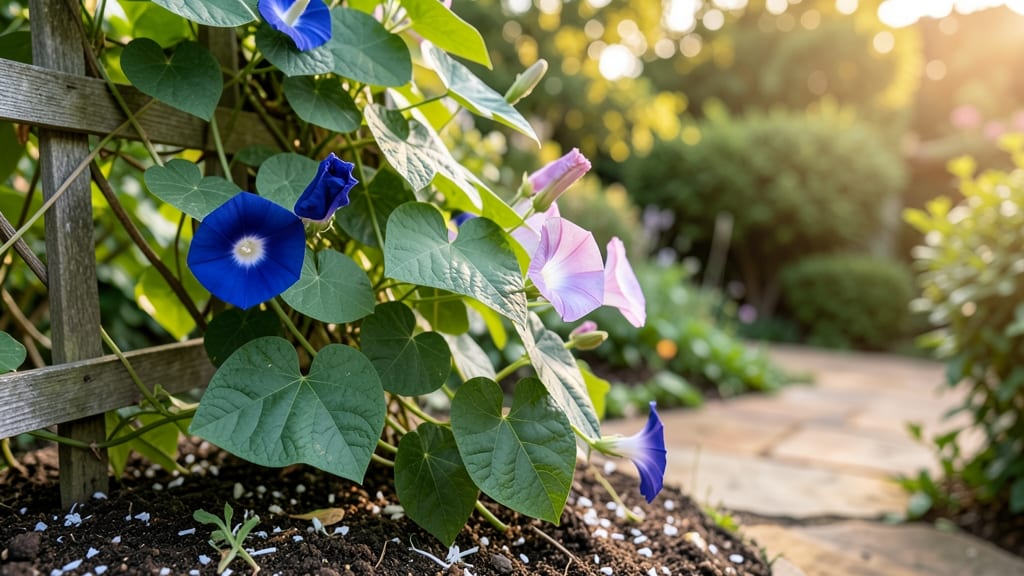
Whether morning glory grows as an annual or perennial depends entirely on your climate—it's an annual in most regions, dying back after frost, but in warm zones, it can persist as a short-lived perennial through root regrowth.
This distinction comes down to temperature tolerance and frost timing.
Morning glory thrives in USDA zones 3-11, but only zones 9-11 consistently allow it to overwinter. 🌱 In cooler areas, the plant completes its life cycle in one season, while warmer climates let it survive multiple years if roots remain undisturbed.
The key difference lies in how quickly frost arrives—morning glory can't withstand freezing temperatures, so any region with regular frost will reset its growth cycle annually.
For gardeners in marginal climates, the solution lies in strategic planning. Planting varieties like 'Heavenly Blue'—which has deeper roots—can improve survival odds, while mulching heavily in fall preserves soil warmth. The trade-off? Even in perennial zones, morning glory's lifespan rarely exceeds 3-4 years without human intervention.
💡 In This Article
- Climate Factors That Determine Morning Glory’s Life Cycle
- Growing Morning Glory as a Perennial in Cold Climates
Climate factors that determine morning glory’s life cycle
Morning glory's annual or perennial behavior hinges on frost timing and USDA hardiness zones. This vine thrives in zones 3-11 but only survives winter in zones 9-11 where temperatures rarely drop below 20°F.
The plant's cells contain 60-70% water, making it highly susceptible to frost damage—even light freezes (32°F) can rupture cell walls and kill the plant. In colder regions, the entire plant dies back, but seeds remain viable for 2-5 years in the soil.
The critical factor is days to first frost. Morning glory completes its life cycle in 60-120 days from seed germination, producing flowers and seeds before frost arrives in most temperate zones. In Florida (zone 10a), however, morning glory can continue growing year-round with minimal dormancy.
The plant's taproot system (reaching 12-18 inches deep) helps it access moisture during dry spells but doesn't provide enough insulation against cold.
Temperature also affects seed viability. Studies show morning glory seeds lose 50% viability after 3 years in dry soil but maintain 90% germination when stored in cool (40°F), moist conditions.
This explains why morning glory often "volunteers" in gardens—seeds from previous years may still sprout. The plant's C3 photosynthesis pathway makes it efficient in warm climates but less competitive in cooler temperatures.
Regional variations create fascinating patterns. In zone 7b (e.g., Atlanta), morning glory acts as an annual, while in zone 8a (e.g., Orlando), it may persist for 2-3 years if roots survive mild winters.
The 10°F difference between these zones determines whether the plant's meristematic tissue (growth centers) freezes or remains active. This temperature threshold is the biological switch between annual and perennial behavior.
Light exposure plays a secondary role. Morning glory requires 6-8 hours of sunlight daily for optimal growth, but in short-day conditions (less than 12 hours of daylight), it enters dormancy faster.
This photoperiod sensitivity explains why northern climates (zone 5) see morning glory as strictly annual—shorter summer days accelerate its life cycle. The plant's rapid growth rate (up to 12 inches per week) is an evolutionary adaptation to complete its cycle before frost.
What most gardeners don't realize is that morning glory's root crown (the area where roots meet stems) contains dormant buds capable of regrowth if protected. This is why some plants in zone 8 may resprout after winter—though they rarely produce flowers until the second season.
The trade-off is that these "perennial" plants often grow 20-30% slower than annuals due to energy spent on root maintenance.