
Flowers
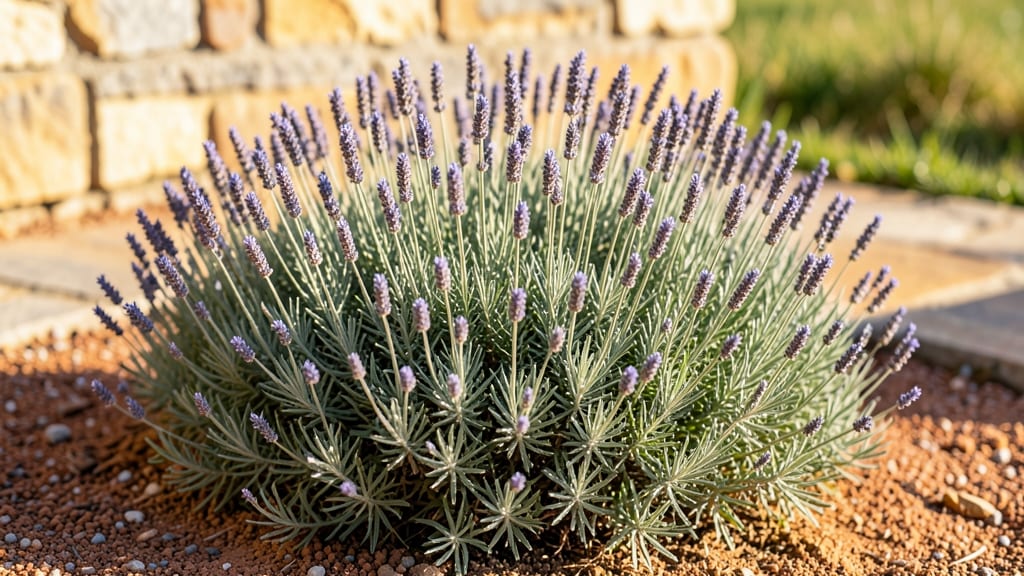
Lavender is a perennial because its hardy woody stems and extensive root network store nutrients underground, allowing it to enter winter dormancy and regrow lushly each spring with minimal care. Strategic late-winter pruning helps maintain its fragrant, compact shape while encouraging fresh growth.
This hardy behavior comes from lavender's natural adaptation to Mediterranean climates, where it evolved to withstand dry summers and cold winters. 🌱 The deep roots reach moisture while the woody stems act as natural insulation, protecting the plant's core during frost.
Unlike annuals that complete their lifecycle in one season, lavender's perennial nature means you'll enjoy its signature fragrance and purple blooms year after year with proper soil drainage and occasional pruning.
What sets lavender apart is how it balances dormancy with rebirth. Many gardeners assume dead-looking stems mean the plant is gone, but those woody stems are actually storing energy for spring's comeback.
I've seen lavender bushes that looked completely browned by winter fully revive with new green shoots within weeks of warmer temperatures—proof that patience pays off with this resilient plant.
💡 In This Article
- Why Lavender’s Dormancy Makes It a Hardy Perennial
- Best Practices for Year-Round Lavender Care
Why lavender’s dormancy makes it a hardy perennial
Lavender's perennial nature stems from its semi-woody stems, which act as natural energy reserves. These stems store carbohydrates produced during the growing season, essentially creating a built-in food supply for winter survival.
Think of them like a plant's winter savings account—when temperatures drop, these stored nutrients fuel the roots while the above-ground growth appears dormant. 🌿 The deep root system, often extending 3-5 feet below the surface, taps into moisture reserves that many shallow-rooted plants can't access, making lavender incredibly drought-resistant once established.
The dormancy process begins when nights grow consistently cooler than 50°F for several weeks. At this point, lavender shifts into survival mode, halting active growth but maintaining just enough metabolic activity to keep essential functions alive.
This adaptation evolved in Mediterranean climates where summers are scorching and winters can bring frost—perfect conditions for testing a plant's hardiness. English lavender (Lavandula angustifolia) typically handles -15°F temperatures, while French lavender (Lavandula stoechas) may struggle below 10°F without protection.
What's fascinating is how lavender's growth cycle works in reverse. When spring arrives and soil temperatures reach 55°F, those woody stems swell with new sap, and the roots begin pushing nutrients upward.
Within 2-3 weeks of consistent warmth, you'll see fresh green shoots emerging from the base—proof that the plant was never truly dead, just patiently waiting. This delayed rebirth strategy gives lavender a competitive edge in harsh environments where quick growth would be risky.
The plant's fragrance also plays a role in its survival strategy. The essential oils produced in lavender's leaves act as natural antifreeze, lowering the freezing point of water within the plant's cells. This means even when temperatures drop below freezing, the cellular structure remains protected.
The strong aroma isn't just for our enjoyment—it's also a defense mechanism against pests that might otherwise attack a weakened plant during dormancy. 🌸
Cold hardiness varies significantly between lavender varieties. English lavender, with its sturdy stems and compact growth, handles winter best, while Spanish lavender (Lavandula stoechas) often requires winter mulching in colder climates.
The key difference lies in their native elevations: mountain-dwelling English lavender evolved to withstand more extreme cold than its lowland Spanish cousins. This variation explains why some gardeners in Zone 5 successfully grow lavender while others need to choose hardier varieties or provide winter protection.
One common misconception is that lavender's winter dieback means the plant is dead. In reality, those brown stems are serving a crucial purpose—they're insulating the plant's core and protecting the new growth that forms at the base.
The real danger comes when gardeners prune lavender too aggressively in fall, removing these protective stems before winter. Proper timing is everything: late winter pruning (after the last frost) removes dead growth while leaving the new shoots unharmed. 🌱