
Flowers
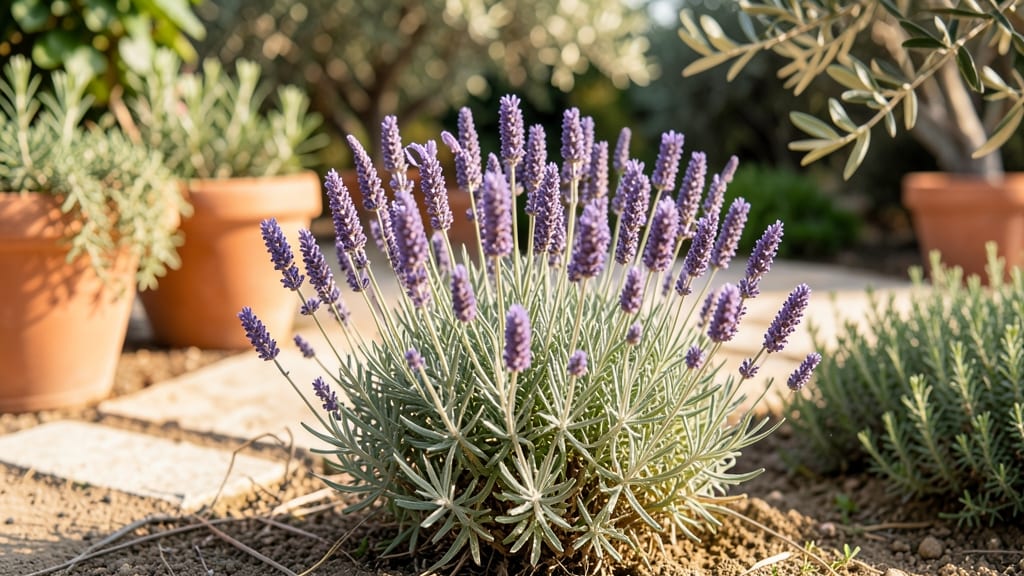
Spanish lavender acts as a perennial in mild climates but behaves more like a short-lived shrub in colder regions, thriving only in USDA zones 8-10 without winter protection. In cooler areas, it often dies back to the ground each year but reliably regrows from its roots when conditions improve.
Spanish lavender's perennial status depends entirely on your climate. In frost-free zones, it establishes deep roots and returns year after year, forming woody stems over time.
However, when temperatures drop below 15°F, the above-ground growth freezes back completely—though the root system often survives if protected. 🌱 This makes it behave like a tender perennial in marginal zones, where gardeners must take extra steps like heavy mulching or container growing to preserve it through winter.
The key difference from its hardier cousin, English lavender, lies in its native Mediterranean origins. Spanish lavender evolved in warmer climates where winter dieback isn't a concern, while English lavender developed frost tolerance.
Even in cold regions, Spanish lavender can make a comeback each spring if you give its roots a fighting chance through proper winter care.
💡 In This Article
- Spanish Lavender’s Cold-Hardiness Limits Explained
- Protecting Spanish Lavender in Cold Climates: Step-by-Step Winter Care
Spanish lavender’s cold-hardiness limits explained
Spanish lavender's struggle with cold stems from its Mediterranean heritage, where winter temperatures rarely drop below 20°F. This plant evolved in regions with mild winters, so its growth habit reflects that adaptation.
Unlike English lavender, which can withstand -10°F to -15°F with proper care, Spanish lavender's tender nature means it typically dies back completely when temperatures fall below 15°F.
The key difference lies in their root systems—Spanish lavender develops fibrous roots that store energy but lack the deep, woody structure found in hardier perennials.
The damage occurs when frost penetrates the stems and leaves, causing cellular collapse. What most gardeners miss is that while the above-ground growth may look dead, the root crown often remains alive if protected.
This is why Spanish lavender can regrow so vigorously in spring—its roots have been conserving energy throughout winter. 🌱 The plant's natural survival strategy is to focus energy on root development rather than winter hardiness, which is why it thrives as a perennial only in zones where winter temperatures rarely drop below 20°F.
Comparing Spanish lavender to its hardier cousin reveals fascinating botanical differences. English lavender's leaves contain higher concentrations of essential oils that act as natural antifreeze, protecting its cells during cold snaps. Spanish lavender lacks this adaptation, making it more vulnerable to freeze damage.
The oil content in Spanish lavender is also more concentrated in the stems rather than leaves, which further reduces its cold tolerance since stems are more susceptible to frost damage than leaves.
Understanding these biological differences helps explain why Spanish lavender behaves differently in various climates. In USDA zones 8-10, it establishes as a true perennial, developing woody stems over time.
But in colder regions, it acts more like an annual or short-lived shrub because the cold stress prevents it from developing the woody structure needed for long-term survival. This is why gardeners in marginal zones often treat it as a tender perennial that needs annual care to persist.
What makes Spanish lavender particularly interesting is its ability to regenerate from just a small piece of root. Even if the entire plant appears dead after winter, the root crown can often produce new growth when temperatures warm.
This resilience makes it worth growing in colder climates, provided you take steps to protect the roots during winter.
The plant's ability to regrow from roots is what gives it that "short-lived shrub" character in colder regions—it may not live for decades like a true perennial, but it can return year after year with proper care.
For gardeners pushing the limits of Spanish lavender's hardiness, the 15°F threshold is critical. Any colder than that, and the root system itself may suffer damage, making regeneration less likely.
This is why microclimates matter so much—south-facing walls, sheltered spots, or containers that can be moved indoors can make all the difference in extending Spanish lavender's growing season in colder areas.