
Flowers
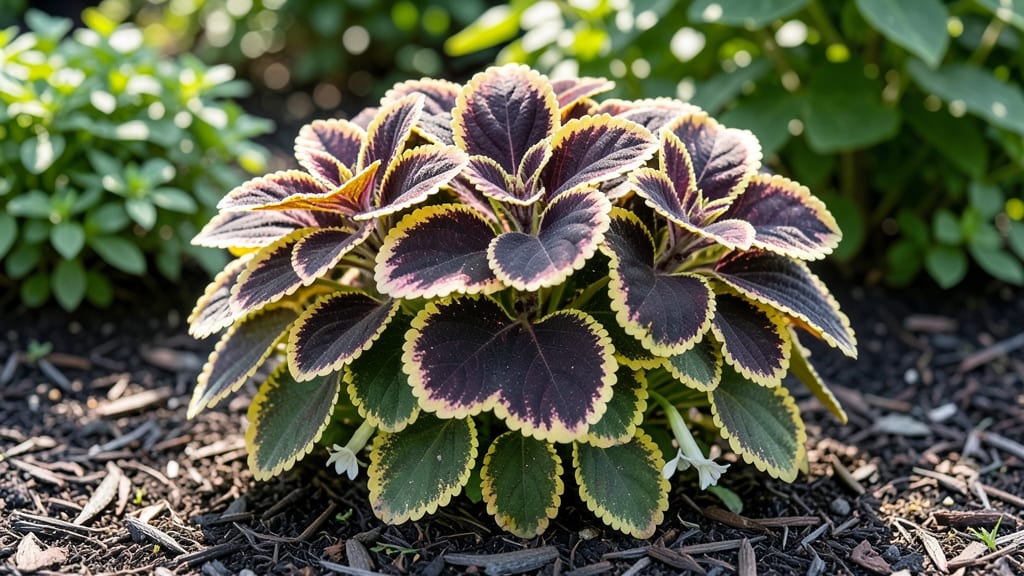
Determining whether kong coleus is annual or perennial depends on your climate: it thrives as a true perennial in frost-free zones but dies back to its roots each winter in cooler areas, regrowing annually—though it’s not a true annual.
This plant’s survival strategy is all about its tuberous root system, which stores energy during dormancy. 🌱 In warmer climates, it grows continuously, but in colder zones, the foliage freezes back to the ground, only to sprout fresh leaves from those roots when temperatures rise.
The confusion arises because many gardeners mistake this dieback for death—similar to how some perennials like peonies go dormant. What sets kong coleus apart is its adaptability: it can act like an annual in harsh winters but behaves as a perennial when conditions stay mild year-round.
For gardeners in cooler regions, this means you can still enjoy kong coleus annually by either digging up and storing tubers indoors or protecting them with thick mulch. The key is understanding that its "annual" behavior is climate-driven, not an inherent trait.
Think of it as a shape-shifter in the plant world—perennial by nature, annual by necessity.
💡 In This Article
- Why Kong Coleus Dies Back Annually (And How It Survives)
- How to Overwinter Kong Coleus in Cold Climates
Why kong coleus dies back annually (and how it survives)
The kong coleus’s annual dieback isn’t a sign of weakness—it’s a survival strategy tied to its tuberous root system, a specialized underground storage organ.
Unlike true annuals (which complete their entire lifecycle in one season), kong coleus stores energy in these thickened roots during dormancy, allowing it to regrow when conditions improve.
This system is similar to how dahlias or cannas survive winter, but kong coleus’s tubers are smaller—typically 1-2 inches in diameter—and less woody, making them more delicate to handle.
Temperature is the trigger for this cycle. When nighttime temperatures drop below 40°F (4°C), the plant’s foliage yellows and collapses, but the roots remain alive underground. This dormancy isn’t death—it’s a metabolic slowdown where the plant conserves energy in its tubers.
In frost-free zones (USDA Hardiness Zones 10-11), these roots stay active year-round, allowing continuous growth. The confusion arises because gardeners in cooler climates (Zones 7-9) often assume the plant is dead when it dies back, much like how peonies or hostas retreat underground each winter. 🌱
What makes kong coleus unique is its regrowth mechanism. When spring temperatures rise above 55°F (13°C), the tubers detect warmth and moisture, triggering the production of new shoots. This process can take 2-4 weeks, depending on soil temperature.
The plant’s ability to regenerate from roots—rather than seeds—classifies it as a perennial in ideal conditions, even if it behaves annually in colder areas.
This dual nature is why it’s often called a "tender perennial," a term used for plants that can’t survive freezing temperatures but regrow from roots when protected.
Comparing it to true annuals (like marigolds) highlights the difference: annuals rely on seeds to propagate, while kong coleus uses its tuberous roots. The roots contain stored carbohydrates and nutrients, which fuel the plant’s rapid regrowth in spring.
In fact, these tubers can remain viable for 1-2 years if stored properly, allowing gardeners to propagate new plants from old roots—a trick many don’t realize is possible. This resilience is part of why kong coleus has become a favorite in container gardening, where roots can be easily managed.
One often-overlooked detail is how light exposure affects this cycle. Kong coleus tubers need at least 6 hours of daylight to trigger regrowth, which is why spring planting should align with longer daylight periods. In shaded areas, the plant may take longer to emerge or produce weaker growth.
This light dependency explains why kong coleus thrives in partial shade during the growing season but still requires bright conditions to break dormancy. Understanding these triggers helps gardeners time their care correctly, whether they’re planting new tubers or protecting existing ones through winter.
For those curious about the science, the dormancy process involves abscisic acid, a plant hormone that signals the shift from growth to storage mode. As temperatures drop, this hormone accumulates in the roots, halting leaf production and redirecting energy to the tubers.
When spring arrives, gibberellins (growth hormones) take over, prompting the roots to sprout new shoots. This hormonal dance is what allows kong coleus to cheat death each year—literally. 🌿