
Planting
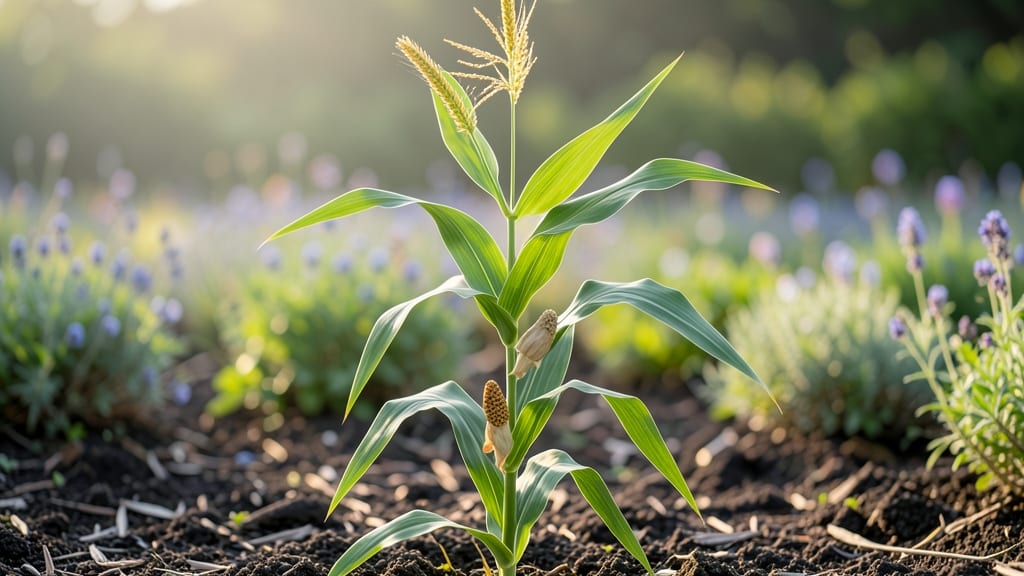
The popcorn plant (Amaranthus caudatus) behaves like an annual in most gardens because its tropical origins make it frost-sensitive, but it's actually a short-lived perennial that can regrow from its root system in warmer climates with proper care.
The popcorn plant's perennial nature becomes clear when you consider its growth cycle. 🌱 While it dies back completely in colder regions, the root system often survives underground, ready to sprout again when temperatures rise.
This explains why some gardeners report seeing new shoots emerge in spring from the same spot year after year. The key difference lies in climate—where winter temperatures stay above freezing, the plant maintains its true perennial characteristics.
What's fascinating is how this compares to other amaranth species. Many amaranths are annuals by nature, but Amaranthus caudatus has developed this semi-perennial adaptation to thrive in its native tropical highlands.
This makes it a unique hybrid between annual and perennial behaviors, offering gardeners the best of both worlds depending on their growing conditions.
💡 In This Article
- Why Popcorn Plant Appears Annual Despite Perennial Roots
- How to Extend Popcorn Plant’s Lifespan as a Perennial
Why popcorn plant appears annual despite perennial roots
The popcorn plant's (Amaranthus caudatus) dual nature stems from its tropical origins in the Andes Mountains, where temperatures rarely drop below freezing. Its root system develops a deep taproot that can store nutrients and remain dormant during adverse conditions, allowing it to regrow when conditions improve.
This adaptation explains why it behaves like an annual in colder climates—frost kills the above-ground growth, but the roots often survive underground.
Botanically, this plant falls into the category of "short-lived perennials" because its lifespan exceeds one growing season, but it lacks the hardiness of true perennials like asparagus or lavender.
The key difference lies in its cold sensitivity: while the roots can endure brief cold snaps, prolonged freezing temperatures (below 20°F) will kill even the hardiest root systems.
In warmer regions (USDA zones 8-11), the plant naturally returns year after year, sometimes for 3-5 years with proper care.
Comparing it to other amaranth species highlights this uniqueness. Most amaranths (like Amaranthus hypochondriacus) are true annuals—they complete their entire life cycle in one season and die completely. The popcorn plant's ability to regenerate from roots makes it more resilient, though it still lacks the longevity of true perennials.
This hybrid behavior is why gardeners in milder climates often see it return like a perennial, while those in colder regions treat it as an annual.
The plant's rapid growth cycle—typically 90-120 days from seed to harvest—also contributes to its annual appearance. Its fast maturation means it focuses energy on seed production rather than extensive root development, which would be necessary for true perennial survival.
However, the roots it does produce are surprisingly robust, capable of sending up new shoots if protected from frost.
What's particularly interesting is how the plant's leaf structure changes with age. Young plants have broad, tender leaves, while mature specimens develop narrower, more fibrous leaves—an adaptation that reduces water loss and improves cold tolerance.
This physiological shift helps explain why older plants sometimes survive winter better than young ones, even in marginal climates.
For gardeners, this dual nature means the popcorn plant can be both a short-term crop (harvested once) and a long-term investment (if overwintered properly).
The key is understanding its climate requirements: in colder regions, it's best treated as an annual, while in warmer areas, it rewards patience with multiple harvests and potential regrowth.