
Planting
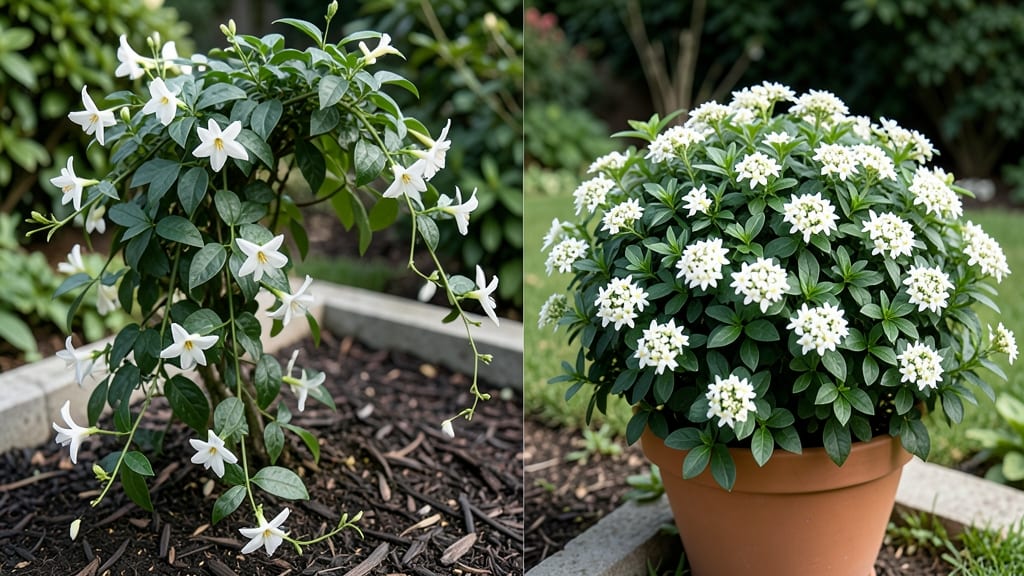
Whether jasmine plants are annuals or perennials depends entirely on your climate: they thrive as perennials in frost-free zones but die back to the ground in colder regions, with roots often surviving underground to regrow each spring.
Jasmine's lifespan behavior is all about where you live.
In warm climates—think USDA zones 8 and above—these plants happily return year after year, their woody stems and roots growing stronger with each season. 🌱 The real magic happens in colder areas, where frost kills the above-ground growth but leaves the roots intact beneath the soil.
This underground survival system lets them bounce back like a botanical phoenix when spring arrives.
What makes this especially interesting is how jasmine adapts its growth cycle. In colder zones, gardeners often treat them as annuals because the foliage disappears completely, but those persistent roots hold the secret to their true perennial nature.
With proper winter care—like heavy mulching or container overwintering—you can coax even cold-zone jasmines to behave more like their perennial cousins.
💡 In This Article
- How Climate Determines Jasmine Plant Lifespan
- Winter Care Tips to Extend Your Jasmine’s Lifespan
How climate determines jasmine plant lifespan
Jasmine's lifespan hinges on its ability to survive winter dormancy, a process deeply tied to your hardiness zone. In frost-free regions like USDA zones 8-11, jasmine thrives as a true perennial, developing woody stems that persist year-round.
The plant's roots extend deep—often 12-18 inches—while its shoots grow 3-6 feet tall, creating a robust underground network that stores nutrients for regrowth. This woody structure acts like a biological battery, allowing the plant to push new growth from the same root system for decades.
The key difference in colder climates (zones 7 and below) lies in temperature thresholds. When nighttime temperatures drop below 28°F, jasmine's tender shoots freeze and turn black, mimicking annual dieback.
However, the roots—protected by 4-6 inches of soil insulation—enter a state of dormancy, similar to how peonies or hostas survive winter. The root crown (the thickened base where roots meet stems) contains meristematic cells that remain alive, ready to sprout when soil temperatures rise above 50°F in spring. 🌱
This survival mechanism explains why gardeners in colder zones often see jasmine return after seemingly dying. The plant's ability to regenerate from roots depends on two critical factors: soil moisture and insulation.
Even in zone 6, where winters are harsh, jasmine roots can survive if protected by 6+ inches of organic mulch or snow cover. The root system's resilience makes jasmine behave like a perennial in practice, even when treated as an annual in colder climates.
What's fascinating is how jasmine adapts its growth cycle based on climate. In warm zones, it grows continuously, while in colder areas, it enters a 4-6 month dormancy period each winter. This dormancy isn't true death—it's an energy-conserving state where the plant redirects resources to root storage.
The leaves may disappear, but the underground system remains active, ready to fuel new growth when conditions improve. This dual nature is why jasmine can be both annual and perennial depending on location.
Consider this comparison: In Miami (zone 10), a jasmine plant might grow 10 feet tall over 5 years, while in Chicago (zone 5), the same plant might only produce 2 feet of new growth annually due to winter setbacks.
The plant's lifespan potential remains the same—perennial—but its visible growth patterns change dramatically based on climate. This adaptability is what makes jasmine such a versatile garden plant across diverse regions.
The science behind this involves a hormone called abscisic acid, which jasmine produces in response to cold. This hormone triggers dormancy by closing stomata (leaf pores) and redirecting sugars to roots. When spring arrives, another hormone—gibberellin—signals the roots to break dormancy and push new shoots.
This hormonal dance explains why proper winter care can turn an "annual" jasmine into a long-lived perennial, even in colder zones.