
Flowers
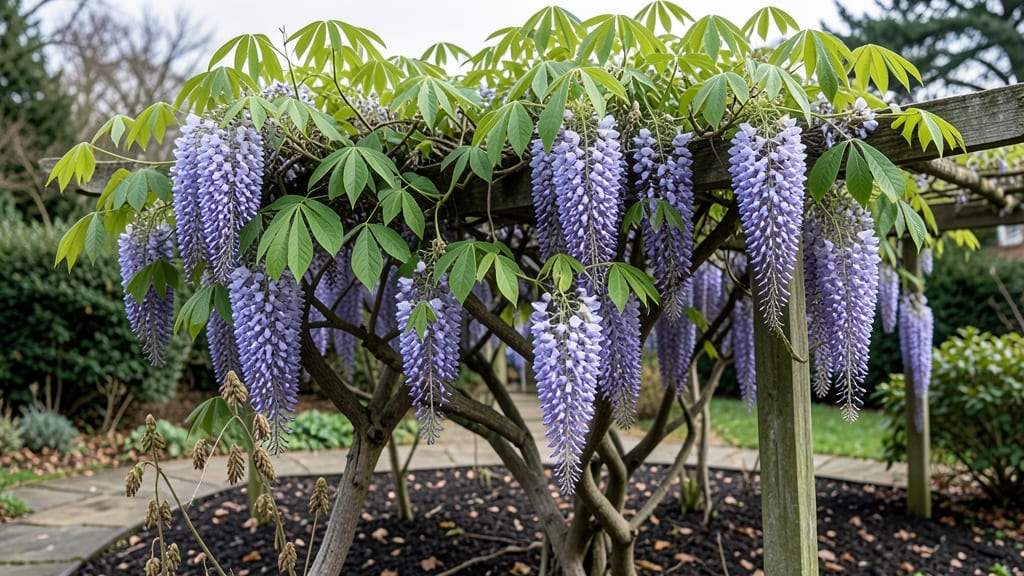
Wisteria is indeed a perennial plant, thriving for multiple years thanks to its deep, hardy root system that survives winter dormancy and regrows each spring with proper care and climate conditions.
Wisteria's perennial nature comes from its deep taproot system, which stores nutrients and moisture during dormancy. 🌱 Unlike annuals, wisteria plants don't die back to the ground each year—they simply enter a resting phase, then burst back to life with proper winter care.
This makes them ideal for long-term landscaping, though their growth rate varies by species. For example, Wisteria floribunda handles colder climates better than Wisteria sinensis, which prefers milder winters.
What truly sets wisteria apart is its ability to regenerate from dormant buds even after severe pruning. The key is protecting those roots—mulching heavily in winter and avoiding overwatering, which can rot the system.
I've seen wisteria vines bounce back after years of neglect, proving their resilience when given basic care. The trade-off? Their vigorous growth means they need regular pruning to maintain shape and health.
💡 In This Article
- How Wisteria’s Root System Supports Perennial Growth
- Caring for Wisteria to Ensure Year-Round Perennial Health
How wisteria’s root system supports perennial growth
Wisteria's perennial nature starts with its deep taproot system, which can extend 6-10 feet below ground. This root structure acts like a natural storage unit, accumulating nutrients and water during active growth months to sustain the plant through dormancy.
The roots contain specialized cells called parenchyma, which store starches and sugars—essentially the plant's winter food supply. 🌱 When temperatures drop, these roots remain dormant but alive, ready to push new shoots upward when spring arrives.
The depth of these roots also provides stability against wind and storm damage, which is why wisteria thrives as a climbing vine in exposed locations.
Interestingly, the root system's depth varies by species: Wisteria floribunda develops roots that can tolerate -15°F to -20°F temperatures, while Wisteria sinensis roots are more sensitive, typically surviving only down to 10°F.
This explains why the former thrives in northern climates like USDA Zone 5, while the latter prefers milder Zone 6-9 regions.
What's fascinating is how wisteria's root system interacts with soil microbes. The roots form symbiotic relationships with mycorrhizal fungi, which extend the plant's reach for water and nutrients up to 100 times their actual root length.
This biological partnership enhances the plant's resilience, allowing it to recover quickly from drought or poor soil conditions. The fungi also help break down organic matter in the soil, providing a steady nutrient supply that supports perennial growth.
Another key mechanism is the plant's ability to regenerate from dormant buds even after severe pruning. These buds, located along the main stem and roots, contain meristematic cells that can activate when conditions improve.
This is why wisteria can recover from heavy pruning or even accidental damage—its root system remains the lifeline that keeps it alive year after year. 💫 The trade-off is that this vigorous regeneration requires careful management to prevent the plant from becoming overly aggressive.
Consider the contrast with annual plants, which complete their entire lifecycle in one growing season. Wisteria, however, invests energy into building a robust root system that persists through multiple cycles.
This strategy makes it a low-maintenance perennial once established, though it does require patience during the initial years as the roots develop. The root system's ability to store and redistribute resources is what truly defines wisteria's perennial nature.
For gardeners, understanding this root behavior means focusing on soil health during establishment. Amending planting areas with compost or well-rotted manure provides the nutrients needed for strong root development.
Avoiding disturbances to the root zone—like excessive digging—preserves these critical structures that support perennial growth. The deeper the roots go, the more resilient the wisteria becomes over time.