
Planting
Hostas are an excellent example of a perennial plant that thrives year after year with minimal care, growing well in shade or partial sun while providing striking foliage and seasonal blooms. Their resilient root systems help them withstand drought once established, making them perfect for low-maintenance landscapes.
Hostas aren't the only perennial plants that deliver long-term beauty with minimal effort. 🌿 These hardy plants establish deep roots that store moisture, allowing them to survive dry spells once settled. Many perennials also offer seasonal interest—some burst with spring blooms while others maintain evergreen foliage through winter.
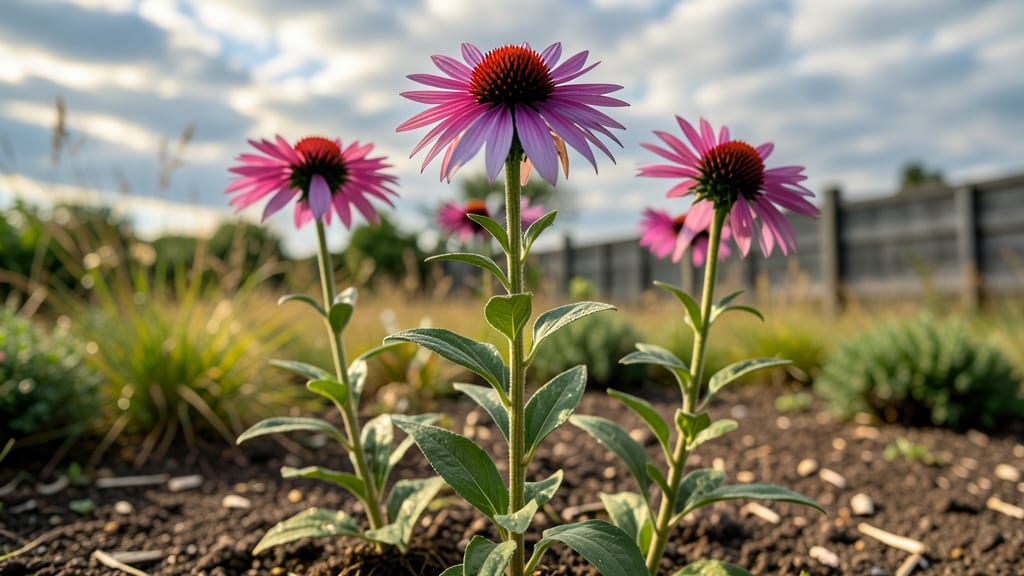
For instance, coneflowers provide vibrant summer color, while lavender offers fragrant foliage and drought tolerance. The key advantage of perennials is their ability to multiply over time, creating lush displays with virtually no replanting needed after the first year.
What sets perennials apart from annuals is their ability to regrow from the same root system each season. This means you get more bang for your buck—both in terms of time and money—since you won't need to replant them every year.
Many gardeners choose perennials specifically for their reliability and ability to create natural, low-maintenance landscapes that evolve beautifully over time.
💡 In This Article
- Why Hostas Are a Top Perennial Garden Staple
- 15 Cold-Hardy Perennials Beyond Hostas for Year-Round Interest
Why hostas are a top perennial garden staple
Hostas thrive because their biology is perfectly adapted to perennial survival. These plants develop extensive root systems that can reach depths of 12-18 inches within their first growing season, allowing them to access moisture and nutrients deep underground.
This deep-rooted structure creates a natural drought resistance once established—after just 2-3 years, hostas can survive with minimal supplemental watering, even during summer droughts.
Their ability to store carbohydrates in these roots during the growing season provides energy for regrowth in spring, explaining why they bounce back annually with minimal intervention.
The secret to hostas' cold hardiness lies in their natural antifreeze proteins. These specialized molecules prevent ice crystals from forming in their cells during freezing temperatures, allowing them to survive winters as low as -30°F (USDA zones 3-9).
This biological adaptation means hostas maintain their evergreen or semi-evergreen foliage through winter, providing year-round visual interest in shady garden areas.
The waxy coating on their leaves also repels rain and reduces fungal diseases, making them naturally resistant to many common garden pests like slugs and deer—though deer may still nibble if other food sources are scarce.
Hostas adapt to nearly any soil type, from sandy loam to heavy clay, though they prefer well-draining soil with organic matter. Their foliage comes in an astonishing range of colors—from deep purples and blues to chartreuse and variegated patterns—creating visual impact that annuals simply can't match.
The key to their popularity is this combination of hardiness, adaptability, and ornamental value. Unlike annuals that must be replanted each year, hostas deliver 10-15 years of growth from a single planting, making them an incredibly cost-effective garden investment.
What most gardeners don't realize is how hostas contribute to ecosystem health. Their dense foliage provides shelter for beneficial insects like ground beetles and spiders, which help control pests naturally. The deep roots also prevent soil erosion while improving soil structure over time.
When planted in groups, hostas create a living mulch that suppresses weeds while maintaining consistent moisture levels—reducing the need for synthetic mulches or irrigation systems.
For shade gardens, hostas are unmatched in their ability to thrive where few other plants will grow. They tolerate 2-6 hours of direct sunlight daily but prefer partial shade, making them perfect for woodland gardens, foundation plantings, or areas under trees.
Their low-maintenance nature means you won't need to divide them for 3-5 years after planting, unlike many other perennials that require regular division to prevent overcrowding. This combination of resilience, beauty, and practicality explains why hostas remain a garden staple for both novice and experienced gardeners alike.
Consider this: A single 1-gallon hosta plant can grow to 18-24 inches in diameter within 3-4 years, creating instant impact in garden beds. When combined with other shade-tolerant perennials like ferns or astilbes, hostas form layered, textured displays that annuals could never achieve.
Their ability to regenerate from even small root fragments means you can propagate them easily—simply dig up a section and replant it to create new plants for free.